

Banjara ST Reservation: History, Challenges & Constitutional Demand
Explore the history of the Banjara community's ST reservation demand, how reservation status changed in Maharashtra, and why state government recommendation is essential for ST inclusion.

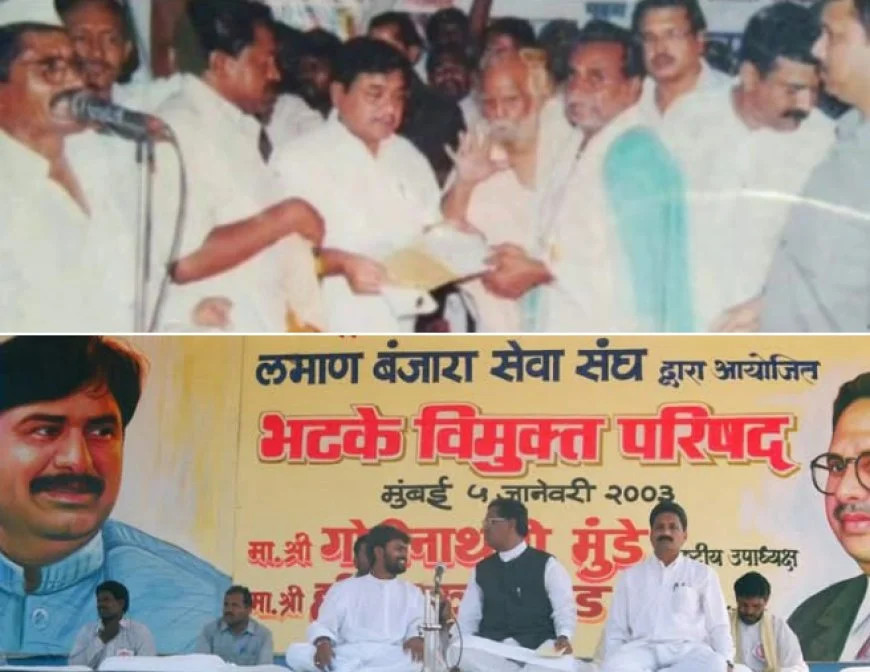
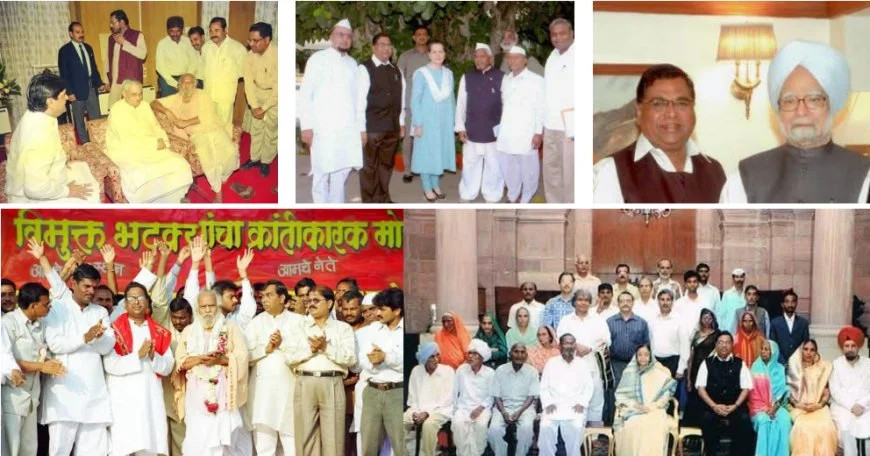
Historical Timeline of the Banjara Community's Demand for ST Reservation
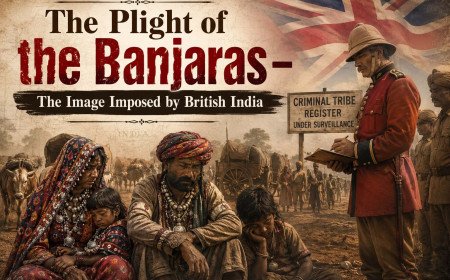
1) 1937 – Padma Shri Ramsinghji Bhanavat and others met the Viceroy of India, Lord Linlithgow, with a draft prepared by Dr. Babasaheb Ambedkar and made the first demand for the repeal of the Criminal Tribes Act.
2) 1947 – Under the leadership of Mahanayak Vasantrao Naik Saheb, Padma Shri Ramsinghji Bhanavat and others met Bharat Ratna Dr. Babasaheb Ambedkar four times and demanded ST reservation.
3) 19 August 1949 – Padma Shri Ramsinghji Bhanavat and others met Prime Minister Pandit Jawaharlal Nehru, Dr. Rajendra Prasad, and Sardar Vallabhbhai Patel to demand the repeal of the Criminal Tribes Act. As a result, the Government of India constituted the Ayyangar Committee on 28 September 1948. The Ayyangar Committee submitted its report on 31 December 1950, following which, on 31 August 1952, Prime Minister Pandit Jawaharlal Nehru broke the barbed-wire fences at Solapur and liberated the Nomadic Tribes from the Criminal Tribes Act. They were then recognized as Denotified Tribes.
4) 1950–52 – Bharat Ratna Dr. Babasaheb Ambedkar, Sardar Hukam Singh, and Jaipal Singh demanded in Parliament that the Banjara community be included in the Scheduled Tribes during the period 1950–52.
5) 26 September 1952 – Under the leadership of Dr. Punjabrao Deshmukh, Mahanayak Vasantrao Naik Saheb, Padma Shri Ramsinghji Bhanavat, Chandram Chavan Guruji, Sakharam Mude, Loknete Baliram Patil Mandvikar, Dagdusingh Rathod, Freedom Fighter Babusingh Rathod, and 15 others met Prime Minister Jawaharlal Nehru and demanded the appointment of a commission under Article 340 of the Constitution for the Denotified communities. As a result, the Kaka Kalelkar Commission was constituted in 1953.
6) According to the All India Banjara Seva Sangh National Conventions – At the conventions held at Digras (31 January 1953), Somgad (11, 12 & 13 April 1954), Chalisgaon (15 March 1955), Gulbarga (11 February 1960), Penkuntha (13 January 1964), Warangal (10 April 1965), Pusad (13 & 14 January 1981), Aurangabad (1 & 2 June 1985), Bijapur (6 & 7 February 1988), Digras (31 January 2003), and Barshi Takli (1 & 2 June 2012), making a total of 12 national conventions, the primary demand was to grant Scheduled Tribe reservation to the Banjara community, and continuous follow-up was carried out with the Central Government.
7) 1969 – Mahanayak Vasantrao Naik Saheb, Padma Shri Ramsinghji Bhanavat, and Freedom Fighter Babusingh Rathod organized public meetings in Saharanpur (Uttar Pradesh) and Ujjain (Madhya Pradesh) to create awareness regarding Scheduled Tribe reservation for the Banjara community.
8) 11 December 1969 to 30 December 1969 – Padma Shri Ramsinghji Bhanavat and Freedom Fighter Babusingh Rathod toured all the states of India and submitted a report to Prime Minister Smt. Indira Gandhi stating that the Banjara community is a tribal community.
9) 12 November 1969 – A grand convention of the Banjara community was held in Delhi where Mahanayak Vasantrao Naik Saheb, Padma Shri Ramsinghji Bhanavat, Freedom Fighter Babusingh Rathod, and others demanded Scheduled Tribe reservation for the Banjara community from Prime Minister Smt. Indira Gandhi.
10) Prime Minister Smt. Indira Gandhi introduced Bills in Parliament in 1969, 1972, and 1976 to provide reservation to the Banjara community.
11) 1971 – In Telangana, under the leadership of Amarsingh Tilawat, Ravindra Naik and Mahendra Naik, the AP Banjara Student Action Committee organized a student movement demanding Scheduled Tribe reservation.
12) 1975 – Great Saint Dr. Ramrao Bapu Maharaj met the Union Home Minister Brahmananda Reddy and demanded reservation. Andhra Pradesh benefited from this effort.
13) 1975 – Mahanayak Vasantrao Naik Saheb, Padma Shri Ramsinghji Bhanavat, and Babusinghji Rathod met Prime Minister Indira Gandhi and demanded Scheduled Tribe reservation.
14) 25 April 1988 – Prof. Motiraj Rathod filed Case No. 3375 in the Bombay High Court regarding constitutional benefits for the Banjara and Denotified Nomadic communities.
15) 31 March 1989 – At Solapur, Shri Sharad Pawar, on behalf of the Government of Maharashtra, submitted an eight-page memorandum to Prime Minister Rajiv Gandhi, along with Prof. Motiraj Rathod, demanding constitutional rights for the Banjara community.
16) 5 January 1991 – Former MP Haribhau Rathod and author Rakesh Jadhav organized a hunger strike and protest at Azad Maidan demanding Scheduled Tribe reservation for the Banjara community. They continued this movement consistently for the next 25 years.
17) 1 August 2002 – Shri Ranjit Naik and author Laxman Gaikwad met the Union Home Minister and demanded Scheduled Tribe reservation.
18) 24 October 2004 – During a statewide agitation at Aurangabad, Prof. Motiraj Rathod demanded Scheduled Tribe reservation.
19) 2004–2009 – MP Haribhau Rathod repeatedly raised the demand for Scheduled Tribe reservation in Parliament, which resulted in the formation of the Renke Commission.
20) 2005 – Great Saint Dr. Ramrao Bapu Maharaj and Mahant Sanjay Maharaj organized the first hunger strike at Jantar Mantar in Delhi and Azad Maidan in Mumbai, and repeatedly demanded Scheduled Tribe reservation.
21) 5 December 2005 – Prof. Motiraj Rathod, Digambarbhau Rathod, Balibhau Rathod, Subhashbhau Rathod, Prof. Mohan Chavan, Yadikar Punjabrao Chavan, and others organized a march of ten thousand people during the Nagpur Winter Session demanding the repeal of the Creamy Layer law and inclusion of the Banjara community in the Scheduled Tribes.
22) 12 December 2012 – A massive march was organized during the Nagpur Winter Session by the Nagpur Sangharsh Vahini and the Bhatke Vimukta Sangharsh Parishad demanding Scheduled Tribe reservation.
23) Shri Manoharbhau Naik and Ramjibhau Ade met Chief Minister Vilasrao Deshmukh in Mumbai and pursued this demand further.
24) 2015 to 2024 – Shri Deorao Rathod, National President of the National Banjara Development Mission India, submitted several memorandums to the Prime Minister and Chief Ministers and organized many agitations for Banjara reservation.
25) Many other Banjara community organizations have organized agitations, rallies, and hunger strikes from time to time over the last 75 years.
How the Banjara Community's Reservation in Maharashtra Is Being Lost
1) 1956 – Due to the linguistic reorganization of states, the Banjara community, which had originally been receiving tribal reservation, was placed under the Denotified Castes category.
2) 1956 – Due to the linguistic reorganization of states, Prime Minister Pandit Jawaharlal Nehru sought reports from every state to provide special concessions to communities that had not received constitutional benefits. However, the Government of Maharashtra did not take any action at that time.
3) 18 August 1991 – Due to the Vanjari–Banjara dispute, the Vanjari community was included in the Vimukta Nomadic reservation category.
4) 16 November 1992 – In the Indra Sawhney case, the Supreme Court opposed reservation in promotions.
5) 22 January 2004 – The Creamy Layer law was imposed on the Vimukta Nomadic communities.
6) 22 February 2005 – Shri Vijay Ghogare sought a stay on promotions in the Bombay High Court.
7) 1 March 2006 – The Government of Maharashtra newly included several castes in the Denotified Castes/Criminal Tribes/Nomadic Tribes categories.
8) 9 March 2007 – In Case No. 8452/04, the Supreme Court, in the Nagaraj case, stayed the filling of reserved posts.
9) By taking advantage of the similarity in the name "Rajput Bhamta," many fake Rajputs, Meenas, and people from other communities infiltrated the reservation system, due to which the reservation of the Denotified and Nomadic communities has almost come to an end.
What Is the Current Status of Reservation for the Denotified Castes/Nomadic Tribes?
Reservation Status in Maharashtra in 1965
(Reservation granted on 9 April 1965 as recommended by the B.D. Deshmukh Committee. Chief Minister: Shri Vasantrao Naik Saheb)
-
Scheduled Castes – 13%
-
Scheduled Tribes – 7%
-
Denotified Castes/Nomadic Tribes – 4%
-
Other Backward Classes – 10%
Total Reservation – 34%
Changes in Reservation in 1992
(Chief Minister: Sudhakarrao Naik)
-
Scheduled Castes – 13%
-
Scheduled Tribes – 7%
-
Denotified & Nomadic Tribes – 6%
-
Other Backward Classes – 10%
Total Reservation – 36%
Reservation After the Bifurcation on 23 March 1994
(During the tenure of Chief Minister Sharad Pawar)
-
Scheduled Castes – 13%
-
Scheduled Tribes – 7%
-
Denotified Castes – Category A-14 and similar castes – 3%
-
Nomadic Tribes – Category B (28 and similar castes existing before January 1990) – 2.5%
-
Nomadic Tribes – Category C (Dhangar and similar castes) – 3.5%
-
Nomadic Tribes – Category D (Vanjari and similar castes) – 2%
-
Other Backward Classes – 19%
Total Reservation – 50%
Demand of the Banjara Community for Reservation
According to the provisions of Article 16(4) of the Constitution of India, it is the primary duty of the State to provide reservation benefits to backward class citizens. Due to the linguistic reorganization of states, 11 out of the 16 districts that were part of the Hyderabad State received reservation in Andhra Pradesh and Karnataka. However, the 8 districts from CP & Berar and the 5 districts from Hyderabad State did not receive the benefits that, under Article 15(4) of the Constitution of India, the States Reorganisation Act, 1956, the recommendations of the Lokur Committee (1965), and the provisions recommended by the Justice Bapat Commission (2004), should have been granted to the Banjara community in the form of Scheduled Tribe reservation.
Therefore, we do not seek any share in the existing 7% reservation meant for the present Scheduled Tribes. Our only demand is that, as before, we should be granted a separate 5.5% reservation as Denotified Tribes and be included in the Scheduled Tribes category.
Procedure for Recommendation of Scheduled Tribe (ST) Reservation
-
Recommendation by the State Government.
-
Recommendation by the State Scheduled Tribes Commission.
-
Recommendation by the Registrar General of India.
-
Recommendation by the National Commission for Scheduled Tribes.
-
Recommendation by the Union Cabinet.
-
Approval of the Bill by Parliament (Lok Sabha and Rajya Sabha).
-
Signature of the Hon'ble President of India.
The Lokur Commission, Mandal Commission, Sachar Commission, Justice Bapat Commission (2004), and the States Reorganisation Act, 1956 have also recommended the inclusion of the Banjara community in the Scheduled Tribes category. The Banjara community also fulfills the five conditions required for recognition as a tribal community. The demand for Scheduled Tribe reservation for the Banjara community is very old and has been raised from time to time by Padma Shri Ramsinghji Bhanavat, Mahanayak Vasantrao Naik Saheb, Great Saint Dr. Ramrao Bapu Maharaj, Ranjit Naik, the All India Banjara Seva Sangh, Prof. Motiraj Rathod, MP Haribhau Rathod, Sangharsh Vahini Shri Waghmare, and the Bhatke Vimukta Sangharsh Samiti.
Overall, considering the history of reservation, government records, and the recommendations of various commissions, the Banjara community fulfills all five conditions required for Scheduled Tribe reservation. Therefore, according to the Hyderabad Gazette and the CP & Berar Gazette, the Government already has sufficient documents and commission recommendations available to grant Scheduled Tribe reservation to the Banjara community, and there is no reason for any difficulty in doing so. However, there must be political willingness on the part of the Government. Since the Government now has this opportunity, it should, without delay, include the Banjara community in the Scheduled Tribes list according to the Hyderabad Gazette, the CP & Berar Gazette, and the government documents referred to in this article. This is now the collective demand of the entire Banjara community, and the Government must approve this demand.
Granting ST Reservation Is the Responsibility of the Central Government, but the State Government Must Make the Recommendation
According to Article 342(2) of the Constitution of India, although the power to amend the list of Scheduled Tribes rests with Parliament, if the State Government makes the recommendation, the Central Government can certainly take steps to grant Scheduled Tribe reservation to the Banjara community.
This is because, on 30 September 2024, orders regarding the sub-classification of SC/ST reservation were issued. Accordingly, if the Government of Maharashtra carries out the sub-classification of Scheduled Tribe reservation, an opportunity is readily available to include the Banjara community in the Scheduled Tribes category. Therefore, obtaining Scheduled Tribe reservation has now become easier for the Banjara community.
What Should Be the Strategy of the Banjara Movement?
Brave Banjara brothers and sisters, the rallies held in Jalna and Beed have witnessed record-breaking participation. In other districts too, the Banjara community has united in large numbers through constitutional means and has risen in protest. At such a time, it is very important to exercise caution. The following suggestions are considered important:
-
The rally should be conducted peacefully and in accordance with the Constitution.
-
Even if political leaders participate in the rally, they should not be allowed to deliver speeches.
-
At the concluding session, only two or three knowledgeable persons should deliver speeches.
-
No one should engage in any act that causes damage to government property or creates pressure on the police administration.
-
Only Gor intellectuals who have knowledge of reservation should present their views before the media.
-
No one should casually begin a hunger strike and leave their family in distress.
-
After coordinating with everyone, two or three separate rallies should not be organized on the same day.
References
-
History of Reservation – Yadikar Punjabrao Chavan.
-
Article by Dr. Subhash Rathod, renowned litterateur, Pune.
-
Article by Dr. Anil Salunke, National President, Akhil Bharatiya Rajput Bhamta Yuvak Aghadi, Mumbai.
-
Article by Shri Ashish Rathod, Women and Child Development Officer.
-
Article by Shri Arvind S. Jadhav, Teacher and Gor Thinker, Mahur.
-
Shri Babasaheb Galat, Organizer, Bhatke Vimukta Sangharsh Parishad, Rohana, Wardha District.
-
News published in social media, electronic media, and print media.
Gor–Banjara Movement, Maharashtra State
-
Chhatrapati Sambhajinagar – 12 September
-
Jalna – 15 September
-
Beed – 15 September
-
Tuljapur – 16 September
-
Chalisgaon – 17 September
-
Manora – 17 September
-
Solapur – 17 September
-
Kinwat–Mahur – 18 September
-
Pune – 18 September
-
Hingoli – 19 September
-
Kannad – 19 September
-
Mahagaon – 19 September
-
Bandra East, Mumbai – 19 September
-
Umarga – 23 September
-
Arni – 24 September
-
Buldhana – 25 September
-
Pusad – 25 September
-
Rajgurunagar (Khed), Pune – 25 September
-
Darwha – 26 September
-
Ausa – 26 September
-
Nanded – 29 September
-
Washim – 29 September
-
Yavatmal – 29 September
-
Dharashiv – 29 September
-
Rajura – 29 September
-
Jiwati (Chandrapur) – 29 September
-
Thane – 3 October
-
Jalgaon – 7 October
(Courtesy of Social Media)
Jai Seva... Jai Vasant!
Yadikar Punjabrao Chavan
(Gor Researcher, Pusad)
What's Your Reaction?
 Like
1
Like
1
 Dislike
0
Dislike
0
 Love
0
Love
0
 Funny
0
Funny
0
 Wow
0
Wow
0
 Sad
0
Sad
0
 Angry
0
Angry
0





Comments (0)