

Mithu Bhukiya Biography: The Legendary Gor Banjara Saint and Valorous Warrior
Discover the inspiring life of Mithu Bhukiya, one of the most respected saints and legendary warriors of the Gor Banjara community. Learn about his history, spiritual legacy, and enduring influence.

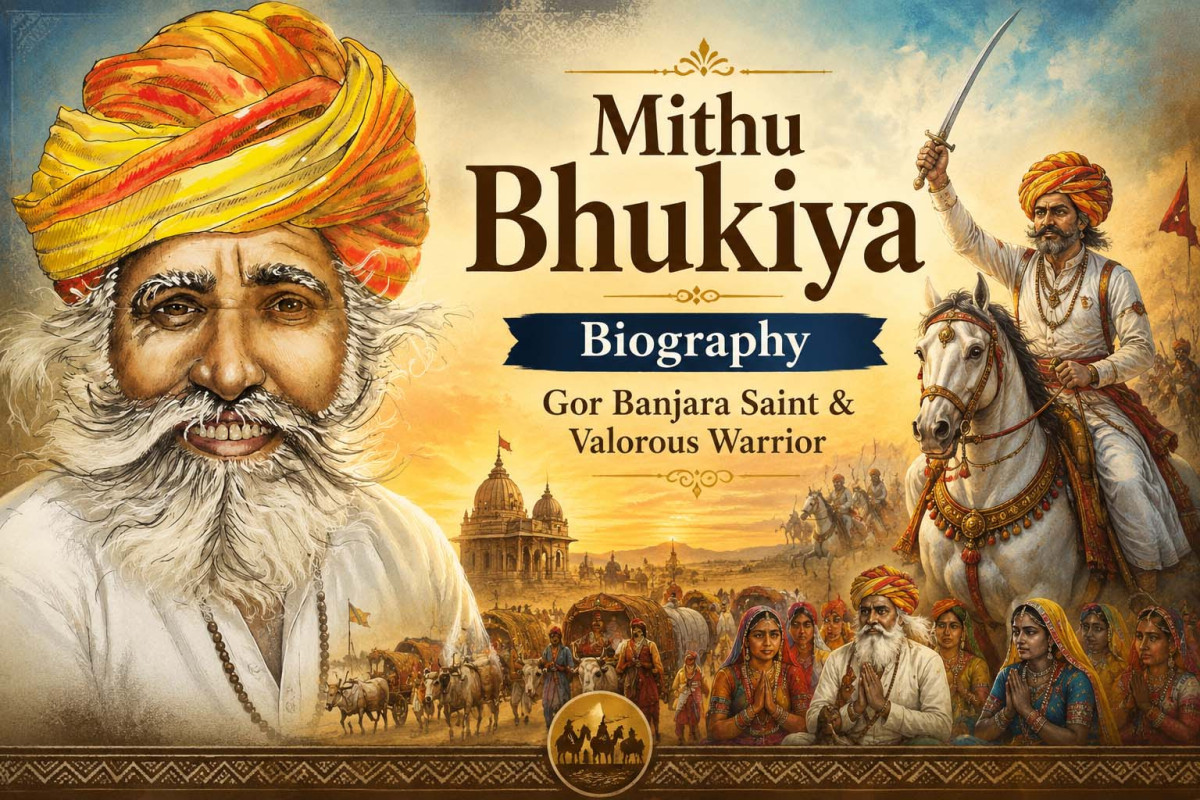
Mithu Bhukiya Biography | Gor Banjara Saint & Warrior
Mithu Bhukiya is one of the most revered spiritual figures in the history of the Gor Banjara community. Remembered as a saint, social reformer, and courageous leader, he occupies a unique place in Banjara folklore and oral traditions. Although much of his life has been preserved through community narratives rather than written records, Mithu Bhukiya continues to be worshipped across several Banjara Tandas, especially in Maharashtra, Telangana, Andhra Pradesh, Karnataka, and other regions where the Gor Banjara community resides.
He is widely regarded as a symbol of courage, justice, faith, and divine protection. Many Banjaras believe he was blessed by Goddess Jagadamba and possessed extraordinary spiritual powers similar to those attributed to Saint Sevalal Maharaj.
Quick Facts
| Details | Information |
|---|---|
| Full Name | Mithu Bhukiya |
| Known For | Gor Banjara Saint, Spiritual Leader, Valorous Warrior |
| Community | Gor Banjara |
| Religion | Hinduism |
| Worshipped As | Guardian Saint of the Gor Banjara Community |
| Active Period | Colonial Era (Traditional Accounts) |
| Main Regions Associated | Parbhani (Maharashtra), Anantapur (Andhra Pradesh) |
| Famous For | Spiritual leadership, miracles, protection of the community |
Early Life
Historical records about Mithu Bhukiya's birth, parents, and early childhood are limited. Most available information comes from Banjara oral traditions passed down through generations.
According to traditional accounts, Mithu Bhukiya spent much of his life in a Gor Banjara Tanda in the Parbhani district of present-day Maharashtra. Later in life, he travelled to present-day Andhra Pradesh and established Mithu Bhukiya Tanda at Pulaguttanalla, located between Guntakal and Gooty in Anantapur district.
During this period, the Gor Banjaras were widely engaged in the historic Ladeni trading system, transporting goods across different parts of India.
One of the Four Great Banjara Leaders
Traditional Banjara history remembers Mithu Bhukiya as one of the four prominent leaders of the colonial era. The other three respected leaders were:
-
Bhima Zharpla
-
Devla Naik
-
Rupala Naik
Together, they are remembered for their leadership and influence within the Gor Banjara society.
Spiritual Powers and Devotion
Banjara folklore describes Mithu Bhukiya as a saint blessed by Goddess Jagadamba. Community traditions state that he performed miraculous acts and protected his followers through divine grace.
Like Saint Sevalal Maharaj, Mithu Bhukiya is believed to have inspired faith, unity, and courage among the Banjaras during difficult times.
Even today, many Banjaras worship him as a guardian saint who blesses devotees with strength, prosperity, and protection.
The Story of Devla Naik and the Trial by Fire
One of the most well-known legends associated with Mithu Bhukiya involves Devla Naik.
According to oral tradition, after a robbery at Rampur in the Berar region, the local ruler accused Devla Naik and his followers of committing the crime. Although they denied the allegations, the ruler demanded that they prove their innocence through a trial involving red-hot iron rods.
Fearing the consequences despite their innocence, Devla Naik sought Mithu Bhukiya's blessings and promised that the community would worship him forever if they were protected.
When the trial took place, the followers reportedly held the heated iron rods without suffering burns. Witnessing this extraordinary event, the ruler accepted their innocence and apologized.
This story remains one of the most important legends highlighting Mithu Bhukiya's spiritual power and his role as the protector of the Gor Banjara people.
Worship in the Banjara Community
For generations, Mithu Bhukiya has been worshipped throughout Banjara settlements.
Traditional accounts describe a separate hut dedicated to him in many Tandas, marked by a white flag. Devotees offered prayers seeking courage, blessings, and protection before undertaking important community activities.
Many rituals associated with his worship have been preserved through oral traditions and vary from one region to another.
British Colonial Misrepresentation
During British rule, several tribal communities, including the Gor Banjaras, suffered discrimination under colonial policies.
British authorities frequently associated the community with criminal activities, eventually classifying many tribes under the Criminal Tribes Act of 1871. This resulted in surveillance, arrests, and widespread social stigma.
Some colonial writers also portrayed Mithu Bhukiya as being connected with robbery traditions. However, within the Gor Banjara community, he has always been remembered as a spiritual guide, protector, and social leader rather than as a criminal.
The British comparison of Mithu Bhukiya to "Robin Hood" reflected their interpretation of local folklore rather than the community's own understanding of his legacy.
Legacy
Although written historical records remain limited, Mithu Bhukiya's influence continues through Banjara oral literature, songs, stories, and religious traditions.
His memory survives in numerous Tandas where annual worship, traditional rituals, and community gatherings continue to honour his life and teachings.
Researchers also note that much of Banjara history remains undocumented, making oral traditions an important source for preserving the legacy of leaders such as Mithu Bhukiya.
Conclusion
Mithu Bhukiya remains one of the most respected spiritual figures in Gor Banjara history. Revered as a saint, courageous leader, and protector of the community, his life represents faith, resilience, and cultural identity.
While historians continue to explore written evidence about his life, his enduring presence in Banjara folklore demonstrates the deep respect and devotion he continues to receive from generations of the Gor Banjara community.
Frequently Asked Questions
What's Your Reaction?
 Like
2
Like
2
 Dislike
0
Dislike
0
 Love
0
Love
0
 Funny
0
Funny
0
 Wow
0
Wow
0
 Sad
0
Sad
0
 Angry
0
Angry
0



Comments (0)