

History of the Banjara Tribe: Origin, Migration and Heritage
Explore the history of the Gor Banjara community, from the Indus Valley Civilization and ancient trade routes to British rule, freedom struggle, and modern identity.

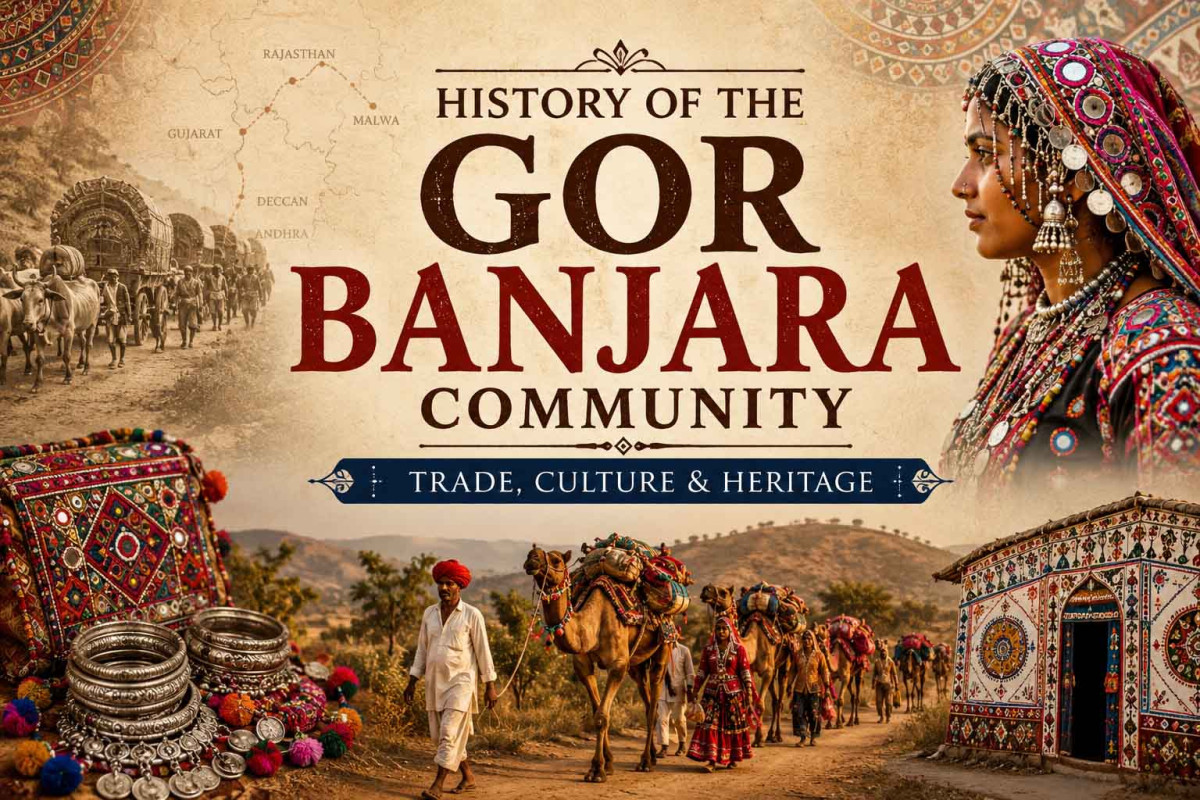
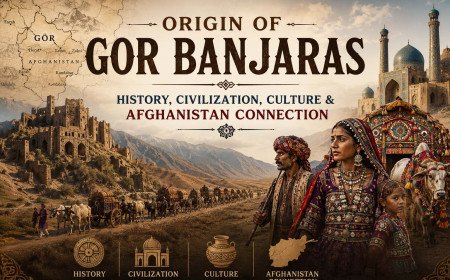
The Banjara tribe is one of the oldest and most culturally rich tribal communities in the Indian subcontinent. Known by various names such as Gor Banjara, Lambani, Lambadi, Labhana, Sugali, and Vanjara, the community has played a significant role in India's economic, cultural, and social history. For centuries, Banjaras were renowned as skilled traders, transporters, cattle breeders, and caravan leaders who connected distant kingdoms through extensive trade networks.
Despite their remarkable contribution to Indian civilization, much of Banjara history remained undocumented because of their nomadic lifestyle. Their traditions, customs, and historical memories were preserved through oral narratives, folk songs, legends, and community storytelling rather than written records. Today, researchers, historians, and members of the Banjara community continue to explore and preserve this remarkable heritage.
This article explores the origin, migration, historical development, and cultural heritage of the Banjara tribe while highlighting their contribution to Indian history.
Who Are the Banjaras?
The Banjaras are traditionally recognized as a nomadic trading community that travelled across India with large caravans of bullocks carrying food grains, salt, spices, textiles, and other essential goods. Long before the development of railways and modern transportation, Banjaras played an important role in supplying commodities to villages, kingdoms, armies, and marketplaces.
Their settlements, known as Thandas, were usually established outside villages. These settlements became centers for preserving their unique language, customs, traditions, governance, and cultural identity.
Today, Banjaras are found throughout India, especially in:
- Maharashtra
- Telangana
- Andhra Pradesh
- Karnataka
- Rajasthan
- Madhya Pradesh
- Gujarat
- Chhattisgarh
- Odisha
- Uttar Pradesh
- Haryana
- Punjab
They are officially recognized under different constitutional categories depending on the state, including Scheduled Tribe (ST), Scheduled Caste (SC), Other Backward Class (OBC), and Denotified Tribes (DNT).
Origin of the Banjara Tribe
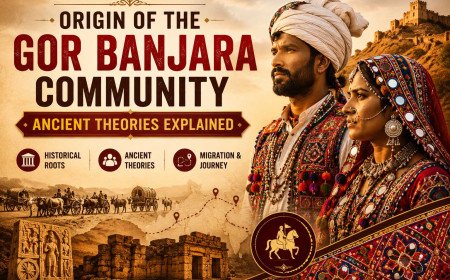
The exact origin of the Banjara community has long been debated among historians. Since the community preserved its history mainly through oral traditions, several theories have emerged regarding its ancestry.
One widely accepted theory suggests that the Banjaras originated in North-Western India, particularly in the regions of Rajasthan and Marwar. Many Banjara clans trace their ancestry to Rajput warrior lineages and maintain strong traditions linking themselves with the Kshatriya heritage.
Another traditional belief associates the Banjaras with the pastoral communities that cared for cattle during the time of Lord Krishna. According to community legends, descendants of these early pastoral groups gradually developed into skilled traders and transporters who travelled across the Indian subcontinent.
Although no single theory has been universally accepted, historians generally agree that the Banjaras have lived in India for many centuries and developed a unique identity through trade, migration, and cultural exchange.
Meaning of the Word "Banjara"
Several explanations have been proposed for the origin of the word Banjara.
Some scholars believe it derives from the Sanskrit words Vanij, Banij, or Baniya, all referring to trade and commerce. Since Banjaras were merchants and caravan traders, this explanation closely reflects their traditional occupation.
Another interpretation links the name to Lavana, meaning salt. Because Banjaras transported salt over long distances using bullock caravans, they became known as Lamani, Lambadi, or Lambani in many regions.
Throughout India, the community is known by different regional names, including:
- Gor Banjara
- Lambani
- Lambadi
- Sugali
- Labhana
- Vanjara
- Brinjari
Although these names differ, they refer to communities that share similar historical roots, traditions, and cultural identity.
Ancient History of the Banjara Community
Many researchers believe the history of the Banjara tribe stretches back thousands of years.
Some historians have suggested possible connections between ancient trading communities and the civilization of the Indus Valley. While definitive archaeological evidence is still limited, the Banjaras' long tradition of trade, transportation, and cattle management has encouraged scholars to investigate these historical links further.
Ancient Indian kingdoms depended heavily on reliable transportation systems for moving food grains, salt, metals, textiles, and military supplies. Banjaras became experts in organizing large caravans capable of travelling safely across forests, deserts, mountains, and plains.
This expertise made them indispensable to rulers, merchants, and armies throughout different historical periods.
The Traditional Occupation of Banjaras
Trade formed the foundation of Banjara society.
Using thousands of pack bullocks, Banjaras transported:
- Food grains
- Salt
- Rice
- Wheat
- Pulses
- Cotton
- Spices
- Forest products
- Household goods
Their caravans often travelled hundreds of kilometres across difficult terrain. Because they possessed extensive knowledge of routes, water sources, forests, and local markets, they became trusted transporters for both kingdoms and common people.
Before the arrival of railways, Banjaras served as one of India's most efficient long-distance logistics networks.
Social Organization
The Banjara community developed a highly organized social structure.
Each settlement, known as a Thanda, functioned almost like a self-governing village.
Leadership was provided by the Naik, who resolved disputes, supervised community welfare, and represented the Thanda during interactions with outsiders.
Traditional councils also played an important role in maintaining harmony, enforcing customary laws, and preserving cultural traditions.
This strong community organization enabled Banjaras to maintain their identity despite centuries of migration.
Major Banjara Clans
The Banjara community consists of several major clans, including:
- Rathod
- Ade
- Pawar (Panwar)
- Chauhan
- Vaditya (Jadhav in some traditions)
- Tori
Each clan contains numerous sub-clans and follows traditional marriage customs that prohibit marriage within the same lineage.
These clan systems continue to play an important role in Banjara society today.
Banjara Migration Across India and the World
Migration has been one of the defining characteristics of the Banjara community. For centuries, Banjaras travelled across the Indian subcontinent with large caravans of bullocks, transporting essential goods between kingdoms, villages, forests, and military camps. Their movement was not random but closely connected to trade routes, seasonal markets, and the needs of rulers and armies.
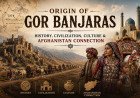
Historians generally believe that the Banjaras originally lived in the north-western regions of India, particularly Rajasthan and nearby areas. As trade expanded, different Banjara groups gradually migrated towards central and southern India. Over time, they established settlements in present-day Maharashtra, Telangana, Andhra Pradesh, Karnataka, Madhya Pradesh, Gujarat, Chhattisgarh, Odisha, and several other states.
The community's mobility also helped spread its language, customs, dress, music, and traditions across different regions. Although local influences shaped certain practices, Banjaras retained a strong cultural identity wherever they settled.
Some researchers have also explored historical links between the Banjara community and the Roma (Gypsy) people of Europe. Linguistic and cultural similarities have encouraged further academic research, although many aspects of this connection remain subjects of ongoing study.
Banjaras as India's Great Caravan Traders
Long before the arrival of railways and modern highways, Banjaras formed one of India's most important transport networks.
Their caravans often included hundreds or even thousands of pack bullocks carrying:
- Rice
- Wheat
- Salt
- Pulses
- Cotton
- Spices
- Forest products
- Household goods
- Military supplies
These caravans travelled through forests, mountains, deserts, and river valleys where permanent roads did not exist.
Banjaras became experts in identifying safe routes, locating water sources, protecting goods from theft, and managing long-distance travel. Their experience made them indispensable to merchants and rulers alike.
The success of many regional economies depended on the reliable transportation services provided by Banjara traders.
Role During the Mughal Period
During the medieval period, Banjara caravans became closely associated with military logistics.
Large armies required enormous quantities of food grains, fodder, salt, and daily necessities. Banjaras supplied these essentials while accompanying military campaigns across different parts of India.
Historical accounts mention that Banjara leaders organized large caravans capable of moving supplies efficiently even through difficult terrain. Their knowledge of routes and local geography allowed armies to continue campaigns far from major cities.
Because of this expertise, Banjaras earned the trust of several rulers and military commanders.
The Impact of British Rule
The arrival of British colonial rule brought major changes to the traditional Banjara way of life.
One of the biggest transformations was the construction of railways.
For centuries, Banjaras had transported goods using bullock caravans. However, rail transport proved faster, cheaper, and capable of carrying much larger quantities of goods. As rail networks expanded across India, demand for traditional caravan transport declined rapidly.
This economic change affected thousands of Banjara families whose livelihoods depended on long-distance trade.
Many communities were forced to abandon their traditional occupations and seek alternative sources of income such as agriculture, livestock rearing, wage labour, and forest-based livelihoods.
The Criminal Tribes Act of 1871
One of the darkest chapters in Banjara history occurred during British colonial rule.
In 1871, the British Government enacted the Criminal Tribes Act, under which several nomadic and semi-nomadic communities—including many Banjara groups—were officially labelled as "criminal tribes."
This law was based on colonial assumptions rather than individual criminal responsibility. Entire communities were subjected to surveillance, restrictions on movement, compulsory registration, and social discrimination.
The Act severely damaged the reputation and social status of the Banjara community. Many families lost opportunities for employment, education, and social acceptance because of this unjust classification.
After India gained independence, the Criminal Tribes Act was repealed in 1952, and the affected communities became known as Denotified Tribes (DNTs).
Although the law was abolished, its social and economic effects continued to influence many Banjara communities for decades.
Preservation of Banjara Culture
Despite centuries of migration and political change, Banjaras successfully preserved many aspects of their unique cultural identity.
Traditional Banjara culture includes:
- Rich oral traditions
- Folk songs
- Storytelling
- Community festivals
- Traditional embroidery
- Colourful clothing
- Jewellery
- Dance
- Music
- Clan traditions
- Thanda-based community life
Much of this heritage was preserved through family traditions rather than written records.
Even today, cultural festivals continue to play an important role in strengthening community identity.
Language: Gor Boli
The traditional language of the community is known as Gor Boli (also called Gor Mati Boli or Brinjari).
It belongs to the Indo-Aryan language family and shares similarities with Hindi, Rajasthani, and several North Indian languages.
Although many Banjaras now speak regional languages such as Marathi, Telugu, Kannada, or Hindi, Gor Boli continues to serve as an important symbol of cultural identity.
Across different states, efforts are being made to preserve the language through literature, music, education, and digital media.
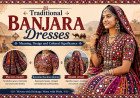
Traditional Dress and Embroidery
The colourful attire of the Banjara community is one of its most recognised cultural symbols.
Traditional women's clothing features:
- Bright embroidered skirts
- Decorated blouses
- Veils with mirror work
- Handmade ornaments
- Silver jewellery
- Bangles
- Nose rings
- Necklaces
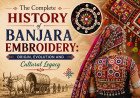
Banjara embroidery is internationally admired for its intricate handwork, geometric patterns, mirrors, shells, and vibrant colours.
Traditional men's dress generally includes turbans, dhotis, kurtas, and other regional garments depending on the area where the community resides.
Today, Banjara embroidery has become an important source of cultural pride and artistic recognition.
Traditional Food
The traditional Banjara diet reflects a practical lifestyle suited to travel and physical labour.
Common foods include:
- Millet rotis
- Wheat bread
- Daliya
- Ghuggari
- Rice
- Lentils
- Goat meat
- Chicken
- Seasonal vegetables
Food traditions vary from region to region, but hospitality remains an important cultural value within Banjara society.
Festivals and Community Celebrations
Banjaras celebrate many traditional and regional festivals with enthusiasm.
Important festivals include:
- Teej
- Holi
- Diwali
- Dussehra
- Ugadi
- Ganesh Chaturthi
These celebrations often feature traditional dances, folk songs, community feasts, and religious ceremonies.
Festivals also strengthen social bonds and help preserve cultural traditions across generations.
The Modern Identity of the Banjara Community
Today, the Banjara community is one of India's largest and most widely distributed tribal and nomadic-origin communities. Over the centuries, they have transitioned from a nomadic trading lifestyle to settled villages and towns while preserving many aspects of their cultural identity.
Banjaras are known by different names across India, including Gor Banjara, Lambani, Lambadi, Labhana, Sugali, Vanjara, and Brinjari. Depending on the state, they are classified under different constitutional categories such as Scheduled Tribe (ST), Scheduled Caste (SC), Other Backward Class (OBC), or Denotified Tribe (DNT).
Although modernization has transformed education, employment, transportation, and communication, many Banjaras continue to celebrate their traditional festivals, speak Gor Boli within their families, and maintain their rich cultural heritage.
Challenges Faced by the Community
Despite significant progress, many Banjara communities continue to face social and economic challenges.
Some of the major issues include:
- Limited educational opportunities in remote areas
- Economic inequality
- Loss of traditional occupations
- Preservation of Gor Boli among younger generations
- Protection of traditional art and embroidery
- Recognition and documentation of Banjara history
- Equal access to government welfare and development programmes
Community organizations, scholars, educators, and social workers are actively working to preserve Banjara heritage while promoting education, skill development, and cultural awareness.
Revival of Banjara Heritage
In recent decades, there has been renewed interest in documenting and promoting Banjara history and culture.
Several initiatives have contributed to this revival:
- Publication of books on Banjara history
- Academic research on language and culture
- Preservation of folk songs and oral traditions
- Promotion of Banjara embroidery through exhibitions
- Digital archives and community websites
- Cultural festivals and youth programmes
- Social media platforms dedicated to Banjara heritage
These efforts are helping younger generations reconnect with their roots and ensuring that traditional knowledge is preserved for the future.
Contribution of the Banjara Community
The Banjara community has made significant contributions to Indian society throughout history.
These include:
- Establishing one of India's earliest long-distance transport systems
- Supporting trade between kingdoms through bullock caravans
- Preserving a rich tradition of folk music, dance, and storytelling
- Developing world-renowned embroidery and textile art
- Maintaining unique systems of community governance through Thandas
- Enriching India's cultural diversity through language, festivals, and customs
Today, Banjara artists, writers, teachers, entrepreneurs, public servants, and social leaders continue to contribute to national development while promoting their cultural identity.
Why the History of the Banjaras Matters
Understanding the history of the Banjara tribe is important because it highlights the role of indigenous and nomadic communities in shaping India's social and economic development.
For centuries, Banjaras connected regions through trade, transported essential goods before modern infrastructure existed, and preserved a distinctive culture despite migration and political change.
Their story is one of resilience, adaptation, and cultural continuity. By documenting and sharing this history, future generations can better appreciate the diversity and heritage of India's tribal communities.
Conclusion
The history of the Banjara tribe is a remarkable journey of migration, trade, resilience, and cultural preservation. From their early role as caravan traders to their vibrant cultural traditions, Banjaras have contributed significantly to the social and economic history of the Indian subcontinent.
Although colonial policies disrupted their traditional livelihood and subjected many communities to discrimination, the Banjaras preserved their language, customs, festivals, and community life. Today, they continue to strengthen their identity through education, cultural revival, research, and digital initiatives.
As awareness grows, documenting authentic Banjara history becomes increasingly important—not only for the community itself but also for anyone interested in India's diverse cultural heritage.
Frequently Asked Questions
What's Your Reaction?
 Like
2
Like
2
 Dislike
0
Dislike
0
 Love
0
Love
0
 Funny
0
Funny
0
 Wow
0
Wow
0
 Sad
0
Sad
0
 Angry
0
Angry
0





Comments (0)