

Banjara Clans & Gotras Marriage System | Complete List of Gor Banjara Gotras
Learn about the Banjara clan and gotra system, traditional marriage rules, major Gor Banjara clans, and the complete list of Rathod, Pawar, Chavan, Jadhav, Banoth and Turi gotras.

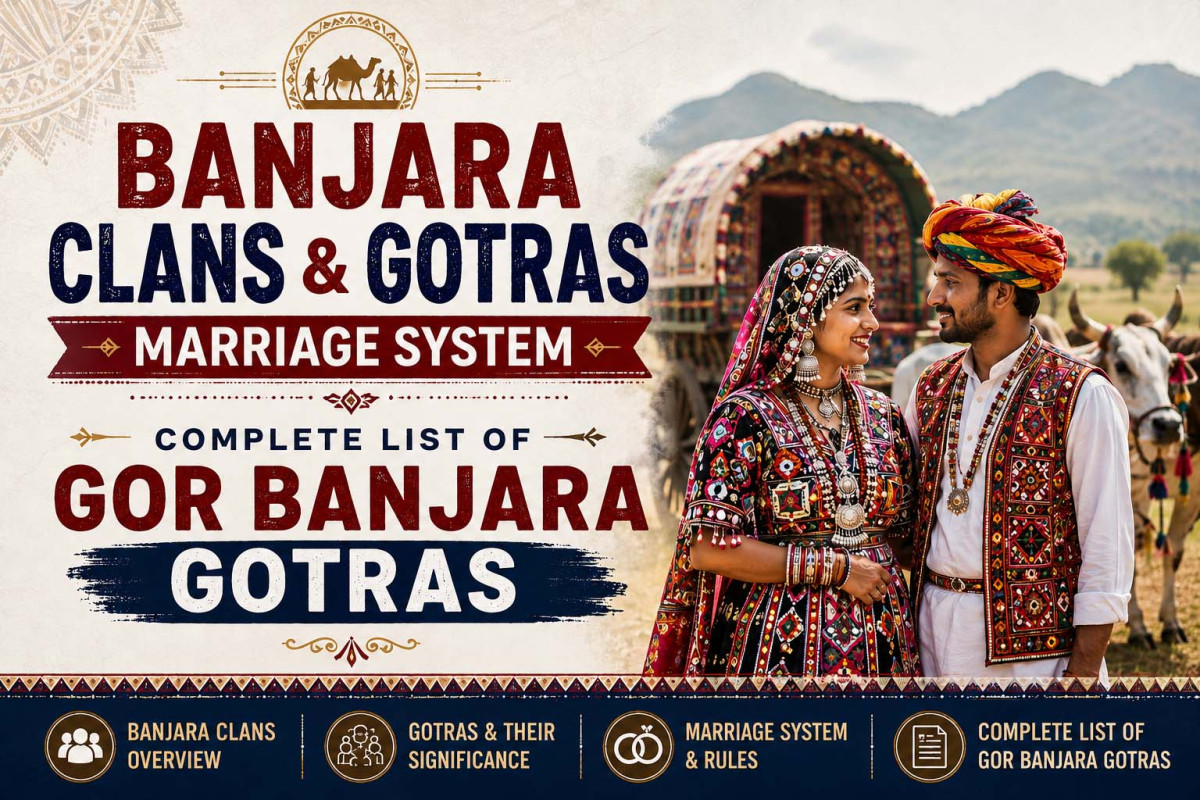
Banjara Clans & Gotras Marriage System
The Banjara (Gor Banjara, Lambani, Lambadi, Sugali, Gor Mati) community possesses one of the richest clan-based social systems in India. The traditional Gotra (Gothra) system has played an important role in maintaining family lineage, regulating marriages, and preserving community identity for centuries.
Although Banjaras today live across Maharashtra, Telangana, Andhra Pradesh, Karnataka, Rajasthan, Gujarat, Madhya Pradesh, Chhattisgarh, and other states, the clan system continues to remain an important part of community life.
This article explains the Banjara marriage system, the major clans (Gor Samuh), regional variations, and provides a comprehensive list of documented gotras.
What is a Gotra in the Banjara Community?
A Gotra represents a person's ancestral lineage. Members belonging to the same gotra are believed to descend from a common ancestor.
For this reason, individuals belonging to the same gotra are traditionally regarded as brothers and sisters, even if they are not closely related by blood.
The gotra system functions as a social mechanism to avoid marriages within the same paternal lineage and preserve genetic diversity.
Among Banjaras, gotra identity is inherited from the father, making the community traditionally patrilineal.
Oral Tradition and Missing Gotras
Unlike communities that maintained extensive written genealogical records, much of Banjara history was preserved through oral tradition.
For centuries, elders memorized and transmitted:
- Family lineages
- Clan histories
- Marriage customs
- Gotra names
- Traditional laws
Because these traditions depended largely on memory, spelling variations and regional differences naturally developed over generations.
As a result:
- Some gotras appear under different spellings.
- Some padas (sub-lineages) are remembered differently in different states.
- Some gotras may not appear in historical lists despite being traditionally recognized.
For example:
- Desaavath / Desavath
- Bhanoth / Banoth
- Khatravath / Khatroth
- Rupavath / Roopavath
- Meghavath / Megavath
These variations do not necessarily indicate different lineages; they often represent regional pronunciation or transcription differences.
Traditional Banjara Marriage Rules
The Banjara community follows a well-established traditional marriage system based on gotra exogamy.
1. Marriage within the Same Gotra is Prohibited
The most fundamental rule is:
People sharing the same gotra cannot marry each other.
Members of the same gotra are traditionally considered descendants of one ancestor and are therefore treated as siblings.
For example:
- Khola × Khola ❌
- Meghavath × Meghavath ❌
- Banoth × Banoth ❌
Such marriages are traditionally prohibited in most Banjara communities.
2. Same-Clan Marriages are Often Avoided
Many Banjara Tandas also discourage marriages within the same major clan (Gor Samuh), even if the gotras are different.
For example:
- Rathod → Rathod
- Pawar → Pawar
- Chavan → Chavan
- Jadhav → Jadhav
Practices vary by region, and community customs may differ.
3. Father's Gotra is Considered
In most Banjara communities, lineage follows the father.
Therefore:
- A daughter belongs to her father's gotra.
- A son belongs to his father's gotra.
The mother's gotra is generally not used for determining gotra identity in many South Indian Banjara traditions.
4. Regional Differences in Marriage Customs
Marriage customs differ significantly across India.
South India
In several Banjara communities of Telangana, Andhra Pradesh, and Karnataka, marriages such as:
- Maternal uncle's daughter (Mama's daughter)
- Father's sister's daughter
have historically existed.
North India
Many northern communities prohibit marriage within both:
- Father's lineage
- Mother's lineage
These customs vary by region and community leadership.
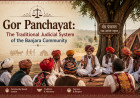
5. Tanda Panchayat
Traditionally, the Tanda Panchayat verified the compatibility of families before approving marriages.
The Panchayat ensured that:
- Gotras were different.
- Traditional customs were respected.
- Family histories were examined.
- Community disputes were avoided.
Today, many families continue these practices alongside modern legal marriage procedures.
Major Banjara Clans (Gor Samuh)
Most historical sources classify Banjaras into four principal clans, while Banoth and Turi are regarded by many scholars as subdivisions of the Rathod lineage. However, some regional traditions recognize them as independent clans.
The six widely recognized clan groupings are:
- Rathod (Bhukya)
- Pawar
- Chavan (Chauhan)
- Jadhav (Vadatiya)
- Banoth (Aade)
- Turi
1. Rathod (Bhukya)
Origin: Marwar (Rajasthan)
Also Known As:
- Rathod
- Rathore
- Bhukya
- Bhukia
- Rathoda
The Rathod clan is considered the largest Banjara lineage, with more than seventy documented gotras.
Common Rathod Gotras
Aadoth, Aaloth, Ade, Bhukya, Bhilavat, Balan, Banoth, Bhanavath, Bhoja, Bhojavath, Bartiya, Degavath, Depavath, Danavath, Dheeravath, Devsoth, Dharamsoth, Dhalavath, Dungavath, Haravath, Jatroth, Jattoth, Jendhavath, Khola, Kadavath, Karamsi, Karamtoth, Karnavath, Khanavath, Khatroth, Kethavath, Khilavath, Khimavath, Kunthavath, Kumavath, Lavori, Marjoth, Meghavath, Meravath, Mohan, Muchhal, Mudavath, Musavath, Nenavath, Panavath, Pathlavath, Pithavath, Rajavath, Ramavath, Ranasoth, Rathlavath, Ratna, Rupavath, Sabdasoth, Sangavath, Tepavath and Turi.
2. Pawar (Panwar)
Origin: Paramara Rajput lineage of Malwa.
Also called:
- Panwar
- Pamhar
- Pawar Gor
Common Pawar Gotras
Amgoth, Aaivoth, Banni, Binjravath, Chalavath, Chaivoth, Goram, Injravath, Inloth Pammar, Jarathla, Lunsavath, Lokavath, Pamdiya, Sarabani, Tarabanni, Vislavath, Vankdoth, Vinjravath and Zarapla.
3. Chavan (Chauhan)
The Chavan clan traces its origin to the Chauhan Rajputs of Rajputana.
Common Chavan Gotras
Sapavath (Sabavat), Palthiya, Mood, Lavadiya, Korra, Keloth, Jaath, Chapavath, Chauradiya, Chitravath and Dumavath.
Many regional traditions also recognize Desavath (Desaavath) within the broader Chauhan lineage, although it is absent from several historical compilations.
4. Jadhav (Vadatiya)
The Jadhav lineage is also known as Vadatiya or Vaditya.
This is another major Banjara clan with numerous documented gotras.
Common Jadhav Gotras
Ajmera, Badavath, Barmavath, Bhagvandas, Bharoth, Bodavath, Chengavath, Dharavath, Desavath, Dhenapadiya, Doongriya, Dungaroth, Gangavath, Goram, Guguloth, Hajavath, Halavath, Hannavath, Harjipadiya, Harkavath, Jadiya, Jajigiri, Jaloth, Jayth, Jejavath, Kagla, Khannavath, Kharpathi, Khetavath, Kunsoth, Lakhawat, Lokhavath, Lonavath, Lulavath, Maloth, Merajoth, Mohandas, Nangoth, Nunvath, Padya, Parpathani, Pemavath, Poosanmal, Porika, Rathnavath, Rudavath, Salavath, Sejavath, Tejavath, Teravath, Tuvar, Undavath, Vadtya and Aatrab Rushi.
5. Aade (Banoth)
Some traditions recognize Aade or Banoth as a separate clan, while others classify it within the Rathod lineage.
Common Banoth Gotras
Sabadosoth, Rupavath, Panavath, Murhavat, Munavath, Mudavath, Muchad, Lavori, Kunthavath, Jatroth, Jatoth, Dheeravath, Dharamsoth, Dhanavath, Bhotavath, Bhanavath, Banoth, Bala, Aalodh, Aadoth and Aade.
6. Turi
The Turi lineage is recognized independently in some regions.
Common Turi Gotras
- Winjod
- Tegawat
- Rajawat
- Jasawat
Other Documented Banjara Gotras
Several gotras appear in historical records but have not yet been conclusively assigned to one major clan. These include:
Aamaa, Aanaa, Aatbhayya, Alaavleeya, Arsi, Basaavath, Bhora, Bhoraavath, Bhunsoth, Bidaano, Chaampa, Cheetah, Chood, Daas, Daesa, Daulavath, Desa, Devi, Devji, Dhakaliya, Dhana, Doodavath, Dunger, Dungha, Elaasi, Gaalaa, Gaja, Ghana, Golaani, Gole, Goreebaavath, Haaku, Haapaavath, Haaravath, Heera, Hoba, Holaani, Jetha, Kaaba, Kamma, Kapoor, Karamchand, Khola, Kohla, Kumba, Lachama, Laksoth, Lambaadhota, Logaala, Lola, Maadhu, Maagaavath, Mannoth, Meeraaja, Mepalaan, Molaani, Naathaavath, Nagga, Naranaavath, Ooda, Padma, Pema, Poona, Ranjit, Rojwaane, Rooda, Saavaare, Sabaano, Soma, Thakkar, Thala, Tholaani, Tokaraavath, Tova, Vedi, Veeroth and Vudsi.
State-wise Distribution of Major Clans
Today the major Banjara clans are spread across India.
Maharashtra: Nanded, Latur, Beed, Osmanabad, Nagpur, Solapur, Yavatmal
Telangana: Adilabad, Nizamabad, Karimnagar, Medak, Nalgonda
Andhra Pradesh: Kurnool, Kadapa, Nellore, Guntur
Karnataka: Bidar, Ballari, Raichur, Kalaburagi
Rajasthan: Jodhpur, Barmer, Nagaur, Jalore
Gujarat: Banaskantha, Sabarkantha, Dahod
Madhya Pradesh: Betul, Chhindwara, Hoshangabad
Modern Perspective on the Gotra System
The gotra system remains an important cultural identity among Banjaras. However, modern society also recognizes:
- Individual freedom.
- Legal marriage rights.
- Scientific understanding of genetics.
- Equality of all clans.
No gotra is considered superior or inferior to another. Every clan forms an equal part of the rich cultural heritage of the Gor Banjara community.
Many young Banjaras today use digital matrimony platforms that include gotra information to help families identify traditionally compatible matches while respecting both cultural values and modern legal principles.
Conclusion
The Banjara gotra system is much more than a list of surnames. It represents centuries of history, migration, oral tradition, and community identity. Although spellings and classifications vary from region to region, the underlying purpose remains the same—to preserve ancestral lineage, strengthen community bonds, and regulate traditional marriage practices.
As research continues and historical records become better documented, additional gotras and regional variations may emerge. Community participation and documentation are essential for preserving this valuable heritage for future generations.
Whether you identify as Rathod, Pawar, Chavan, Jadhav, Banoth, Turi, or another traditional lineage, every gotra contributes equally to the diverse and vibrant legacy of the Gor Banjara people.
Frequently Asked Questions
What's Your Reaction?
 Like
8
Like
8
 Dislike
0
Dislike
0
 Love
2
Love
2
 Funny
0
Funny
0
 Wow
2
Wow
2
 Sad
0
Sad
0
 Angry
0
Angry
0


Comments (1)