
Traditional Political Organization of the Banjara Tanda: Roles of Nayak, Davo, Karbhari, and Davsan
Learn how the traditional Banjara Tanda was governed through the leadership of the Nayak, Davo, Karbhari, and Davsan, and understand the importance of the Gor Panchayat.

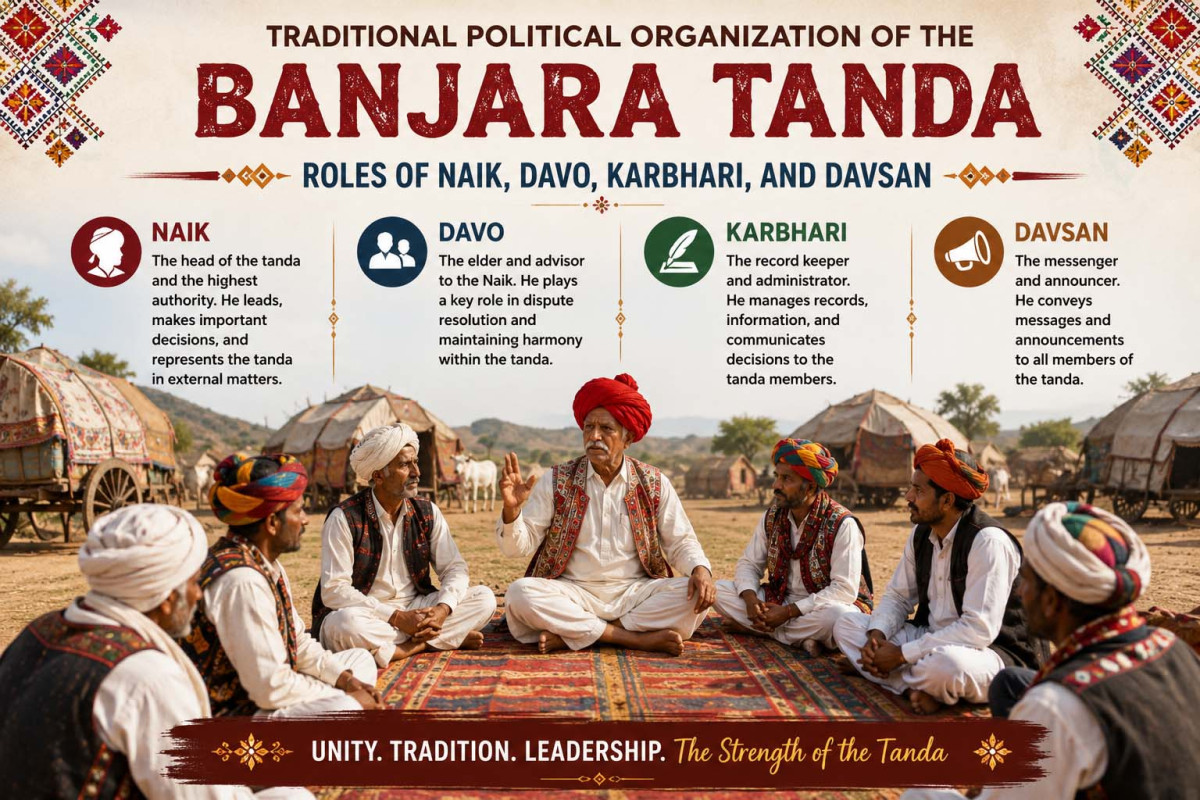
The Banjara community is one of India's oldest and most culturally rich tribal communities, known for its vibrant traditions, strong social values, and unique system of self-governance. Long before modern local administrative systems became widespread, Banjaras had developed an organized political and judicial structure within their settlements, known as Tandas.
The traditional political organization of a Tanda was designed to maintain harmony, resolve disputes, preserve customs, and ensure the welfare of every family. This governance system relied on respected community leaders who worked together to administer justice and oversee social affairs.
At the center of this system were four important positions:
- Nayak (President)
- Davo (Vice-President)
- Karbhari (Secretary)
- Davsan (Senior Elders)
Together, these leaders formed the backbone of traditional Banjara administration and played a crucial role in preserving the community's identity for generations.
What is a Tanda?
A Tanda is a traditional settlement of the Banjara community. Historically, Banjaras lived in groups while traveling across different regions of India as traders and transporters. As they gradually settled permanently, these settlements became known as Tandas.
Unlike ordinary villages, a Tanda functioned as a close-knit social unit where members shared common customs, traditions, festivals, and responsibilities. Every Tanda had its own leadership system to manage public affairs, maintain discipline, and settle disputes internally.
This self-governing structure made the Tanda largely independent in handling local issues.
Traditional Political Organization of the Tanda
The political organization of a traditional Banjara Tanda was carefully structured. Rather than concentrating authority in one individual, responsibilities were shared among experienced leaders.
The principal offices included:
- Nayak – Head of the Tanda
- Davo – Deputy Leader
- Karbhari – Administrative Executive
- Davsan – Council of Senior Members
Each position had distinct duties while working collectively for the welfare of the community.
Nayak: The Head of the Tanda
The Nayak was the highest authority within the Tanda and served as its chief administrator.
Traditionally, this position was hereditary, often passing within respected families. However, the successor was expected to possess leadership qualities and earn the confidence of the community.
Responsibilities of the Nayak
The Nayak supervised every important activity within the settlement, including:
- Maintaining peace and order
- Presiding over community meetings
- Settling disputes
- Representing the Tanda before outsiders
- Organizing festivals and social ceremonies
- Protecting traditional customs
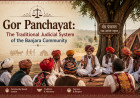
- Leading the Gor Panchayat
The Nayak was expected to be honest, wise, courageous, experienced, and impartial. Community members respected his decisions because they believed he acted in the interest of everyone.
During marriages, religious ceremonies, and important social events, the presence of the Naik was considered highly significant.
Qualities Expected in a Nayak
A successful Naik was expected to demonstrate:
- Integrity
- Honesty
- Leadership ability
- Wisdom
- Knowledge of customs
- Administrative skill
- Courage
- Fairness in judgment
Rather than ruling through authority alone, the Nayak earned respect through his character and service to the community.
Davo: The Vice-President
The Davo served as the deputy leader of the Tanda and was second only to the Nayak.
Whenever the Nayak was absent, the Davo assumed all administrative responsibilities and ensured that the daily functioning of the Tanda continued without interruption.
Major Duties of the Davo
The Davo assisted the Nayak by:
- Supervising community affairs
- Helping resolve disputes
- Coordinating meetings
- Advising the Nayak
- Maintaining continuity of leadership
Like the Nayak, this office was generally hereditary, although community approval remained important.
The Davo acted as a trusted advisor and dependable administrator.
Karbhari: The Secretary and Executive Officer
The Karbhari functioned as the executive administrator of the Tanda.
While the Nayak provided leadership, the Karbhari handled much of the day-to-day administration.
Responsibilities of the Karbhari
These included:
- Implementing decisions made by the Nayak
- Organizing Panchayat meetings
- Managing community records
- Coordinating communication
- Supervising administrative work
- Assisting both the Nayak and Davo
The Karbhari ensured that decisions taken during meetings were effectively carried out.
In many ways, the Karbhari served as the operational backbone of the Tanda administration.
Davsan: The Council of Senior Elders
The Davsan consisted of respected elderly members of the community.
These individuals did not exercise executive authority but played an essential advisory role.
Duties of the Davsan
Their responsibilities included:
- Advising the Nayak
- Participating in Panchayat discussions
- Providing guidance based on experience
- Helping resolve disputes
- Preserving traditions
- Representing collective community wisdom
The Naik generally listened carefully to the opinions of the Davsan before making important decisions.
Their presence reflected the democratic spirit of consultation within traditional Banjara society.
Other Important Functionaries
Apart from the four principal leaders, the Tanda also included several supporting functionaries.
Dalia
The Dalia acted as the community messenger.
His duties included:
- Informing members about Panchayat meetings
- Summoning people when required
- Bringing individuals before the Panchayat
- Conveying official announcements
Dhadi
The Dhadi was a traditional folk singer.
Besides preserving Banjara oral history through songs, the Dhadi often played a role in arranging marriages and participating in cultural ceremonies.
Navi
The Navi served as the community barber while also performing various social and ceremonial duties within the Tanda.
Although these positions carried lower social status than the leadership offices, they remained important for the functioning of traditional community life.
Collective Decision-Making
One of the remarkable aspects of the Banjara political system was its emphasis on collective leadership.
Although the Nayak held the highest authority, he rarely acted alone.
Important matters were discussed with:
- Davo
- Karbhari
- Davsan
- Other respected elders
Only after hearing different opinions would the Nayak announce a final decision.
This process promoted fairness, transparency, and community participation.
Leadership Beyond Administration
The responsibilities of Tanda leaders extended far beyond governance.
They also:
- Preserved cultural traditions
- Protected community values
- Organized festivals
- Encouraged unity
- Resolved family disputes
- Guided younger generations
- Represented the Tanda before neighboring communities
Thus, political leadership and cultural leadership were closely connected.
Importance of the Traditional Political System
The traditional political organization provided several benefits:
- Effective local governance
- Quick settlement of disputes
- Strong community unity
- Preservation of customs
- Respect for elders
- Social discipline
- Collective responsibility
- Cultural continuity
Even without formal government institutions, the Tanda functioned efficiently because every member respected its leadership structure.
Relevance in Modern Times
Today, many Banjaras live in towns and cities, and government institutions now handle most legal and administrative matters.
Nevertheless, the traditional leadership system continues to hold cultural significance.
During festivals, marriages, social gatherings, and community events, respected elders and traditional leaders still play important roles in guiding the community.
Modern Banjara organizations also draw inspiration from the values of unity, consultation, responsibility, and mutual respect that characterized the traditional Tanda administration.
Conclusion
The traditional political organization of the Banjara Tanda reflects a well-developed system of community governance that balanced authority with collective responsibility. Through the leadership of the Nayak, the support of the Davo, the administrative skills of the Karbhari, and the wisdom of the Davsan, the Banjara community successfully maintained social order and preserved its cultural identity for generations.
Although society has evolved, this indigenous governance model remains an important part of Banjara heritage. Understanding these traditional institutions helps us appreciate the community's rich history, democratic practices, and enduring commitment to unity and self-governance.
Frequently Asked Questions
What's Your Reaction?
 Like
3
Like
3
 Dislike
0
Dislike
0
 Love
0
Love
0
 Funny
0
Funny
0
 Wow
0
Wow
0
 Sad
0
Sad
0
 Angry
0
Angry
0






Comments (0)