
Evolution of Banjara Leadership and Governance: From Traditional Tandas to Modern Organizations
Explore the evolution of Banjara leadership from traditional Tandas and Gor Panchayat to modern organizations promoting education, culture, and community development.

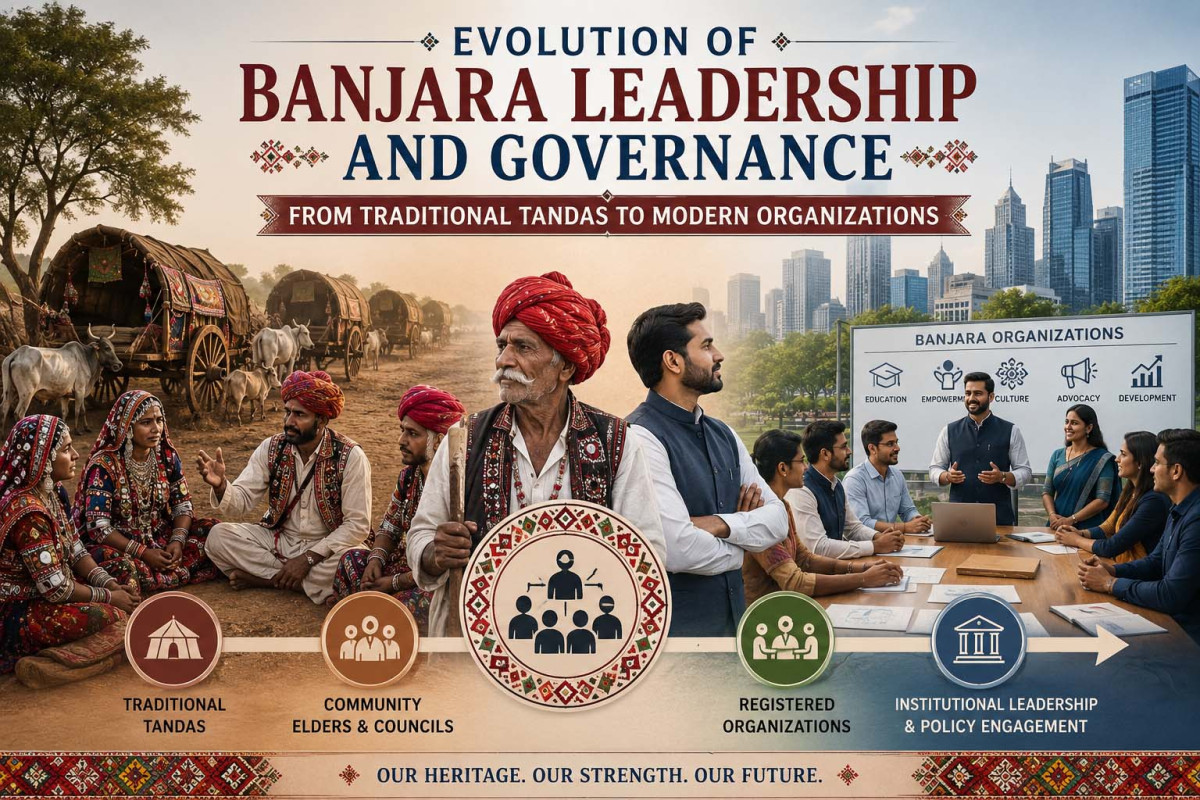
The Banjara community, also known as Lambani, Lambadi, Gor, or Sugali in different regions of India, has a long and distinguished history of self-governance. For centuries, Banjaras lived in organized settlements called Tandas, where community affairs were managed through a traditional leadership system based on customs, collective responsibility, and mutual respect.
The governance of a Tanda was not merely administrative; it was deeply connected to the social, cultural, religious, and economic life of the community. Leadership positions such as the Naik, Davo, Karbhari, and Davsan ensured peace, resolved disputes, protected traditions, and guided the community through changing times.
However, modernization, urbanization, education, constitutional governance, and migration have transformed the traditional political structure of the Banjaras. While many customary institutions continue to hold cultural importance, new organizations and community associations have emerged to address the needs of a rapidly changing society.
This article explores the remarkable evolution of Banjara leadership—from the traditional governance of the Tanda to the establishment of modern community organizations.
Understanding the Traditional Tanda
A Tanda is a traditional Banjara settlement where families live together while maintaining a shared cultural identity.
Historically, Banjaras were renowned traders, transporters, and caravan merchants who traveled across India transporting goods such as salt, grains, spices, and textiles. As they gradually adopted a settled lifestyle, permanent Tandas developed throughout different parts of the country.
Every Tanda functioned almost like a self-governing village with its own leadership, customs, and judicial system.
The people relied on community leaders rather than outside authorities for resolving disputes and maintaining order.
The Traditional Leadership Structure
The administration of the Tanda was organized around several important positions.
These included:
- Naik – President and chief administrator
- Davo – Vice-President
- Karbhari – Secretary and executive officer
- Davsan – Senior advisers and elders
Together, these leaders formed the political organization responsible for managing the affairs of the settlement.
Each office carried distinct responsibilities while working together for the welfare of the community.
The Naik: Symbol of Leadership
The Naik was the supreme authority within the Tanda.
Traditionally, the position was hereditary and usually remained within respected families. However, heredity alone was not sufficient. A Naik was expected to possess qualities that inspired confidence among the people.
These qualities included:
- Honesty
- Integrity
- Courage
- Wisdom
- Administrative ability
- Knowledge of customs
- Fairness
- Leadership skills
The Naik supervised every important activity within the settlement and represented the Tanda before neighboring communities.
Installation of a New Naik
One of the most significant traditions associated with Banjara leadership was the installation ceremony of a new Naik.
Whenever a new leader assumed office, neighboring Tandas often participated in a ceremonial gathering.
A special ritual known as "Page" was performed during which a ceremonial turban was placed on the new Naik.
This ritual symbolized:
- Acceptance by the community
- Transfer of authority
- Responsibility toward the people
- Preservation of tradition
The ceremony reinforced unity among different Tandas and highlighted the importance of collective recognition.
Hereditary Leadership with Community Approval
Although the offices of Naik and Karbhari were generally hereditary, succession was not always automatic.
Traditionally:
- The eldest son often became the next Naik.
- If he was considered incapable, another suitable son or close relative could be chosen.
- In certain situations, respected members of the community participated in selecting the successor.
This flexibility ensured that leadership remained effective while respecting family traditions.
Role of the Davo
The Davo served as the deputy leader of the Tanda.
His responsibilities included:
- Assisting the Naik
- Supervising administrative work
- Managing community affairs
- Acting as leader during the Naik's absence
- Supporting Panchayat activities
The Davo ensured continuity of governance whenever the Naik was unavailable.
Role of the Karbhari
The Karbhari functioned as the secretary and chief executive officer of the Tanda.
His duties included:
- Organizing meetings
- Implementing decisions
- Maintaining communication
- Coordinating community activities
- Assisting the Naik in administration
The efficiency of the Tanda often depended upon the administrative abilities of the Karbhari.
Importance of the Davsan
The Davsan consisted of experienced elderly members of the community.
Although they did not possess executive authority, they provided:
- Guidance
- Traditional knowledge
- Advice during disputes
- Community wisdom
- Moral support
The Naik generally consulted these elders before making important decisions.
This system reflected the Banjara belief that experience should guide leadership.
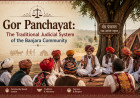
Gor Panchayat: The Judicial Authority
An essential part of traditional governance was the Gor Panchayat.
The Panchayat maintained:
- Law and order
- Social discipline
- Community harmony
- Traditional customs
- Conflict resolution
Most disputes involving marriage, family matters, property, theft, and social conduct were settled internally without approaching government authorities.
This institution helped preserve peace within the Tanda for generations.
Leadership Beyond Administration
Traditional leaders were responsible for much more than governance.
They also:
- Organized festivals
- Conducted community meetings
- Preserved customs
- Encouraged social unity
- Guided younger generations
- Represented the community externally
Thus, leadership combined political, social, cultural, and religious responsibilities.
Factors That Changed Traditional Governance
During the twentieth century, several developments transformed Banjara leadership.
Urbanization
Many Banjara families moved from traditional Tandas to towns and cities in search of employment, education, and better living conditions.
As communities became geographically dispersed, traditional governance became more difficult.
Modern Education
Education introduced new ideas regarding:
- Democracy
- Equality
- Constitutional rights
- Public administration
- Legal awareness
Younger generations increasingly relied on formal institutions rather than customary leadership.
Government Administration
Independent India's democratic system established:
- Gram Panchayats
- Municipal bodies
- Police administration
- Civil courts
- District administration
Many responsibilities once handled by the Naik and Gor Panchayat were gradually transferred to these institutions.
Legal Reforms
The Constitution of India guarantees equal rights before the law.
Today, serious legal matters are resolved through:
- Police investigation
- Judicial courts
- Government authorities
Traditional Panchayats generally focus only on cultural and social issues.
Economic Transformation
Earlier, Banjaras depended heavily on community cooperation.
Modern occupations, businesses, government employment, and migration have diversified economic life, reducing dependence on traditional administrative systems.
Rise of Modern Banjara Organizations
As traditional governance evolved, new community organizations emerged to represent Banjara interests at regional and national levels.
These organizations work toward:
- Educational development
- Social welfare
- Youth empowerment
- Women's participation
- Cultural preservation
- Political awareness
- Economic progress
- Community unity
Unlike traditional Tanda leadership, these organizations often function through democratic elections and registered associations.
Role of Community Associations Today
Modern Banjara organizations organize:
- Cultural festivals
- Community conferences
- Educational seminars
- Scholarship programs
- Social awareness campaigns
- Youth leadership workshops
- Women's empowerment initiatives
- Preservation of Banjara language, music, and traditions
These efforts help strengthen community identity while adapting to contemporary society.
Continuity of Traditional Values
Although governance structures have changed, many traditional values continue to influence the Banjara community.
These include:
- Respect for elders
- Collective decision-making
- Community cooperation
- Honesty in leadership
- Social responsibility
- Cultural pride
- Mutual assistance
- Preservation of traditions
Modern organizations continue to promote these values while embracing democratic principles.
Challenges in the Modern Era
Today's Banjara leadership faces several new challenges.
These include:
- Preserving cultural identity
- Protecting the Gor Boli language
- Increasing educational opportunities
- Addressing unemployment
- Encouraging women's leadership
- Balancing tradition with modernization
- Promoting youth participation
- Documenting community history
Addressing these issues requires cooperation between traditional leaders, community organizations, scholars, and younger generations.
Future of Banjara Leadership
The future of Banjara governance is likely to combine traditional wisdom with modern democratic values.
Future leaders may continue to:
- Preserve cultural heritage
- Promote education
- Encourage inclusive leadership
- Use digital platforms for community development
- Support social reforms
- Strengthen national and international Banjara networks
Such an approach can help protect the community's unique identity while ensuring continued progress.
Conclusion
The evolution of Banjara leadership represents a remarkable journey from hereditary Tanda administration to modern community organizations. The traditional institutions led by the Naik, Davo, Karbhari, Davsan, and the Gor Panchayat successfully maintained social order and preserved Banjara customs for generations.
While modernization has transformed many aspects of governance, the core values of unity, mutual respect, collective responsibility, and cultural pride remain deeply rooted in Banjara society. Today's organizations build upon this rich legacy by promoting education, social welfare, political participation, and cultural preservation.
Understanding this evolution helps us appreciate how the Banjara community has successfully adapted to changing times while continuing to honor its remarkable heritage.
Frequently Asked Questions
What's Your Reaction?
 Like
0
Like
0
 Dislike
0
Dislike
0
 Love
0
Love
0
 Funny
0
Funny
0
 Wow
0
Wow
0
 Sad
0
Sad
0
 Angry
0
Angry
0





Comments (0)