

Sant Sevalal Maharaj and the Nizam of Hyderabad: A Historic Encounter
Explore the remarkable story of Sant Sevalal Maharaj's meeting with the Nizam of Hyderabad, the poisoned sweets miracle, the cholera epidemic, and the inspiring lessons of faith and courage.

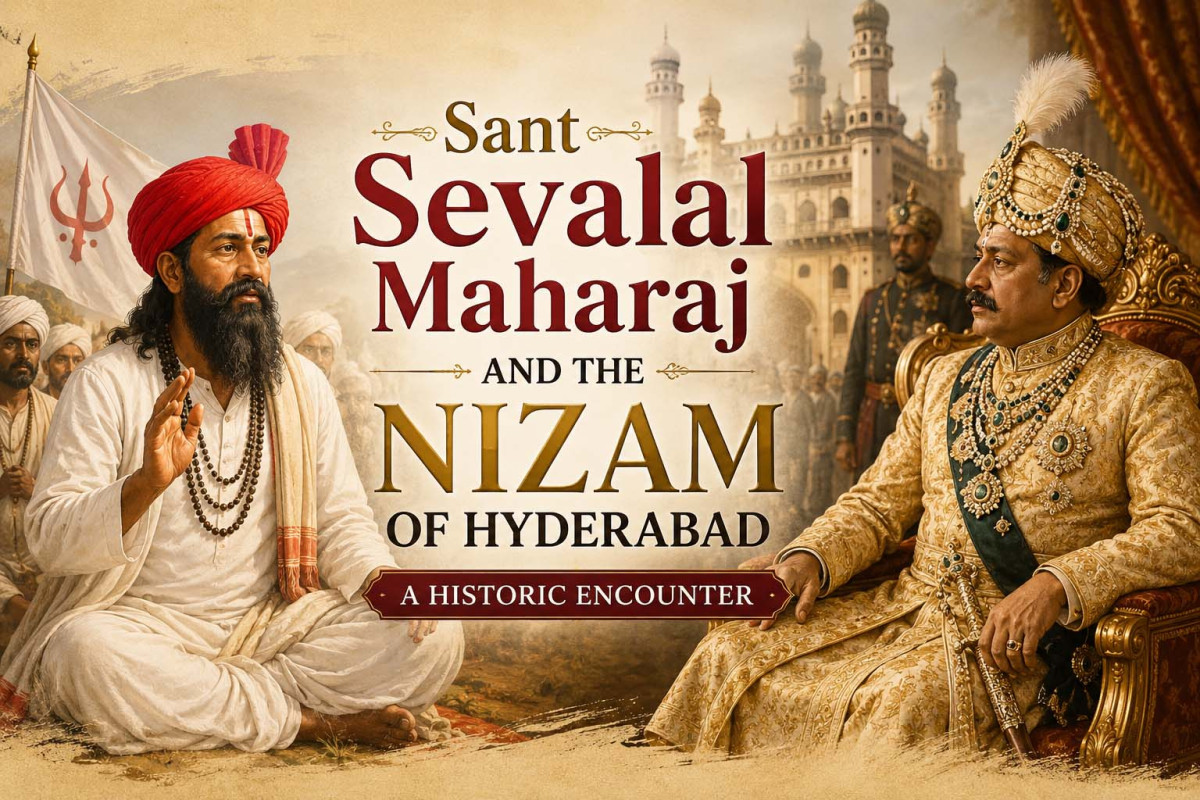
Among the many inspiring stories associated with Sant Sevalal Maharaj, one of the most remarkable is his encounter with the Nizam of Hyderabad. This historic episode is deeply cherished within the Gor Banjara community because it represents far more than a meeting between a ruler and a saint. It symbolizes the triumph of truth over deception, compassion over power, and spiritual wisdom over political authority.
According to traditional Banjara history and oral narratives, Sant Sevalal Maharaj visited Hyderabad during the eighteenth century while travelling with hundreds of Banjara families. At that time, the Nizam ruled one of the largest princely states in India. Initially suspicious of the Banjaras, the ruler attempted to challenge their leader. However, after witnessing several extraordinary events, the Nizam's perception changed completely.
The meeting between Sant Sevalal Maharaj and the Nizam remains one of the most celebrated chapters in Banjara history. It demonstrates the saint's unwavering faith in Jagadamba, his fearless character, and his commitment to protecting his people without seeking wealth, political favour, or royal recognition.
The Historical Background
To understand this famous encounter, it is important to know who the Banjaras were during that period.
For centuries, the Banjaras were among India's greatest transporters and traders. Long before the arrival of railways and modern roads, they transported food grains, salt, weapons, spices, and other essential commodities across the country using thousands of bullocks.
After the decline of the Rajput kingdoms, many Banjara groups migrated throughout India. They established settlements known as Thandas, where each community was led by a Naik, assisted by respected elders and community representatives.
The Banjaras became famous for:
- Honesty in trade
- Excellent animal husbandry
- Courage during wartime
- Strong community governance
- Deep devotion to Goddess Jagadamba
Sant Sevalal Maharaj was born into this proud tradition. From an early age, he displayed remarkable spiritual qualities, leadership, and compassion toward both humans and animals.
As he travelled across South India, his reputation spread rapidly. Stories of miraculous healings, wise teachings, and fearless leadership reached villages, kingdoms, and royal courts alike.
Eventually, these stories reached Hyderabad.
Hyderabad Under the Nizam
During Sant Sevalal Maharaj's lifetime, Hyderabad was one of India's most influential kingdoms.
The Nizam ruled over vast territories and maintained a powerful administration. Hyderabad attracted traders, soldiers, pilgrims, artisans, and travellers from different regions.
The Banjaras also frequently visited Hyderabad because it served as an important commercial centre.
When Sant Sevalal Maharaj arrived near Hyderabad with his followers, they established their temporary settlement in the area that later became famous as Banjara Hills. According to Banjara tradition, the locality derived its name from the large Banjara settlements that once existed there.
The group consisted of hundreds of families along with thousands of cattle, horses, sheep, and bullocks. Since grazing lands and water were available, they stayed there for some time.
However, their arrival soon attracted attention.
Farmers Complain to the Nizam
The Banjaras depended on their animals for survival. Their large herds required vast grazing grounds every day.
Nearby farmers approached the royal administration with serious complaints.
They claimed that the cattle belonging to Sant Sevalal Maharaj's followers had entered agricultural fields and grazed upon crops such as:
- Paddy
- Wheat
- Bengal gram (Chana)
These complaints eventually reached the Nizam's court.
Naturally, the ruler wished to investigate the matter.
He ordered his soldiers to bring the leaders of the Banjaras before him.
For most people, refusing such an order from the ruler of Hyderabad would have been unimaginable.
But Sant Sevalal Maharaj was not an ordinary man.
Sant Sevalal Maharaj Refuses to Appear
The royal messengers arrived at the Banjara settlement carrying the Nizam's command.
They instructed Sant Sevalal Maharaj to present himself before the ruler.
According to traditional accounts, Sevabhaya respectfully declined the invitation.
His refusal was not born from arrogance.
Rather, he believed that truth did not need to bow before political power.
If any misunderstanding existed, it could be resolved honestly without compromising his principles.
The refusal greatly angered the Nizam.
The ruler interpreted it as an insult to his authority.
Determined to teach the Banjaras a lesson, he decided to test the spiritual leader in a cruel and dangerous manner.
The Poisoned Sweets Plot
Instead of initiating open dialogue, the Nizam secretly devised a deadly plan.
He ordered his soldiers to prepare sweets mixed with poison.
These sweets were then delivered to Sant Sevalal Maharaj with instructions that they should be distributed among all the Banjaras.
The intention was horrifying.
If the Banjaras consumed the poisoned sweets, their entire community could perish.
The soldiers delivered the sweets without revealing the conspiracy.
Everything appeared normal.
Many followers eagerly prepared to receive the royal offering.
No one suspected danger.
Except one.
Divine Guidance from Jagadamba
According to Banjara tradition, Sant Sevalal Maharaj enjoyed a unique spiritual relationship with Sri Jagadamba (Mariamma).
Before anyone touched the sweets, the Divine Mother warned Sevabhaya about the hidden poison.
She instructed him not to distribute them immediately.
Instead, she advised him to mix the sweets with her sacred prasadam (holy ash).
Only after this purification should they be offered.
Sant Sevalal Maharaj followed the divine instruction without hesitation.
His complete faith in Jagadamba would soon save hundreds of innocent lives.
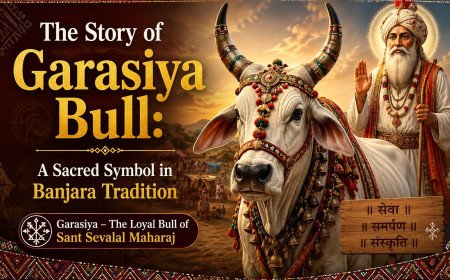
The Test of Garasiya Bull
Before allowing anyone to eat the sweets, Sant Sevalal Maharaj performed one more act that demonstrated both wisdom and compassion.
He first offered the sweets to his beloved Garasiya Bull.
The Garasiya Bull held special significance within the Banjara community and was considered sacred.
Everyone watched anxiously.
If poison remained, the animal would die.
The bull calmly consumed the sweets.
Nothing happened.
There was no sign of illness.
No weakness.
No suffering.
The poison had become powerless.
According to traditional belief, Jagadamba's blessings had transformed the poisoned sweets into Panchamrut, making them completely harmless.
Only after witnessing this miracle did Sant Sevalal Maharaj permit his followers to eat.
Every member of the community remained perfectly safe.
What had been intended as an instrument of death became a symbol of divine protection.
The Nizam Is Astonished
News of the failed poisoning quickly spread.
The soldiers who had delivered the sweets were unable to explain what had happened.
The Nizam himself was astonished.
He knew the sweets had contained poison.
Yet hundreds of Banjaras had eaten them without suffering any harm.
This unexpected event deeply disturbed the ruler.
He began wondering whether the stories about Sant Sevalal Maharaj's spiritual powers were actually true.
Still, the Nizam had not completely accepted him.
Another extraordinary event would soon transform his opinion forever.
A Deadly Cholera Epidemic
Soon after the poisoned sweets incident, Hyderabad was struck by a devastating cholera epidemic.
The disease spread rapidly across villages and settlements surrounding the city.
Fear gripped the population.
Families lost loved ones.
People abandoned infected areas.
Medical knowledge during that period was extremely limited, and epidemics often caused widespread panic.
However, something remarkable happened.
Although cholera spread across the surrounding regions, the area where Sant Sevalal Maharaj and the Banjaras were staying remained untouched.
No epidemic entered the Banjara settlement.
This unusual observation soon reached the Nizam.
People began speaking of the saint's divine protection.
The Nizam Seeks Help
The Nizam now viewed Sant Sevalal Maharaj differently.
Instead of summoning him through force, he respectfully requested that the saint come to help save his kingdom.
Sant Sevalal Maharaj accepted the request without resentment.
He did not remember the earlier attempt on his life.
Nor did he seek revenge.
His only concern was the welfare of humanity.
He asked the Nizam to arrange the necessary materials for worship.
Once everything had been prepared, Sant Sevalal Maharaj gathered his followers.
They began singing devotional Bhajans in praise of Jagadamba while he entered deep prayer and meditation.
The atmosphere became intensely spiritual.
With complete devotion, he prayed for the suffering people of Hyderabad.
According to Banjara tradition, the blessings of Jagadamba answered his prayers, and the epidemic gradually came to an end.
Peace returned to the kingdom.
The people believed they had witnessed another miracle.
The Nizam himself was deeply moved.
For the first time, he truly recognized Sant Sevalal Maharaj not merely as a tribal leader, but as a great saint whose compassion extended to all people regardless of caste, religion, or political authority.
This remarkable transformation would lead to one of the most famous conversations in Banjara history—a respectful meeting between the Nizam of Hyderabad and Sant Sevalal Maharaj that continues to inspire generations.
The Historic Meeting Between Sant Sevalal Maharaj and the Nizam
After witnessing two extraordinary events—the miraculous survival of the Banjara community after consuming poisoned sweets and the disappearance of the cholera epidemic following Sant Sevalal Maharaj's prayers—the Nizam's attitude changed dramatically.
The ruler who had once doubted and challenged the saint now desired to meet him with respect.
This meeting became one of the most memorable moments in the history of the Gor Banjara community.
Unlike many saints who sought royal patronage, Sant Sevalal Maharaj approached the Nizam without fear, greed, or expectation. He came only as a humble servant of Jagadamba and a guardian of his people.
According to historical traditions preserved in Banjara literature, the conversation between the two was recorded in an Urdu chronicle and later reproduced in community publications. It remains one of the most treasured dialogues associated with Sant Sevalal Maharaj.
The Famous Conversation Between the Nizam and Sevabhaya
The Nizam welcomed the saint with great curiosity.
He wished to understand who this remarkable man truly was.
The recorded dialogue is remembered as follows:
Nizam:
"What is your name?"
Sevabhaya:
"My name is Sevabhaya."
The answer was simple.
He introduced himself not with titles, honorifics, or claims of greatness, but merely by the name through which the Banjara community affectionately knew him.
Nizam:
"Whom do you worship?"
Sevabhaya:
"We worship Sri Jagadamba."
This reply reflected the spiritual foundation of the Gor Banjara community.
Jagadamba (also revered as Mariamma in many traditions) was regarded as the Divine Mother and protector of the Banjaras.
Throughout his life, Sant Sevalal Maharaj emphasized that all his strength, wisdom, and success came only through her blessings.
He never claimed supernatural powers for himself.
Nizam:
"What do you offer during worship?"
Sevabhaya:
"After worship, we traditionally offer a goat as sacrifice."
This question reflected the Nizam's curiosity regarding the customs of the Banjaras.
The discussion was not intended as an argument but as an effort to understand another community's religious traditions.
Nizam:
"Does your Goddess actually eat those offerings?"
Sevabhaya:
"No. She sits among us and accepts our devotion."
This profound reply revealed Sant Sevalal Maharaj's spiritual philosophy.
For him, devotion was not merely ritual.
True worship meant living with sincerity, gratitude, and faith.
The Divine Mother did not require food.
She accepted the love and devotion of her children.
This answer deeply impressed everyone present.
The Offer of a Jagir
After witnessing the saint's wisdom and miracles, the Nizam wished to reward him.
Royal rulers often honoured saints, scholars, and religious leaders by granting them land, villages, wealth, or tax-free estates known as Jagirs.
The Nizam therefore said:
"We wish to grant you a Jagir."
For most people, such an offer would have been considered an extraordinary privilege.
Accepting a Jagir meant wealth, influence, prestige, and permanent royal protection.
However, Sant Sevalal Maharaj had dedicated his entire life to simplicity.
His mission was not to accumulate property.
His purpose was to uplift the Banjara community.
Sant Sevalal Maharaj Refuses Royal Wealth
The saint respectfully replied:
"No. Jagadamba provides everything that I need. I travel only according to her command."
This single statement perfectly reflected his character.
He neither desired political authority nor material riches.
He believed that a spiritual leader should remain independent.
Accepting royal gifts could create obligations and compromise the freedom to serve society.
Instead, Sant Sevalal Maharaj chose a life of sacrifice, humility, and service.
His refusal astonished the royal court.
The Nizam realized that the saint could not be influenced by wealth.
His devotion was genuine.
His leadership was selfless.
The Portrait of Sant Sevalal Maharaj
Although the saint declined the Jagir, the Nizam made one final request.
He asked:
"Will you allow us to paint your portrait?"
This was not merely an artistic request.
It was a mark of great respect.
Royal portraits were generally reserved for kings, nobles, military commanders, and distinguished personalities.
Sant Sevalal Maharaj agreed.
The Nizam immediately instructed his royal artist to prepare the saint's portrait.
According to Banjara historical accounts, the original portrait remained preserved in the Nizam family's collection for many years.
Later, members of the Banjara community obtained a copy, which is now displayed at Sevagad, one of the most important pilgrimage centres associated with Sant Sevalal Maharaj.
Today, that portrait remains a symbol of the respect shown by one of India's most powerful rulers toward a humble saint of the Gor Banjara community.
Why This Meeting Is Historically Important
The meeting between Sant Sevalal Maharaj and the Nizam is significant for several reasons.
First, it demonstrated that moral authority is greater than political authority.
Although the Nizam possessed armies, wealth, and royal power, he ultimately bowed before truth and spirituality.
Second, the incident strengthened the confidence of the Banjara people.
For generations, Banjaras had lived as travelling traders, often facing misunderstanding and discrimination.
Seeing their spiritual leader respected by the ruler of Hyderabad became a source of immense pride.
Third, the meeting promoted harmony between communities.
There was no hatred or revenge.
Even after the poisoning attempt, Sant Sevalal Maharaj willingly prayed for the welfare of Hyderabad during the cholera epidemic.
His compassion extended even to those who had wronged him.
This universal outlook remains one of the greatest lessons from his life.
Lessons from Sant Sevalal Maharaj's Encounter with the Nizam
The story continues to inspire millions because it teaches timeless values.
Faith Over Fear
Sant Sevalal Maharaj never panicked during difficult situations.
Whether confronted by poisoned sweets or political pressure, he placed complete trust in Jagadamba.
His faith gave courage not only to himself but also to his followers.
Forgiveness Is Greater Than Revenge
The Nizam had attempted to destroy the Banjara community.
Yet when Hyderabad suffered from cholera, Sant Sevalal Maharaj did not refuse assistance.
Instead, he prayed for the wellbeing of the entire kingdom.
His actions remind us that true saints work for humanity rather than personal revenge.
Service Above Wealth
The refusal of the Jagir is perhaps one of the strongest examples of selfless leadership in Indian spiritual history.
Sant Sevalal Maharaj believed that spiritual service loses its purity when motivated by material gain.
His life demonstrated that respect earned through honesty is greater than wealth granted by kings.
Leadership Through Character
Sant Sevalal Maharaj never ruled through fear.
He inspired people through compassion, discipline, truthfulness, and simplicity.
His leadership united scattered Banjara communities across different regions of India.
The Legacy of the Historic Encounter
Even today, devotees remember this meeting as a defining moment in Banjara history.
It represents the victory of righteousness over deceit.
It also reminds future generations that truth ultimately commands greater respect than worldly power.
The portrait of Sant Sevalal Maharaj associated with the Nizam remains an important historical symbol.
Likewise, the traditional account of their conversation continues to be narrated during religious gatherings, community meetings, and cultural programs.
For the Gor Banjara community, this event is not merely history.
It is a source of identity, confidence, and inspiration.
Conclusion
The story of Sant Sevalal Maharaj and the Nizam of Hyderabad is much more than a tale of miracles.
It is the story of unwavering faith, fearless leadership, moral courage, compassion, and selfless service.
The saint transformed hostility into respect without raising a weapon.
He defeated deception through wisdom.
He answered hatred with kindness.
He refused wealth in favour of service.
He demonstrated that true greatness lies not in political power but in spiritual integrity and dedication to humanity.
Centuries later, Sant Sevalal Maharaj continues to inspire millions of Banjaras across India. His teachings of unity, compassion, honesty, hard work, non-violence, and devotion remain as relevant today as they were during his lifetime.
The historic meeting with the Nizam stands as lasting proof that when truth is supported by faith and righteousness, even the most powerful rulers recognize its greatness.
What's Your Reaction?
 Like
3
Like
3
 Dislike
0
Dislike
0
 Love
0
Love
0
 Funny
0
Funny
0
 Wow
0
Wow
0
 Sad
0
Sad
0
 Angry
0
Angry
0











Comments (0)