
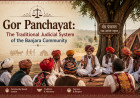
Gor Panchayat: The Traditional Judicial System of the Banjara Community
Explore the history, structure, and functions of the Gor Panchayat, the traditional judicial and governance system of the Banjara community that preserved justice and social harmony.

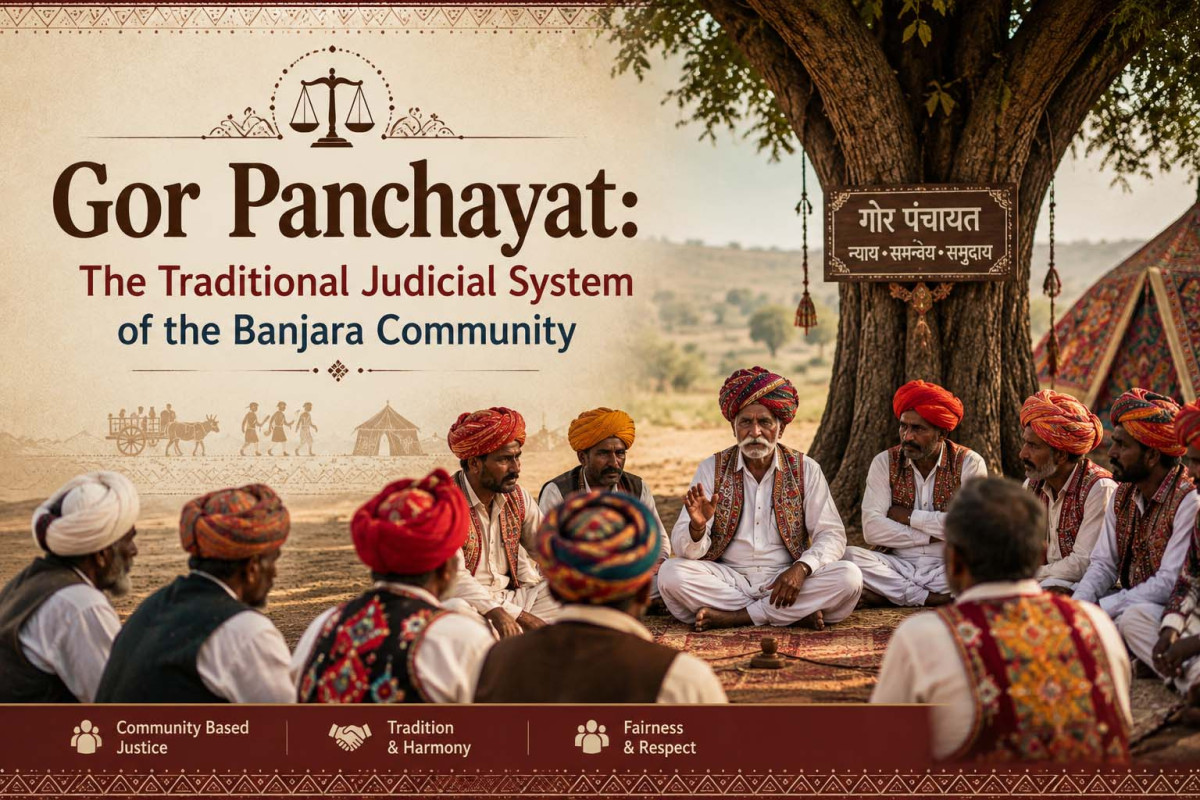
For centuries, the Banjara community maintained a unique and effective system of self-governance known as the Gor Panchayat. Long before the establishment of modern courts and local administrative institutions, this traditional judicial body resolved disputes, maintained law and order, protected cultural values, and ensured harmony within Banjara settlements, called Tandas.
The Gor Panchayat was more than a village council—it was the highest authority for social justice, conflict resolution, and community discipline. Guided by experienced leaders and respected elders, the Panchayat played a vital role in preserving unity among the Banjaras while safeguarding their customs and traditions.
Even today, although its legal authority has largely been replaced by government institutions, the Gor Panchayat remains an important symbol of the Banjara community's cultural heritage.
What is the Gor Panchayat?
The Gor Panchayat is the traditional council of the Banjara (Lambani/Lambadi/Sugali) community. It functioned as the highest governing and judicial institution within a Tanda.
Its primary objectives were to:
- Maintain peace and order
- Resolve disputes among community members
- Enforce customary laws
- Protect social values
- Preserve Banjara traditions
- Promote unity and collective responsibility
Rather than depending on outside authorities, most conflicts were settled within the community itself through the Gor Panchayat.
Structure of the Gor Panchayat
The Panchayat was headed by the Naik, who served as the chief leader of the Tanda.
He was assisted by several important officials:
- Davo – Deputy leader
- Karbhari – Secretary and executive administrator
- Davsan – Senior elders and advisors
- Other respected elders and experienced members of the community
Every important matter was discussed collectively before a decision was reached.
This collaborative approach helped ensure fairness and community acceptance.
Role of the Naik in the Panchayat
The Naik presided over every Panchayat meeting.
His responsibilities included:
- Listening to complaints
- Calling Panchayat meetings
- Hearing both parties involved in a dispute
- Consulting senior elders
- Delivering the final judgment
- Ensuring that decisions were followed
Although the Naik held the highest authority, he generally made decisions only after consulting the Davsan and other respected elders.
How the Gor Panchayat Functioned
Whenever disputes arose within the Tanda, the affected individuals approached the Naik.
The Panchayat would then:
- Receive the complaint.
- Fix a meeting date.
- Summon both parties.
- Hear witnesses if necessary.
- Consult elders.
- Discuss the issue collectively.
- Deliver a final decision.
- Ensure implementation of the judgment.
The complainant generally bore the expenses associated with organizing the Panchayat meeting.
Most meetings were held in public places where members of the community could observe the proceedings.
Participation of Community Members
The Gor Panchayat emphasized collective responsibility.
Senior men of the community actively participated in discussions and offered advice based on their experience.
Traditionally, women did not participate in Panchayat meetings, reflecting the patriarchal social structure that existed during that period.
Today, many Banjara communities encourage greater participation of women in community organizations, reflecting changing social values.
Types of Cases Handled by the Gor Panchayat
The Gor Panchayat dealt with a wide variety of disputes affecting community life.
These included:
Family Disputes
- Marriage disagreements
- Divorce
- Domestic conflicts
- Family misunderstandings
Property Matters
- Land disputes
- Ownership conflicts
- Division of family property
Social Issues
- Violation of community customs
- Misconduct
- Community discipline
- Social responsibilities
Criminal and Moral Issues
Historically, the Panchayat also addressed:
- Theft
- Adultery
- Public misconduct
- Breach of traditional rules
Its primary objective was not merely to punish but to restore harmony within the community.
Categories of Disputes
Traditional Gor Panchayats classified disputes into different categories.
These generally included:
Nasabh
Cases involving punishment or penalties imposed on offenders.
Hasabh
Matters related to:
- Land
- Property
- Financial disputes
- Ownership rights
Malavh
Internal conflicts involving relationships, misunderstandings, or disputes between members of the community.
This classification enabled the Panchayat to deal systematically with different types of issues.
Traditional Punishments
The Gor Panchayat possessed the authority to impose community-approved penalties.
These included:
- Monetary fines
- Public apology
- Compensation to the affected party
- Social warnings
- Temporary social restrictions
The objective of these punishments was corrective rather than vindictive.
Community harmony was always considered more important than severe punishment.
Importance of Elders
One of the defining characteristics of the Gor Panchayat was the importance given to senior members.
The Davsan and other respected elders contributed:
- Experience
- Practical wisdom
- Knowledge of traditions
- Neutral advice
- Community confidence
Their opinions carried significant weight before the Naik announced any judgment.
This system reflected the Banjara tradition of respecting age and experience.
Why the Gor Panchayat Was Effective
The Gor Panchayat remained effective for generations because it offered several advantages.
Quick Justice
Disputes were resolved without lengthy legal procedures.
Low Cost
Community members avoided expensive court cases.
Cultural Understanding
Judgments considered Banjara customs and traditions.
Social Acceptance
Since decisions were taken collectively, most members accepted them willingly.
Community Unity
The Panchayat emphasized reconciliation rather than conflict.
Changes in the Modern Era
Over time, several factors reduced the authority of the traditional Gor Panchayat.
These include:
- Urbanization
- Migration
- Expansion of the modern legal system
- Increased education
- Government administration
- Constitutional rights
- Greater awareness of individual freedoms
Today, civil and criminal matters are handled through India's judicial system, while the Gor Panchayat mainly serves cultural and social functions.
Continuing Cultural Significance
Although its legal powers have diminished, the Gor Panchayat continues to influence Banjara society in several ways.
It helps:
- Preserve traditional customs
- Promote community unity
- Organize cultural events
- Encourage social harmony
- Resolve minor community misunderstandings
- Strengthen Banjara identity
Many community organizations continue to respect traditional leadership while working within India's constitutional framework.
Lessons from the Gor Panchayat
The traditional Banjara judicial system teaches several valuable lessons:
- Community participation strengthens governance.
- Respect for elders promotes wise decision-making.
- Dialogue is often better than prolonged conflict.
- Local customs play an important role in maintaining social harmony.
- Justice should aim for reconciliation whenever possible.
These principles remain relevant even in modern democratic societies.
Conclusion
The Gor Panchayat represents one of the most remarkable traditional institutions of the Banjara community. It functioned not only as a judicial body but also as a guardian of culture, social order, and collective responsibility. Led by the Naik and supported by the Davo, Karbhari, Davsan, and other respected elders, it resolved disputes through consultation, fairness, and community participation.
Although modern legal institutions now perform most judicial functions, the Gor Panchayat remains a symbol of the Banjaras' rich cultural heritage and indigenous system of self-governance. Understanding this institution provides valuable insight into the history, values, and social organization of one of India's oldest communities.
Frequently Asked Questions
What's Your Reaction?
 Like
2
Like
2
 Dislike
0
Dislike
0
 Love
0
Love
0
 Funny
0
Funny
0
 Wow
0
Wow
0
 Sad
0
Sad
0
 Angry
0
Angry
0




Comments (0)