

Why Are Banjaras Called Lambani, Lambadi and Sugali? Complete History Explained
Discover why the Banjara community is known as Lambani, Lambadi, Sugali, Labhana, and Gor Banjara. Learn the history, origin, regional names, and meanings behind these identities.

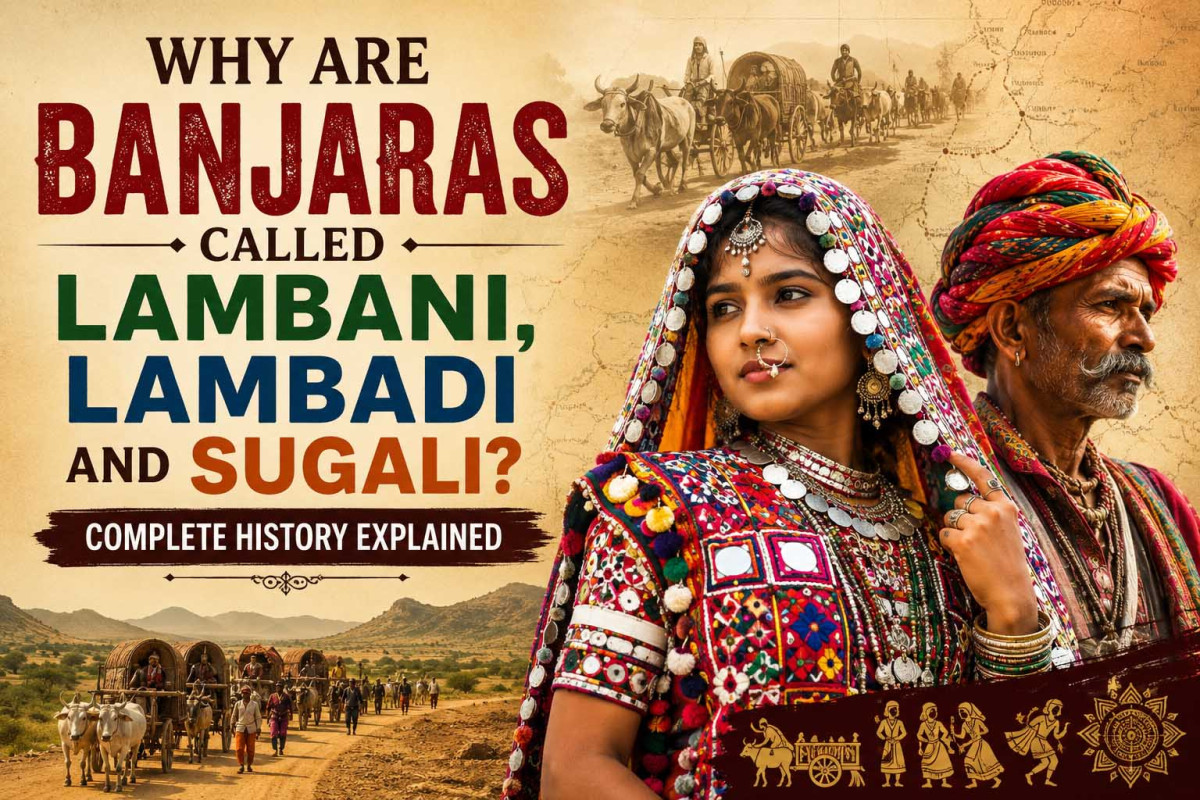
The Banjara community is one of India's oldest and most widespread tribal and nomadic-origin communities. Across different states, they are known by several names, including Gor Banjara, Lambani, Lambadi, Sugali, Labhana, Vanjara, Brinjari, and Lamani. These names often create confusion, leading many people to wonder whether they represent different communities.
The answer is no. In most contexts, these names refer to the same historical community. The variations developed because of differences in regional languages, local pronunciations, occupations, and historical records.
This article explains why Banjaras are known by different names, the meaning behind each name, and how these regional identities evolved over time.
Are Lambani, Lambadi and Sugali Different Communities?
One of the most common misconceptions is that Lambanis, Lambadis, Sugalis, and Banjaras belong to different communities.
Historically, they share the same cultural roots and many common traditions. Although local customs, dialects, and administrative classifications may differ from one state to another, these names generally describe regional identities of the broader Banjara community.
For example:
- In Karnataka, the community is commonly called Lambani or Lamani.
- In Telangana, the names Lambada and Lambadi are widely used.
- In Andhra Pradesh, the community is generally known as Sugali.
- In Rajasthan, Madhya Pradesh, and Maharashtra, Banjara or Gor Banjara is more common.
Despite these regional names, the community shares similar traditions, clan structures, festivals, and historical origins.
Meaning of the Word "Banjara"
The name Banjara is closely connected with trade and transportation.
Several scholars believe it originated from Sanskrit words such as:
- Vanij
- Banij
- Baniya
These words are associated with merchants, traders, and commerce.
Historically, Banjaras transported food grains, salt, spices, textiles, and other goods across India using large caravans of pack bullocks. Because trade formed the foundation of their livelihood, the name "Banjara" became strongly associated with their profession.
Why Are They Called Lambani or Lamani?
The names Lambani, Lambadi, and Lamani are believed to have evolved from the Sanskrit word Lavana, meaning salt.
For centuries, Banjaras were among India's principal transporters of salt. Long before railways and motor vehicles existed, they carried salt from production areas to distant towns and villages using large bullock caravans.
As a result, communities involved in transporting salt gradually came to be identified as:
- Lamani
- Lambani
- Lambadi
- Lambada
Although the spellings differ, these names reflect the same historical occupation.
Today, Lambani is the most commonly used name in Karnataka, while Lambadi and Lambada are widely recognised in Telangana.
Why Are They Called Sugali?
In Andhra Pradesh, the Banjara community is traditionally known as Sugali.
Several explanations have been proposed regarding the origin of this name. One widely accepted view links it to the community's historic role in transporting and trading goods across long distances.
Over centuries, regional languages influenced pronunciation and terminology, resulting in names such as Sugali becoming more common than Banjara in certain areas.
Despite the different name, Sugalis share the same cultural heritage, traditional occupations, clan system, and festivals as Banjaras living in neighbouring states.
Why Do Banjaras Call Themselves "Gor"?
Within the community, many people identify themselves as Gor or Gor Banjara.
The term "Gor" is regarded as an important marker of community identity and distinguishes Banjaras from outsiders. Traditionally, Banjaras referred to members of their own community as Gor and to non-Banjaras using different local expressions.
Today, "Gor Banjara" has become a widely accepted cultural identity representing the community's shared heritage across India.
Other Names of the Banjara Community
Because the community migrated across different regions over many centuries, numerous regional names emerged.
Some of the best-known include:
- Gor Banjara
- Banjara
- Lambani
- Lamani
- Lambadi
- Lambada
- Sugali
- Labhana
- Vanjara
- Brinjari
The use of these names often depends on the state, language, and historical records rather than differences in ancestry.
Regional Names Across India
| State | Common Name |
|---|---|
| Maharashtra | Banjara, Gor Banjara |
| Telangana | Lambada, Lambadi |
| Andhra Pradesh | Sugali |
| Karnataka | Lambani, Lamani |
| Rajasthan | Banjara |
| Madhya Pradesh | Banjara |
| Gujarat | Vanjara, Banjara |
| Chhattisgarh | Banjara |
| Odisha | Banjara |
Cultural Unity Despite Different Names
Although Banjaras are known by different names, they continue to preserve many shared cultural traditions.
Common features include:
- Gor Boli language (or related dialects)
- Traditional embroidery
- Colourful clothing
- Community festivals
- Folk music and dance
- Clan-based social organization
- Thanda settlements
- Traditional marriage customs
- Respect for elders and community leadership
These common cultural practices demonstrate that regional names have not changed the community's core identity.
Modern Identity
Today, educated members of the community increasingly use the term Gor Banjara to emphasise their shared historical identity beyond state boundaries.
Digital platforms, cultural organisations, literature, and academic research have also encouraged greater awareness that Lambani, Lambadi, Sugali, and Banjara represent closely connected identities within the same historical community.
This growing recognition helps strengthen cultural unity while respecting regional diversity.
Conclusion
The names Banjara, Lambani, Lambadi, Lamani, Sugali, Labhana, and Vanjara reflect the long history of one of India's most remarkable communities. These names developed because of migration, regional languages, and traditional occupations, not because they represent completely different peoples.
Whether known as Lambani in Karnataka, Sugali in Andhra Pradesh, Lambadi in Telangana, or Gor Banjara in Maharashtra and Rajasthan, the community shares a rich heritage of trade, resilience, language, culture, and tradition.
Understanding these names helps us appreciate the diversity within the Banjara community while recognising the historical connections that unite them.
Frequently Asked Questions
What's Your Reaction?
 Like
2
Like
2
 Dislike
0
Dislike
0
 Love
0
Love
0
 Funny
0
Funny
0
 Wow
0
Wow
0
 Sad
0
Sad
0
 Angry
0
Angry
0















Comments (0)