

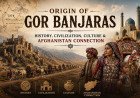
Origin of Gor Banjaras: History, Civilization, Culture & Afghanistan Connection
Discover the origin of the Gor Banjaras, their connection to ancient civilizations, Afghanistan, the Indus Valley, Aryan traditions, Tanda culture, and the rich history of one of India's oldest tribal communities.

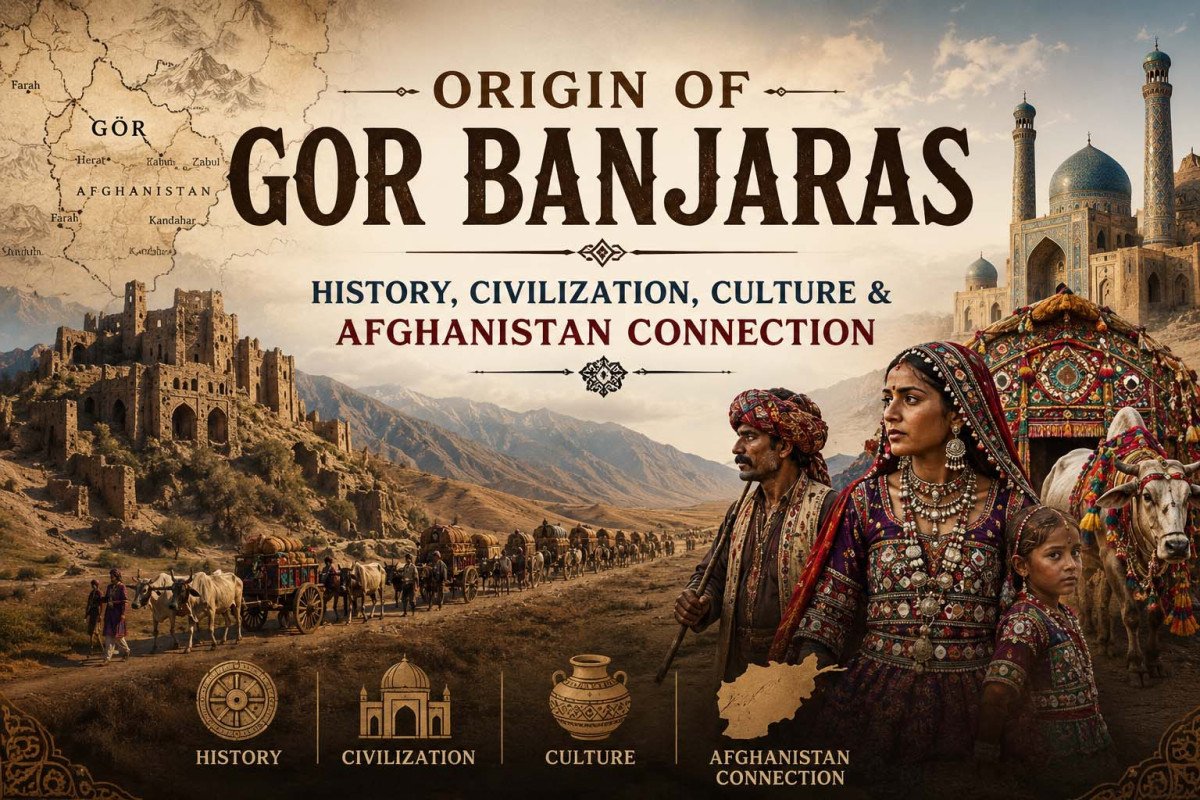
The Gor Banjara community is one of the oldest and most culturally rich tribal communities in the Indian subcontinent. Known by various names such as Gor, Banjara, Lambadi, Lambani, Labhana, Sugali, Gormati, Vanjara, and Brinjari, the community has preserved its unique traditions, language, customs, and way of life despite centuries of migration and changing political landscapes.
Unlike many ancient civilizations that disappeared with time, the Gor Banjara community has successfully preserved its cultural identity through oral traditions, folk songs, festivals, rituals, traditional dress, and the Tanda system. These living traditions provide valuable insights into an ancient civilization whose roots may stretch back several thousand years.
The question of the origin of the Gor Banjaras has fascinated historians, anthropologists, archaeologists, linguists, and researchers for decades. Various historical records, archaeological findings, literary references, and cultural similarities suggest that the Gor community has an ancient lineage connected with early Indo-Aryan societies and the northwestern regions of the Indian subcontinent.
While many aspects of Banjara history continue to be debated, one fact remains undisputed—the Gor Banjaras possess one of the richest surviving tribal cultures in South Asia.
Who Are the Gor Banjaras?
The Gor Banjaras are traditionally known as nomadic traders, transporters, cattle breeders, and caravan leaders. For centuries before the invention of railways and modern transportation, Banjara caravans transported essential commodities such as:
- Salt
- Grain
- Rice
- Cotton
- Metals
- Forest produce
- Spices
- Livestock
Across vast regions extending from Afghanistan, Pakistan, Rajasthan, Gujarat, Maharashtra, Karnataka, Telangana, Andhra Pradesh, Madhya Pradesh, Chhattisgarh, Odisha, and beyond, Banjara caravans formed the backbone of long-distance trade.
Their settlements, known as Tandas, served not only as temporary camps but also as organized social and economic units with their own leadership, customs, and governance.
Even today, thousands of Tandas continue to preserve the traditions established by their ancestors centuries ago.
Meaning of the Word "Gor"
Among themselves, members of the community proudly identify as "Gor" rather than Banjara or Lambadi.
Several scholars have attempted to explain the origin of the word Gor.
One traditional interpretation divides the word into two parts:
- Go = Cow
- R = Protector
According to this explanation, Gor means "protector of cattle."
This interpretation aligns closely with the traditional occupation of the community. Historically, Gor Banjaras maintained enormous herds of cattle and oxen that pulled trading caravans across mountains, forests, deserts, and plains.
Their livelihood depended upon:
- Cattle breeding
- Oxen transportation
- Animal husbandry
- Trade routes
- Caravan protection
Thus, the name "Gor" may have evolved from their responsibility of protecting cattle and maintaining large transport caravans.
Even today, cattle occupy an important place in Banjara customs, rituals, songs, and festivals.
A Civilization That Withstood Time
History shows that many great civilizations disappeared because of wars, invasions, famine, or political change. However, the Gor civilization survived through its ability to preserve culture instead of monuments.
Unlike kingdoms that left behind palaces and forts, the Gor Banjaras preserved their history through:
- Folk songs
- Oral storytelling
- Ritual songs
- Proverbs
- Marriage traditions
- Festivals
- Traditional dress
- Language (Gor Boli/Gormati)
- Community customs
These traditions continue to be practiced across India even today.
This remarkable continuity makes the Gor community an important subject of anthropological and historical research.
Oral Tradition: The Living Archive of the Gor Community
Unlike many civilizations that relied primarily on written records, the Gor Banjaras passed knowledge from one generation to another through oral traditions.
Their cultural heritage survives in:
- Folk songs
- Ballads
- Wedding songs
- Holi songs
- Teej songs
- Proverbs
- Folk tales
- Traditional sayings
- Ritual chants
These oral traditions preserve not only entertainment but also memories of migration, social values, occupations, and religious beliefs.
Many historians believe that oral traditions often preserve historical memories that written records fail to capture.
Because of this, Gor folk literature is considered one of the most valuable sources for understanding the community's ancient past.
Connection with the Indus Valley Civilization
One of the most interesting theories regarding Gor Banjara origins connects them with the Indus Valley Civilization.
Archaeological excavations at Harappa and Mohenjo-daro have revealed an advanced civilization characterized by:
- Planned cities
- Drainage systems
- Agriculture
- Animal husbandry
- Trade networks
- Skilled craftsmanship
Researchers have observed certain cultural similarities between archaeological findings and practices still followed among Gor Banjaras.
Some examples include:
Burial Practices
Excavations from the Indus Valley show that many deceased individuals were buried in a north-south orientation.
Interestingly, many Gor Banjara communities traditionally bury their dead with:
- Head facing north
- Feet towards south
Although this similarity alone cannot establish direct ancestry, it remains an important cultural observation often cited in discussions about Gor origins.
Bull-Centered Economy
The Indus civilization extensively used bulls for:
- Agriculture
- Transportation
- Trade
- Religious symbolism
Similarly, the Gor Banjaras have historically depended on oxen for transporting goods over long distances.
Large bull caravans became the identity of the Banjara community for centuries.
The importance of bulls is reflected in:
- Marriage customs
- Folk songs
- Traditional wealth
- Religious beliefs
- Daily livelihood
Community-Based Settlements
The organized nature of Tandas resembles early tribal settlement systems where families lived collectively under traditional leadership.
Each Tanda maintained:
- A Naik (leader)
- Community rules
- Collective decision-making
- Shared responsibilities
- Cultural traditions
Such social organization has helped preserve Gor identity despite centuries of migration.
Archaeology, Anthropology and Historical Interpretation
Modern archaeology provides physical evidence through excavations, while anthropology studies living cultures and traditions.
Historians often compare:
- Archaeological remains
- Human skeletons
- Burial customs
- Pottery
- Animal remains
- Language
- Folk traditions
to reconstruct the history of ancient communities.
However, it is important to note that historical conclusions are based on available evidence and may evolve as new discoveries emerge.
Many researchers have suggested cultural parallels between the Gor Banjaras and ancient northwestern civilizations, but several aspects of these theories continue to be debated within academic circles.
Cultural Continuity Across Thousands of Years
Perhaps the strongest evidence for the antiquity of the Gor community lies in its extraordinary cultural continuity.
Even today, many traditional practices remain remarkably unchanged:
- Tanda settlements
- Traditional leadership under the Naik
- Distinctive embroidery and attire
- Bull-centered symbolism
- Community festivals
- Marriage rituals
- Oral folklore
- Gor Boli language
- Collective celebrations
- Respect for ancestors
These living traditions provide a cultural bridge connecting present-day Gor Banjaras with their ancestral heritage.
Why the Origin of the Gor Banjaras Matters
Understanding the origin of the Gor Banjaras is not merely an academic exercise. It is essential for preserving the identity, dignity, and historical contributions of one of India's oldest tribal communities.
For generations, the Gor Banjaras played a vital role in trade, transportation, cultural exchange, and economic development across the Indian subcontinent. Yet much of their history remains scattered across oral traditions, historical records, and archaeological interpretations.
By studying their language, customs, festivals, and migration patterns, researchers continue to uncover valuable clues about an ancient civilization whose legacy still survives in the vibrant life of the Tandas.
Afghanistan: The Proposed Homeland of the Gor Banjaras
One of the most widely discussed theories regarding the origin of the Gor Banjara community suggests that their earliest homeland was located in present-day Afghanistan, particularly in the historic Ghor (Gor) Province.
This theory is based on a combination of historical references, geographical names, cultural similarities, and the traditional migration routes of ancient communities.
Researchers point out that several ancient geographical features still preserve the name "Gor", including:
- Ghor (Gor) Province
- Gor Mountains
- Gor River
- Ancient settlements bearing similar names
Supporters of this theory believe these names are not merely coincidental but may represent the historical homeland of early Gor communities before their migration into the Indian subcontinent.
Although definitive archaeological proof is still being researched, these geographical links remain significant in studies concerning Gor Banjara history.
The Historic Land of Ghor (Gor)
Located in central Afghanistan, the mountainous region of Ghor has been known throughout history as an important cultural and political center.
Ancient records describe this region as:
- Rich in mountain fortresses
- Home to independent tribal groups
- Connected with important trade routes
- Influenced by Hinduism, Buddhism, and later Islam
For centuries, the rugged terrain of Ghor enabled tribal communities to preserve their traditions despite repeated invasions.
Some historians believe this geographical isolation may explain how ancient customs survived for long periods before migration toward the Indian plains.
Historical References to Gor Kings
Several historical writings mention rulers associated with the Ghor region.
Medieval chronicles describe powerful dynasties that ruled from the mountainous areas of present-day Afghanistan.
Although these rulers are not directly identified as modern Gor Banjaras, researchers studying Gor history consider these references important because they indicate that the name "Gor" was historically associated with organized political powers long before medieval India.
Historical texts also mention that many inhabitants of the region followed religions such as:
- Hinduism
- Buddhism
- Zoroastrian traditions
before the spread of Islam across Central Asia.
Afghanistan Before Islamic Rule
Historical evidence indicates that Afghanistan was once home to flourishing Hindu and Buddhist civilizations.
Several ancient cities contained:
- Hindu temples
- Buddhist monasteries
- Trade centers
- Caravan routes
- Agricultural settlements
Many historians describe Afghanistan as an important cultural bridge between:
- India
- Persia
- Central Asia
Communities living in this region actively participated in trade and cultural exchanges that extended across Asia.
This historical environment closely matches the traditional occupation of the Gor Banjaras as merchants, transporters, and caravan organizers.
Ancient Trade Routes and the Gor Banjaras
Long before the invention of modern transportation, trade depended on caravans.
The Gor Banjaras became famous throughout history because of their extraordinary ability to organize large transport caravans using thousands of oxen.
These caravans transported essential goods over enormous distances through:
- Afghanistan
- Sindh
- Punjab
- Rajasthan
- Gujarat
- Maharashtra
- Central India
- The Deccan Plateau
Their knowledge of forests, rivers, mountains, and deserts made them one of the most respected trading communities of ancient India.
Some historians believe that the migration of Gor Banjaras into India followed these very trade routes.
Cultural Similarities Across the Northwest
Researchers have observed that several customs found among Gor Banjaras resemble traditions historically practiced in regions stretching from:
- Kabul
- Kandahar
- Herat
- Makran
- Sindh
- Punjab
- Kathiawar
Among the similarities frequently discussed are:
- Traditional dress
- Caravan lifestyle
- Animal husbandry
- Bull-centered economy
- Folk music
- Community settlements
- Marriage customs
- Tribal leadership
These cultural continuities have encouraged scholars to investigate historical connections between these regions and the Gor community.
The Aryan Connection
Another important theory links the Gor Banjaras with early Indo-Aryan tribal groups.
According to this interpretation, ancient Aryan society consisted of numerous clans and tribal communities, each governed by its own chief.
These tribal groups often traveled together, settled temporarily, and later established organized communities.
The traditional Tanda system of the Gor Banjaras reflects many characteristics of such early tribal organization.
Every Tanda traditionally had:
- A Naik (chief)
- Elders
- Community assemblies
- Collective decision-making
- Shared responsibilities
This decentralized system enabled communities to remain united even while traveling across vast territories.
Meaning of the Tanda System
The Tanda is far more than a settlement.
Historically, it functioned as a complete social institution.
Every Tanda included:
- Families belonging to different clans
- Community leadership
- Religious practices
- Economic cooperation
- Mutual protection
- Cultural education
Children learned traditions through daily participation rather than formal schools.
Songs, stories, festivals, and customs became the living textbooks of Gor society.
Even today, many Tandas continue to preserve this collective way of life.
References in Ancient Literature
Several modern scholars have attempted to connect Gor history with references found in ancient literature.
Among the frequently cited researchers is Rahul Sankrityayan, whose historical writings discuss ancient Aryan communities and cattle-herding societies.
Some interpretations of his work suggest that communities identified with the term "Gor" were associated with:
- Cattle breeding
- Pastoral life
- Tribal settlements
- Early Indo-Aryan society
Similarly, historians studying ancient Indian culture have noted that cattle occupied a central place in early Aryan civilization.
While these interpretations remain subjects of scholarly discussion, they contribute to ongoing research regarding the antiquity of the Gor community.
Why Cattle Were Sacred to the Gor Community
For the Gor Banjaras, cattle were never merely domestic animals.
They represented:
- Wealth
- Transportation
- Livelihood
- Social prestige
- Religious importance
Large caravans often consisted of hundreds or even thousands of bullocks carrying grain, salt, cloth, metals, and other commodities across difficult landscapes.
Marriage customs also reflected this importance.
Historical traditions mention that bulls were once considered valuable gifts during marriages, symbolizing prosperity and economic stability.
This close relationship between humans and cattle became one of the defining features of Gor civilization.
The Sumerian Connection: A Cultural Comparison
Some researchers have proposed fascinating comparisons between the ancient Sumerian civilization and traditional Gor culture.
These comparisons are based on cultural similarities rather than confirmed ancestry.
Among the observations often discussed are:
- Respect for bulls
- Bull-centered transportation
- Trade-based economy
- Community organization
- Agricultural practices
Because both civilizations placed significant importance on oxen and caravan trade, some scholars believe comparative research may reveal new historical insights.
However, these comparisons remain hypotheses that require further archaeological and historical investigation.
Migration into the Indian Subcontinent
As political landscapes changed over centuries, many tribal communities gradually migrated into different parts of the Indian subcontinent.
The Gor Banjaras eventually spread across:
- Rajasthan
- Gujarat
- Maharashtra
- Karnataka
- Telangana
- Andhra Pradesh
- Madhya Pradesh
- Chhattisgarh
- Odisha
- Uttar Pradesh
- Haryana
Despite geographical separation, remarkable similarities continued to exist among different Banjara groups.
Common features included:
- Gor Boli language
- Traditional embroidery
- Festivals
- Clan system
- Marriage rituals
- Tanda organization
- Folk music
- Oral history
These shared traditions suggest a common cultural heritage maintained over many centuries.
A Living Link to the Past
Unlike many ancient civilizations that survive only through archaeological ruins, the Gor Banjaras preserve their history through everyday life.
Their festivals, songs, clothing, language, and customs continue to reflect traditions inherited from earlier generations.
This living continuity makes the Gor community unique among tribal societies and provides researchers with valuable opportunities to study ancient cultural practices that have survived into the modern era.
Life Inside a Traditional Gor Tanda
To understand the true origin and identity of the Gor Banjaras, one must look beyond archaeological evidence and historical records. The most authentic reflection of their ancient civilization is found in the Tanda—the traditional settlement where Gor Banjaras have lived together for generations.
A Tanda was much more than a village. It was a self-sufficient social, cultural, and economic unit where every family contributed to the welfare of the community. Under the guidance of the Naik (traditional chief) and respected elders, the Tanda functioned according to customary laws that had been passed down through generations.
Daily life revolved around cooperation. Families shared responsibilities, celebrated festivals together, helped one another during marriages and difficult times, and raised children collectively. This spirit of unity became one of the strongest reasons why the Gor community preserved its identity despite centuries of migration.
Children learned their traditions not from books but from everyday life. Elders narrated stories of ancestors, women sang traditional songs while working, and every festival became a lesson in history, culture, and community values.
Folk Songs: The Living History of the Gor Community
One of the greatest treasures of the Gor Banjaras is their vast collection of folk songs, which preserve memories of love, migration, festivals, marriage, devotion, and everyday life.
Unlike written history, these songs have survived through oral tradition for centuries. They are sung during important occasions such as:
- Holi
- Teej
- Diwali
- Marriage ceremonies
- Harvest festivals
- Birth celebrations
- Community gatherings
Many traditional songs continue to be sung in their original Gor Boli language, preserving words and expressions that may be hundreds of years old.
For example, during everyday household work, women often sang songs expressing affection, family bonds, and the rhythm of village life:
"हाटेरो हाटीलो, मोतु हाट मत जो..."
Similarly, playful songs between boys and girls formed an important part of community life, reflecting innocence, friendship, and social traditions rather than mere entertainment.
These songs are not only cultural expressions but also valuable historical sources that help researchers understand the emotions, customs, occupations, and values of earlier generations.
Festivals That Preserved Ancient Traditions
Festivals have always occupied a central place in Gor Banjara society. More than religious celebrations, they served as occasions for strengthening community bonds, preserving traditions, and passing cultural knowledge from one generation to the next.
Teej Festival
Among unmarried girls, Teej is one of the most cherished festivals.
The celebration traditionally lasts for several days. Young girls collect sacred black soil, sow seeds, decorate baskets, and sing devotional songs while praying for prosperity and happiness.
Groups of girls move through the Tanda singing traditional Teej songs, while young boys often engage in playful customs that have become part of the festival's identity.
One well-known traditional line associated with Teej is:
"बोरडीर बोर, खाटे मीठे बोर..."
At the conclusion of the festival, the Teej baskets are immersed in a nearby river or pond. The farewell songs sung during this ritual beautifully express the emotions of separation and the hope of celebrating Teej again the following year.
Nag Panchami
Nag Panchami is another important festival deeply connected with family relationships.
Married daughters traditionally return to their parental Tanda to celebrate with relatives and childhood friends. Swings tied to large Neem trees become gathering places where young women sing songs, share memories, and celebrate together.
The festival strengthens family bonds and reflects the importance of women in preserving cultural traditions.
Diwali
Diwali among the Gor Banjaras has several unique customs.
Young girls visit every household carrying oil lamps and receive blessings from elders. The following day, cattle—especially cows and bullocks—are worshipped with devotion in recognition of their importance to the community's livelihood.
Traditional songs celebrating cattle continue to be sung during these rituals, emphasizing the close relationship between humans, animals, and nature.
Holi: The Festival of Unity
Among all festivals, Holi occupies a special place in Gor Banjara culture.
Traditionally celebrated over several days, Holi combines music, dance, playful rituals, and community gatherings. Men and women participate together in songs known as Faag, Lehengi, and other traditional forms.
Humorous songs are exchanged between participants, but mutual respect remains central to the celebrations.
One famous Holi verse seeks forgiveness for playful teasing:
"याडी भोजाईयो रिस मत कर जो, होळी बोलच ये बोल..."
The message is clear: the teasing belongs to Holi itself, not to the individual singing the song.
This reflects the Gor community's emphasis on maintaining harmony even during moments of celebration.
Marriage Traditions: A Reflection of Ancient Society
Marriage ceremonies among the Gor Banjaras are among the richest examples of their cultural continuity.
Traditionally, weddings lasted several days and involved the participation of the entire Tanda. Every ritual carried symbolic meaning and reflected values such as respect for elders, family unity, and social responsibility.
Some important traditional ceremonies include:
- Haladi Lagayer
- Matho Bandher
- Mand Ramer
- Dosakya Foder
- Chudo Tiper
- Kular Karayar
- Phera Pharer
- Taangadi Ceremony
- Haveli Ritual
Each custom has been preserved through oral instruction rather than written manuals, demonstrating the remarkable continuity of Gor tradition.
Marriage songs, dances, blessings, and rituals continue to connect modern generations with the practices of their ancestors.
The Strength of Oral Heritage
For centuries, the Gor Banjaras maintained their history without written records. Instead, knowledge was preserved through:
- Songs
- Proverbs
- Rituals
- Community gatherings
- Storytelling
- Festivals
- Traditional customs
This oral heritage has enabled the community to retain its identity despite migrations, changing kingdoms, and modern influences.
Researchers increasingly recognize that oral traditions can preserve valuable historical information, especially when written sources are limited.
Challenges in Preserving Gor Heritage
Modernization has brought education, technology, and improved opportunities to the Gor community. At the same time, it has also created new challenges.
Some traditional practices are gradually disappearing because of:
- Urbanization
- Migration to cities
- Declining use of Gor Boli among younger generations
- Reduced knowledge of folk songs
- Shortened marriage ceremonies
- Loss of traditional embroidery and crafts
- Decreasing awareness of community history
If these traditions are not documented and taught to future generations, an irreplaceable cultural heritage could be lost.
The Importance of Research and Documentation
The history of the Gor Banjaras deserves greater attention from historians, archaeologists, linguists, and anthropologists.
Future research may include:
- Archaeological studies
- DNA analysis
- Comparative cultural research
- Linguistic studies of Gor Boli
- Documentation of oral literature
- Preservation of folk songs
- Digital archives of Tanda traditions
Such efforts can help preserve the community's heritage while providing a clearer understanding of its historical origins.
The Legacy of the Gor Banjaras
The story of the Gor Banjaras is not simply a tale of migration or trade—it is the story of a resilient civilization that carried its identity across centuries.
Whether transporting goods across ancient trade routes, preserving folklore through music, or maintaining the unique institution of the Tanda, the Gor community has made significant contributions to the cultural history of the Indian subcontinent.
Their traditions continue to inspire younger generations to value unity, cooperation, respect for nature, and pride in their heritage.
Conclusion
The origin of the Gor Banjaras remains a fascinating subject that combines history, archaeology, anthropology, linguistics, and oral tradition. While many scholars associate the community with the ancient regions of present-day Afghanistan and the northwestern Indian subcontinent, several questions continue to invite further research.
What is beyond doubt, however, is the extraordinary continuity of Gor culture. The community has preserved its language, festivals, folk songs, social institutions, and traditional values through countless generations.
The Tanda system, vibrant oral literature, colorful festivals, and rich customs are not merely remnants of the past—they are living expressions of an ancient heritage that continues to thrive today.
Preserving this heritage is not only the responsibility of historians or researchers but also of every member of the Gor Banjara community. By documenting traditions, promoting Gor Boli, celebrating festivals, and sharing historical knowledge with younger generations, the community can ensure that its remarkable legacy continues to inspire the future.
References & Further Reading
- Rahul Sankrityayan – Volga Se Ganga
- Will Durant – The Story of Civilization (Indian Culture)
- Elliot & Dowson – History of India
- Dr. Suniti Kumar Chatterji – Bharatiya Arya Bhasha and Hindi
- Dr. Shyam Manohar Vyas – Bharatiya Sanskriti
- Various anthropological and archaeological studies on the Indus Valley Civilization, early trade routes, and Gor/Banjara cultural traditions.
Note: Several theories discussed in this article—such as direct links between the Gor Banjaras, the Indus Valley Civilization, Sumerian culture, or Afghanistan as the original homeland—are based on interpretations found in historical writings and community traditions. These remain subjects of ongoing academic research and should be understood as historical hypotheses rather than universally established facts.
Frequently Asked Questions
What's Your Reaction?
 Like
0
Like
0
 Dislike
0
Dislike
0
 Love
0
Love
0
 Funny
0
Funny
0
 Wow
0
Wow
0
 Sad
0
Sad
0
 Angry
0
Angry
0



Comments (0)