

The Traditional Tanda System of Gor Banjaras | History & Culture
Explore the traditional Tanda System of the Gor Banjaras, including Naik, Karbhari, Ladeni trade, Jati Panchayat, social organization, and cultural heritage.

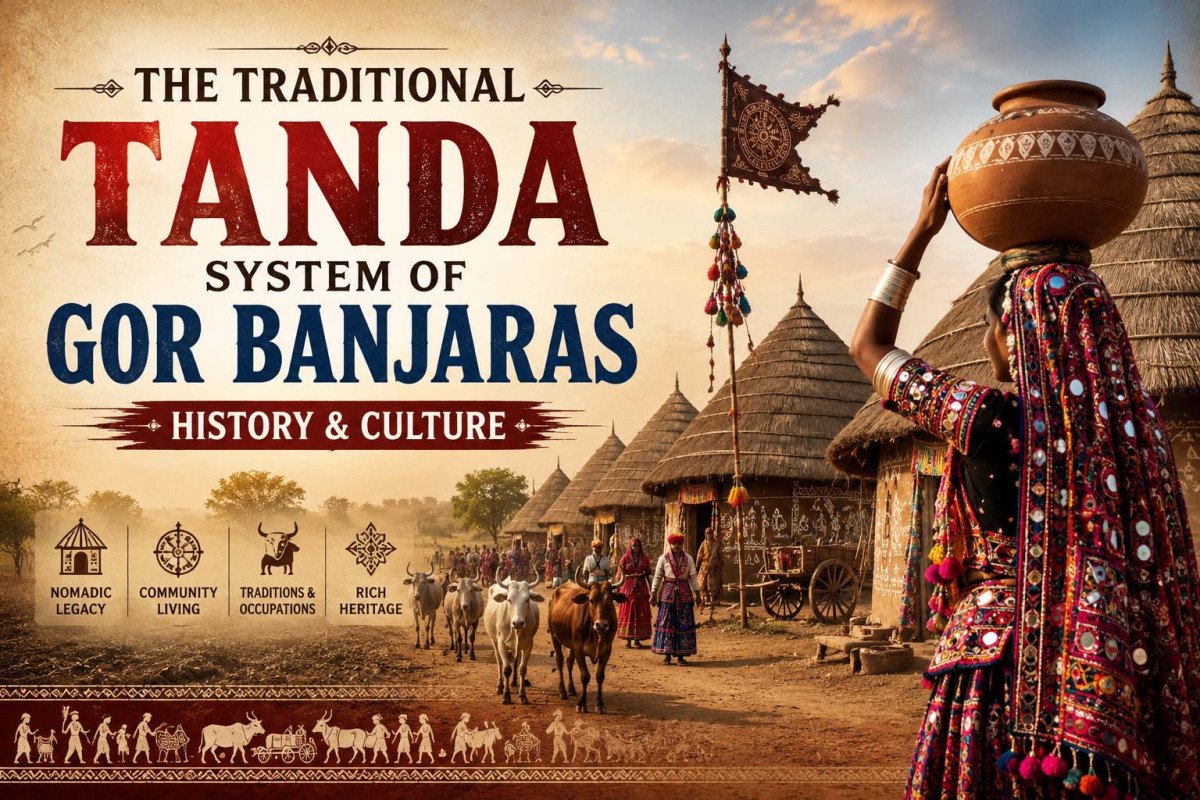
The Tanda System is one of the oldest and most distinctive social institutions of the Gor Banjara community. Long before modern villages, towns, and administrative systems emerged, Gor Banjaras had already established a highly organized mobile society that enabled them to travel across the Indian subcontinent while maintaining unity, discipline, justice, trade, and cultural identity.
For centuries, Gor Banjaras were among India's greatest transporters and traders. They moved goods across forests, mountains, plains, and kingdoms using massive caravans of bullocks. Such large-scale movement required not only courage and skill but also a well-defined social structure capable of governing hundreds of families. This structure was known as the Tanda.
A Tanda was much more than a temporary settlement. It was a self-governing community with its own leadership, rules, occupations, customs, and justice system. Every individual had a specific role, and every decision was taken collectively under the guidance of experienced leaders. Even today, the word "Tanda" remains synonymous with Gor Banjara settlements in many parts of India, reflecting the community’s rich historical legacy.
This article explores the origin of the Tanda System, its leadership hierarchy, social organization, and the important roles played by various groups within the traditional Gor Banjara society.
What is a Tanda?
A Tanda is the traditional settlement of the Gor Banjaras. Historically, it referred to a group of families traveling together for trade, accompanied by thousands of bullocks carrying goods from one region to another.
Unlike permanent villages, Tandas were mobile settlements. Whenever fodder became scarce or trading opportunities shifted elsewhere, the entire Tanda would relocate together. This mobility allowed Gor Banjaras to maintain their livelihood while protecting their livestock, which formed the backbone of their economy.
Although the settlements were temporary during the trading era, the social organization within the Tanda was remarkably stable. Every family knew its responsibilities, every dispute had a mechanism for resolution, and every member respected the authority of the community leaders.
Today, many Gor Banjara villages across Maharashtra, Telangana, Karnataka, Andhra Pradesh, Madhya Pradesh, Rajasthan, Gujarat, and other states are still called Tandas, preserving the memory of their nomadic ancestors.
Origin of the Tanda System
The origin of the Tanda System is closely linked with the pastoral and trading traditions of ancient communities.
Historian C. N. Luniya, while describing early Indian society, observed that cattle represented the true wealth of ancient Aryan communities. A person's prosperity was measured by the number of cattle he possessed. Similar traditions existed among the Gor Banjaras, whose enormous herds of oxen became the foundation of their trading empire.
Since cattle required abundant grazing land and water, Gor Banjaras established settlements in plains where:
- Water sources were easily available.
- Grasslands were abundant.
- Soil absorbed rainwater efficiently.
- Bullocks could be safely sheltered.
Whenever fodder became insufficient, the entire settlement shifted to another suitable location. Over generations, this practice evolved into the famous Tanda System that became a defining feature of Gor Banjara culture.
The term Tanda is believed to have originated from the Nemadi word "Toda," referring to settlements located near forests and hills. Similar words such as Tandu, Sthan, and Thano also describe settlements in different regional languages.
Because of their nomadic lifestyle, a popular saying became associated with the community:
"Tanda Ruka, Tanda Chala."
"The Tanda halted; the Tanda moved again."
This phrase perfectly captures the dynamic lifestyle of the Gor Banjaras, whose homes were never confined to one place but whose identity remained united wherever they traveled.
Why the Tanda System Was Necessary
Managing thousands of bullocks, hundreds of traders, and numerous families across vast distances required extraordinary organization.
The Tanda System fulfilled several essential purposes:
- Ensured safety during long-distance trade.
- Protected cattle and valuable goods.
- Maintained law and order.
- Organized food and water supplies.
- Resolved disputes internally.
- Preserved customs and traditions.
- Strengthened unity among different lineages.
Without such a structured system, the extensive trading networks of the Gor Banjaras would have been nearly impossible to sustain.
Leadership of the Tanda
Every Tanda functioned under a clearly defined leadership structure. Authority was respected, but it was also accompanied by responsibility and accountability.
The principal offices included:
- Naik (Chief)
- Karbhari (Manager)
- Dhaliya (Messenger)
- Dhadhi (Bard)
- Sunar (Goldsmith)
- Hajam (Barber)
- Jogi
- Shingada Banjara
Each role contributed to the smooth functioning of the community.
Naik – The Chief of the Tanda
The Naik was the supreme leader of the Tanda.
Every caravan or group of Gor Banjaras had its own Naik, whose authority extended over trade, administration, discipline, and social welfare. No important activity was undertaken without his approval.
In many ways, the Naik served as the king of the Tanda. However, unlike an absolute ruler, he was expected to embody qualities that earned the trust and respect of the community.
Responsibilities of the Naik
The Naik was responsible for:
- Protecting every family in the Tanda.
- Maintaining peace and harmony.
- Organizing trade expeditions.
- Preventing internal conflicts.
- Representing the Tanda before outsiders.
- Ensuring justice.
- Helping needy members.
- Preserving community traditions.
He was expected to display virtues such as:
- Truthfulness
- Justice
- Forgiveness
- Compassion
- Courage
- Dharma (righteous conduct)
A respected Naik attracted more families to join his Tanda because people believed they would enjoy security, fairness, and prosperity under his leadership.
Hereditary Leadership
Traditionally, the office of Naik was hereditary.
Within major Gor Banjara lineages such as:
- Rathod
- Chavan
- Pawar
- Jadhav
the leadership passed from one generation to the next within a designated family. This continuity ensured stability and preserved accumulated experience in governance.
The reputation of the Naik often influenced matrimonial alliances. Families considered the prestige and character of a Naik while arranging marriages, making his standing a symbol of the Tanda's honor.
Historical accounts also note that some Naiks practiced polygamy, marrying two wives as a mark of prestige. Both wives were respected within the Tanda and occupied honorable positions in community life.
Karbhari – The Manager of the Tanda
The second most important person after the Naik was the Karbhari.
If the Naik formulated policies, the Karbhari ensured they were implemented.
He supervised the daily functioning of the Tanda and acted as the chief administrator.
Duties of the Karbhari
The Karbhari:
- Monitored community activities.
- Ensured obedience to the Naik's decisions.
- Reported important developments.
- Coordinated trade operations.
- Assisted in dispute resolution.
- Encouraged development of the Tanda.
- Protected the reputation of the community.
The Karbhari and the Naik worked closely together. Their cooperation was essential for maintaining discipline and efficiency.
If either failed to fulfill their responsibilities, senior members from the same hereditary lineage could be appointed to replace them, ensuring that capable leadership remained in place.
Dhaliya – The Messenger of the Tanda
Every Tanda employed a trusted servant known as the Dhaliya.
Despite being a servant, the Dhaliya occupied an important position because communication was vital for the functioning of nomadic communities.
Responsibilities
The Dhaliya:
- Delivered messages between Tandas.
- Assisted the Naik and Karbhari.
- Helped during community gatherings.
- Announced important events.
- Performed ceremonial duties.
During marriages and festivals, he played a traditional musical instrument called the Duf, contributing to the festive atmosphere.
The community took responsibility for his welfare. His food, shelter, and family needs were collectively supported, while the Naik and Karbhari provided clothing. During festivals, he also received gifts and rewards.
Whenever he greeted community members with "Ram Ram," they responded respectfully and blessed him.
This mutual respect reflected the cooperative spirit that characterized the Tanda System.
Sunar – The Goldsmith
Traditional Gor Banjara ornaments are among the most beautiful examples of Indian tribal craftsmanship.
To create these ornaments, every major Tanda included one or two families of Sunars (Goldsmiths).
They designed distinctive jewelry specifically for Gor Banjara women, including elaborate ornaments that became symbols of cultural identity.
Unlike ordinary craftsmen, Sunars often remained permanently attached to a particular Tanda under the protection of its Naik.
Specialized artisans who produced ornaments such as Mathiya and Bodalu were sometimes known as Malenda. Historical accounts mention that although many Malenda artisans followed Islam, they continued living harmoniously within Gor Banjara Tandas, illustrating the practical and inclusive nature of the community's occupational system.
Hajam – The Barber
Personal appearance held considerable importance among Gor Banjara men.
Their distinctive hairstyle, known as Zalpa, required skilled barbers.
The Hajam family usually resided permanently within the Tanda and provided hair-cutting and grooming services to the community.
Their responsibilities also extended to assisting families during ceremonies and important social occasions.
Whenever financial difficulties arose, the Naik and Karbhari helped support the Hajam family, recognizing that every occupation contributed to the collective welfare of the Tanda.
Dhadhi – The Custodians of Oral History
Among the most respected members of the Tanda were the Dhadhis.
They were poets, singers, storytellers, historians, and musicians whose work preserved the community's collective memory.
Using a traditional instrument called the Kingari, they composed and performed:
- Heroic ballads
- Historical songs
- Genealogies
- Praise songs
- Folk narratives
The Dhadhis traveled between different Tandas, collecting information about families, events, and notable individuals. Because they possessed extensive knowledge of various communities, they also played a significant role in arranging matrimonial alliances.
Many Naiks considered the presence of accomplished Dhadhis a matter of prestige, much like royal courts honored court poets and chroniclers.
Their contributions ensured that Gor Banjara history, values, and traditions were transmitted orally across generations long before written records became common.
Jogi Banjara – The Spiritual Tradition of the Tanda
Among the communities associated with the Tanda were the Jogi Banjaras, who were respected for their spiritual traditions and religious devotion.
According to Gor Banjara oral traditions, their origin is linked with King Bhartrihari (Bhratari), the legendary ruler who renounced his kingdom during the era of the Navnath (Nine Nath Yogis). After abandoning worldly pleasures, Bhartrihari embraced the life of a saint and traveled extensively.
Historical traditions state that he moved with Gor Banjara Tandas, preaching spirituality and detachment from material life. His followers gradually formed a separate group that later became known as Jogi Banjaras.
Even today, folk singers across many Gor Banjara regions continue to narrate the life of King Bhartrihari through devotional songs and oral storytelling, preserving this spiritual heritage.
Shingada Banjara – The Warriors and War Musicians
Another important group within the traditional Tanda was the Shingada Banjara.
The name derives from Shinga or Turahi, the large war horn that was sounded before and during battles.
In ancient times, these musicians performed several important duties:
- Blowing the war bugle before battles.
- Motivating soldiers with heroic songs.
- Announcing military movements.
- Carrying swords while playing the bugle.
- Training young warriors in traditional weapons.
The Shingada Banjaras represented both courage and discipline. Historical traditions mention that many of them fought in battles while carrying the bugle in one hand and the sword in the other.
Even today, communities of Shingada Banjaras can be found in parts of Maharashtra, particularly around Killari and Pusad, where many families continue to preserve their identity.
Occupational Communities within the Tanda
The Tanda included several occupational groups that lived together for generations.
These included:
- Dhadhi
- Dhaliya
- Sunar
- Malenda
- Hajam
- Jogi
- Shingada
Although they lived alongside Gor Banjaras and spoke Gor Boli, they traditionally maintained their own community identities and matrimonial customs.
Interestingly:
- Their festivals were largely similar.
- Their lifestyle closely resembled that of the Gor Banjaras.
- Many adopted Gor Banjara customs and traditions.
- Some surnames were shared between different occupational groups.
However, when asked about their identity, they generally identified themselves by their respective occupational communities rather than calling themselves Gormati.
This demonstrates the remarkable diversity that existed within the Tanda while preserving clear social identities.
The Physical Structure of a Traditional Tanda
Unlike ordinary villages, a Tanda was carefully planned according to practical needs.
The settlement was generally established:
- Near the foothills of mountains.
- Close to permanent water sources.
- On land with good drainage.
- Near abundant grazing fields.
These conditions ensured that both people and cattle could survive comfortably throughout the trading season.
Houses of the Tanda
Traditional Gor Banjara houses were simple yet highly functional.
They were built using:
- Wooden poles.
- Bamboo.
- Grass.
- Mud.
- Thatch roofing.
Each house consisted of two main sections.
Main Characteristics
- Only one entrance.
- No windows.
- East-facing door.
- Grass-covered roof.
- Strong wooden framework.
The absence of windows helped protect the family from wild animals, storms, and extreme weather while preserving warmth during winter.
Interior Arrangement
Despite their simplicity, every house followed a fixed internal layout.
Kitchen
Located on the left side immediately after entering.
Living Area
The right side served as both sitting and sleeping space.
Tagadi (Sacred Center)
The center of the house contained a sacred place called Tagadi.
This area was extremely important because it housed:
- Family deities.
- Sacred objects.
- Valuable ornaments.
- Important possessions.
Tagadi symbolized the spiritual heart of every Gor Banjara household.
Arrangement of Houses
One of the most interesting features of the Tanda was its layout.
The houses were constructed in a semi-circular formation.
This arrangement provided several advantages:
- Easier defense.
- Better communication.
- Central gathering space.
- Protection of cattle.
- Strong community interaction.
Although every lineage had its own row of houses, all families remained part of one united settlement.
Interestingly, the houses of the Naik and Karbhari were not significantly larger than those of ordinary families, reflecting the community's emphasis on leadership through responsibility rather than luxury.
Damani – The Cattle Shelter
Every house had an open space in front called the Damani.
Here the family kept:
- Bullocks.
- Cows.
- Calves.
- Agricultural animals.
Since livestock represented the primary source of wealth, the Damani occupied an essential place in every household.
Community Ground
A large open ground existed in front of every Tanda.
This served multiple purposes.
It was used for:
- Religious ceremonies.
- Community meetings.
- Festivals.
- Marriage rituals.
- Public announcements.
- Traditional dances.
- Social gatherings.
Major rituals such as Ori and Samanka were conducted here.
Usually, the Tanda was established about one or two kilometers away from neighboring villages to maintain independence while avoiding unnecessary interference in village affairs.
Bhoomi Puja – Worship of the Land
Whenever a new Tanda settled in a location, the first ceremony performed was Bhoomi Puja, or the worship of Mother Earth.
The Gor Banjaras believed that nature possessed divine power and deserved respect before human habitation began.
This ceremony sought blessings for:
- Prosperity.
- Good health.
- Safe journeys.
- Protection from natural calamities.
- Peace within the community.
Nature worship has remained one of the oldest traditions of the Gor Banjaras.
Samank Puja
Along with Bhoomi Puja, another important ritual called Samank Puja was performed.
According to traditional beliefs, unseen spiritual forces inhabited forests, hills, and deserted places.
To seek harmony with these forces, families collected contributions and offered a goat as a symbolic sacrifice.
The ritual involved:
- Community prayers.
- Offering blood to the earth.
- Cooking the meat collectively.
- Sharing the meal together.
The same ritual was repeated when the Tanda prepared to migrate, marking both the beginning and the end of a settlement.
Ladeni – The Great Bullock Caravan Trade
Perhaps the greatest achievement of the Gor Banjaras was Ladeni, the traditional transportation system that made them famous throughout India.
The word Ladeni refers to carrying goods by loading them onto bullocks.
For centuries, Gor Banjaras transported:
- Salt
- Grain
- Cotton
- Spices
- Metals
- Forest products
- Cloth
- Military supplies
Historical records describe caravans consisting of thousands—and sometimes even lakhs—of bullocks moving across the Indian subcontinent.
Before the development of railways and highways, this was one of the most efficient transportation systems in India.
Seasonal Trade Cycle
The Ladeni profession followed a well-organized annual schedule.
After Diwali
Trade caravans departed for distant regions.
Six to Seven Months
The men remained engaged in transporting goods.
Before the Monsoon
The caravans returned home.
Rainy Season
Families devoted themselves to:
- Agriculture.
- Repairing equipment.
- Preparing for the next trading season.
This cycle continued year after year and became the foundation of the Gor Banjara economy.
Responsibilities of Women During Ladeni
Women usually remained in the Tanda while the men traveled.
They carried out several important responsibilities:
- Looking after children.
- Caring for elderly family members.
- Managing cattle.
- Preparing food.
- Spinning thread.
- Stitching cloth.
- Making strong sacks known as Gunli.
These specially designed sacks were used to carry goods during the next trading expedition.
Thus, women played an indispensable role in sustaining the Ladeni economy.
Admission into the Community – The Bheler Ritual
One of the unique aspects of the Tanda System was its process of integrating outsiders.
Historical accounts mention that during trading journeys, some children or individuals from other communities became attached to Gor Banjara Tandas. They initially worked as helpers or servants and were known as Jangad.
If they chose to remain permanently with the Tanda, they underwent a traditional ceremony called Bheler, through which they were formally accepted into the community.
The process generally involved:
- Ritual purification.
- Community approval.
- A feast shared by the entire Tanda.
- Recognition as a member of the community.
Over successive generations, families of such individuals gradually became fully integrated into Gor Banjara society. Oral traditions describe this as a process through which the status of an outsider diminished over time until the descendants were regarded as part of the community.
These historical practices should be understood in the context of their time and do not reflect present-day social norms or values.
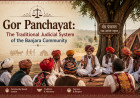
Jati Panchayat – The Traditional Justice System
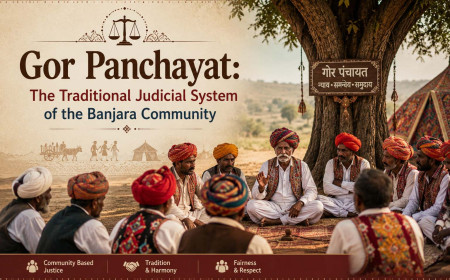
Every Tanda maintained its own judicial institution known as the Jati Panchayat, also called Nasab or Malav.
This system ensured that disputes were resolved within the community without immediately approaching external authorities.
The objectives of the Panchayat included:
- Maintaining peace.
- Preserving community unity.
- Protecting family honor.
- Preventing unnecessary conflicts.
- Delivering fair justice.
- Safeguarding the reputation of the Tanda.
The Daisane – Community Elders
The Panchayat consisted of experienced elders known as Daisane.
The members generally included:
- Naik
- Karbhari
- Senior respected elders
- Experienced representatives of different lineages
Their wisdom and impartiality formed the foundation of the justice system.
How a Panchayat Functioned
When a dispute arose:
- The complainant approached the Naik.
- The Naik consulted the Karbhari.
- A hearing date was announced.
- The Panchayat assembled outside the Tanda.
- Both parties presented their arguments.
- Witnesses were questioned.
- Elders discussed the evidence privately.
- A collective decision was reached.
Throughout the proceedings, discipline and respect were strictly maintained.
Judgments and Punishments
Most punishments involved:
- Monetary fines.
- Public apology.
- Community service.
- Compensation to the aggrieved family.
If a person disagreed with the decision, he could appeal before another Tanda's Panchayat, though such cases were uncommon.
The most severe punishment was social boycott (outcasting). A person who repeatedly refused to accept the Panchayat's decision could be declared an outcast, and the community would cease social interactions with the individual and, in some cases, the family. This underscores the importance that traditional Tanda society placed on collective responsibility and social harmony.
The Laman Route – The Historic Trade Network of the Gor Banjaras
Long before modern roads, railways, and highways connected India, the Gor Banjaras had already developed an extensive network of trade routes known as the Laman Route.
The word Laman became associated with Gor Banjara traders because of their prominent role in transporting salt (Lavan) and many other essential goods across the Indian subcontinent. Over time, communities engaged in this profession came to be known in different regions as Laman, Lamani, Lambada, or Lambadi, though these names have regional and historical variations.
The Laman Route was carefully planned. Caravans preferred:
- The shortest practical path between trading centers.
- Reliable water sources.
- Safe camping grounds.
- Grazing areas for thousands of bullocks.
- Routes that avoided unnecessary danger.
These paths later became important travel routes for merchants and travelers.
Historical records mention one of the most significant Laman trade routes connecting Mirzapur with Nagpur, a corridor that played a major role in inland commerce before the railway era. European travelers of the eighteenth century also documented the movement of Banjara caravans along such routes.
The success of these routes demonstrates the remarkable logistical knowledge possessed by the Gor Banjaras.
Hunting – Yed Ramer
Besides trade and cattle rearing, hunting formed an important part of traditional Tanda life.
The Gor Banjaras referred to hunting as Yed Ramer.
Hunting served multiple purposes:
- Obtaining meat.
- Protecting livestock.
- Demonstrating bravery.
- Training young men in survival skills.
- Strengthening community cooperation.
Most households kept trained hunting dogs.
The weapons commonly used included:
- Spears
- Wooden sticks
- Swords
- Traditional hunting equipment
Once the dogs detected an animal, they chased it while hunters surrounded it.
Wild Boar Hunting
Among all hunting activities, wild boar hunting was regarded as the greatest test of courage.
The wild boar is known as Sur in Gor Boli.
A hunter who successfully killed a wild boar earned great respect and was called Surama Mati.
Traditional hunting followed strict rules.
For example:
- The hunter who first located and killed the animal received its head as a mark of honor.
- Meat was divided equally among participants.
- The Naik received an honorary share.
- Hunting was considered a collective activity rather than an individual achievement.
Historical traditions also mention that hunting was associated with the celebration of Chaitra Shukla Pratipada, the traditional New Year.
Today, however, wildlife protection laws prohibit the hunting of protected animals in India, and such practices are no longer legally permitted.
Tattooing – A Living Tribal Art
Tattooing has long been an important cultural tradition among the Gor Banjaras.
Men, women, and young girls traditionally adorned their bodies with symbolic tattoos.
Tattoos represented:
- Family identity.
- Religious beliefs.
- Beauty.
- Protection.
- Personal memories.
- Cultural pride.
Girls often tattooed the names of their brothers as a symbol of affection and lifelong family bonds.
Women commonly preferred circular designs and decorative patterns.
Men frequently chose symbols associated with bravery, such as:
- Swords
- Daggers (Jambiya)
- Traditional motifs
Tattooing was usually performed by experienced women using fine needles.
Although modern tattoo techniques have become popular, many elderly Gor Banjaras continue to preserve these traditional designs, making them a living expression of tribal heritage.
Traditional Healthcare of the Tanda
For centuries, Gor Banjara Tandas lived in forests, hills, and remote regions where modern medical facilities were unavailable.
As a result, they developed a rich tradition of indigenous healthcare based on:
- Forest herbs.
- Medicinal plants.
- Roots.
- Leaves.
- Natural oils.
- Traditional healing practices.
Knowledge of medicinal plants was passed orally from one generation to another.
Every experienced elder was expected to possess at least some understanding of herbal medicine.
Two Categories of Illness
Traditional Gor Banjara belief generally divided illness into two broad categories.
1. Physical Illness
These included:
- Fever
- Wounds
- Snake bites
- Animal injuries
- Digestive disorders
Such illnesses were treated with herbal medicines prepared from forest plants.
2. Spiritual or Supernatural Illness
Some ailments were believed to result from unseen spiritual influences, such as evil spirits or black magic. These were commonly referred to in oral traditions as Barer.
To diagnose such conditions, ritual specialists known as Bhagats (Jaanies) performed ceremonies intended to identify the perceived cause and recommend appropriate rituals or remedies.
These beliefs formed part of the traditional worldview of many communities living in remote areas before the development of modern medical science.
The Samal Ritual
One of the distinctive traditional practices was Samal, a ritual used to seek guidance regarding illness or misfortune.
Historical descriptions mention symbolic acts such as:
- Turning over a grinding stone.
- Placing a coin on a metal plate.
- Using a water vessel.
- Observing ritual movements of sacred objects.
Based on these rituals, the Bhagat interpreted the situation and suggested prayers, fasting, herbal treatments, or other customary practices.
While Samal holds cultural significance, it should not be considered a substitute for modern medical diagnosis or treatment.
Herbal Medicine
The forests surrounding the Tanda served as a natural pharmacy.
Traditional remedies included herbs for:
- Cuts and wounds.
- Fever.
- Bone injuries.
- Digestive problems.
- Snake bites.
- Scorpion stings.
Knowledge of these remedies reflected centuries of close interaction with nature.
Many of these plants continue to be studied today for their medicinal properties, although professional medical care remains essential for serious illnesses.
Ritual Healing Practices
Traditional healing sometimes included symbolic rituals such as:
- Tying a thread with seven knots around the waist.
- Offering prayers to the family deity.
- Using sacred ash.
- Ritual fasting.
- Passing a lemon or egg over the patient's body before discarding it.
These practices reflected cultural beliefs about spiritual well-being and community support. They are best understood as part of the historical and religious traditions of the Tanda.
Historical Accounts of Human Sacrifice
Some historical writings and oral traditions claim that, in ancient times, certain communities performed human sacrifice before major trading expeditions to appease supernatural forces.
These accounts describe alleged practices associated with the movement of large bullock caravans.
However, such reports are difficult to verify conclusively and are based on historical narratives rather than living tradition.
There is no evidence that such practices exist among Gor Banjaras today, and they are entirely incompatible with modern ethical values and the law.
When studying tribal history, it is important to distinguish between historical claims, folklore, and contemporary cultural practices.
Widow Remarriage – A Practical Social Institution
Unlike many traditional societies that discouraged widow remarriage, the Gor Banjaras historically recognized it as an accepted social institution.
Widow remarriage provided:
- Economic security.
- Family stability.
- Protection of children.
- Continuity of household responsibilities.
In many cases, a younger brother married the widow of his deceased elder brother, a practice intended to ensure that the widow remained supported within the family.
Similarly, oral traditions describe rare situations in which an elder brother married the fiancée of a younger brother who died before the wedding. Folk songs preserve memories of such incidents, reflecting the emotional and social complexities of these customs.
These traditions were shaped by the social and economic conditions of their time and should be understood within their historical context.
Divorce and the "Mamala Toder" Tradition
Traditional Gor Banjara society also recognized divorce under specific circumstances.
If a married woman chose to leave her husband and marry another man, she was historically referred to as Bhangali.
The second husband was generally expected to compensate the first husband for marriage-related expenses. This settlement was known as Mamala Toder, literally meaning the settlement or resolution of the marital matter.
The Jati Panchayat supervised such cases to ensure that disputes were resolved peacefully and according to customary law.
Unity within Diversity
One of the greatest strengths of the Tanda System was its ability to accommodate people from different occupational backgrounds while preserving a common cultural identity.
Within a traditional Tanda lived:
- Traders
- Cattle breeders
- Artisans
- Poets
- Musicians
- Goldsmiths
- Barbers
- Religious specialists
- Messengers
Each occupation contributed to the success of the community.
This cooperative system enabled the Gor Banjaras to maintain one of the most organized mobile societies in Indian history.
The Legacy of the Tanda System
Although the nomadic trading lifestyle has largely disappeared, the legacy of the Tanda continues to shape Gor Banjara identity.
Today, the word Tanda still refers to many Gor Banjara settlements across India.
The values inherited from the traditional Tanda remain visible in community life:
- Collective decision-making.
- Respect for elders.
- Strong family bonds.
- Hospitality.
- Community cooperation.
- Preservation of Gor Boli.
- Celebration of traditional festivals.
- Pride in Banjara heritage.
Even as modern education, urbanization, and technology transform society, these cultural foundations continue to connect younger generations with their ancestral roots.
Conclusion
The Traditional Tanda System was far more than a temporary settlement of traveling traders. It was a sophisticated social, economic, and cultural institution that enabled the Gor Banjaras to thrive for centuries.
Its structured leadership under the Naik, efficient administration through the Karbhari, extensive Ladeni trade, carefully organized settlements, respected Jati Panchayat, skilled artisans, oral historians, and strong community values together created a resilient and self-sufficient society.
Many practices described in historical records belong to a different era and should be understood in their historical context rather than as representations of present-day Gor Banjara life. The enduring legacy of the Tanda lies not in those isolated accounts but in its remarkable organization, resilience, cultural richness, and ability to preserve identity across generations.
The Tanda remains one of the most significant institutions in the history of the Gor Banjaras—a living symbol of unity, tradition, and the enduring spirit of a community that made an extraordinary contribution to the cultural and commercial history of India.
Frequently Asked Questions
What's Your Reaction?
 Like
0
Like
0
 Dislike
0
Dislike
0
 Love
0
Love
0
 Funny
0
Funny
0
 Wow
0
Wow
0
 Sad
0
Sad
0
 Angry
0
Angry
0


Comments (0)