

Gor Banjara Lifestyle and Traditional Clothing: A Living Heritage of Art, Identity, and Culture
The Gor Banjara lifestyle and traditional clothing reflect centuries of rich cultural heritage, artistic craftsmanship, and tribal identity. Known for their vibrant embroidered dresses, intricate mirror work, distinctive hairstyles, and elaborate silver ornaments, the Gor Banjaras have preserved their unique traditions across generations. Their philosophy of joyful living, love for music and dance, respect for nature, and colorful attire make them one of India's most culturally significant tribal communities.

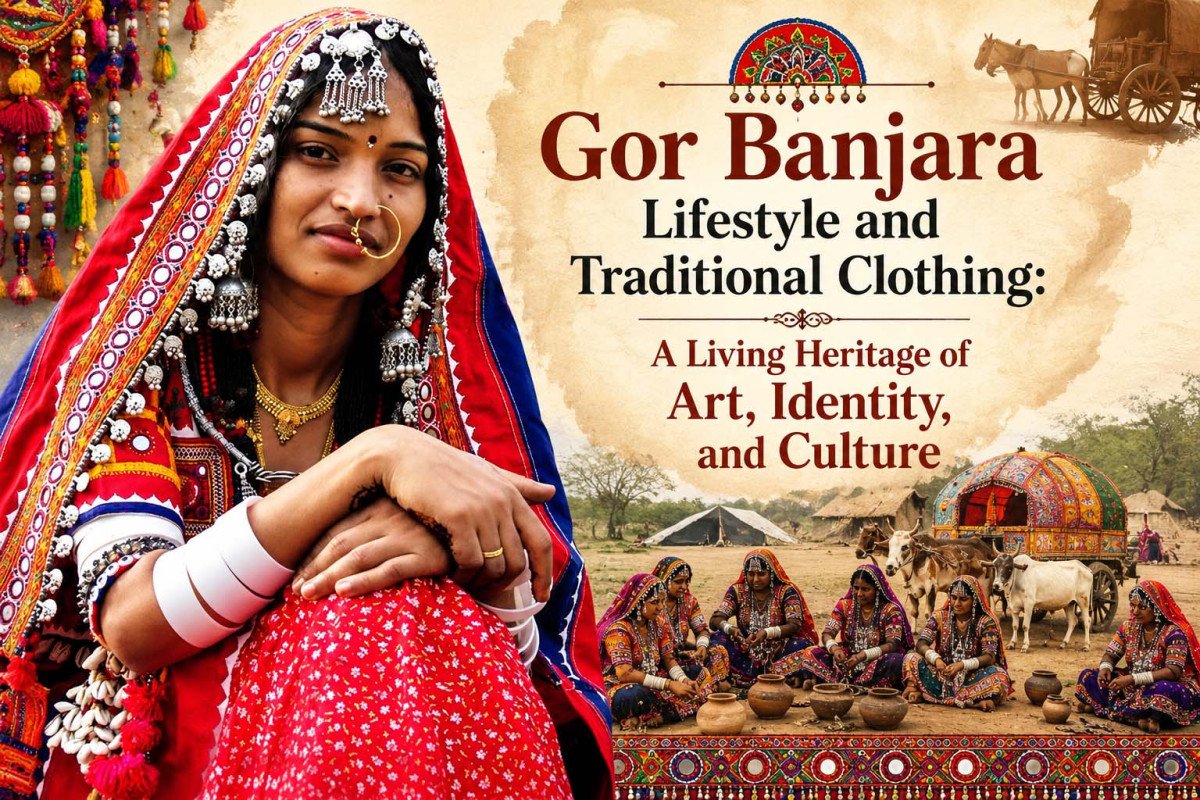
The Gor Banjara community is one of the oldest and most culturally vibrant tribal communities of the Indian subcontinent. Known throughout history as traders, transporters, travelers, and guardians of trade routes, the Gor Banjaras preserved their identity despite centuries of migration across vast geographical regions. Their rich cultural heritage is reflected not only in their language, festivals, customs, and traditions but also in their distinctive lifestyle and traditional clothing, which continue to fascinate historians, anthropologists, and cultural researchers.
Unlike many communities whose traditional attire gradually disappeared with modernization, the Gor Banjaras have remarkably preserved many elements of their ancestral clothing and ornaments. Their costumes are not merely garments but symbols of history, identity, craftsmanship, and social values. Every embroidered thread, mirror, bead, and ornament carries stories passed down through generations.
This article explores the unique lifestyle, clothing traditions, hairstyles, ornaments, and cultural significance of Gor Banjara attire while highlighting their historical connections and artistic excellence.
Gor Banjaras: Travelers Who Connected Cultures
The Gor Banjaras are often described as coordinators of world culture because of their historic role as long-distance traders. Long before modern transportation systems existed, they traveled across forests, mountains, deserts, and kingdoms with large caravans of bullocks carrying goods from one region to another.
Many scholars believe that Gor Banjaras had been moving across vast territories even before the flourishing of the Indus Valley Civilization. Their journeys connected different civilizations, allowing the exchange of goods, traditions, skills, beliefs, and cultural practices.
Unlike famous foreign travelers such as Fa Hein (399–411 AD) and Xuanzang (Hue-n-Tsang) (629–645 AD), who merely documented India after visiting it, the Gor Banjaras spent almost eight months every year traveling within and beyond the Indian subcontinent. Their contribution to the spread and enrichment of Indian culture remains an important area of historical research.
Lifestyle Rooted in Freedom and Celebration
The Gor Banjara way of life reflects a deep appreciation for freedom, joy, courage, and community living. Rather than accumulating excessive material wealth, they traditionally preferred to enjoy life with music, dance, festivals, food, and togetherness.
Their philosophy of life is beautifully expressed in the traditional Gor Boli saying:
"ये जीवडारो भरोसे केय जायनी आये जलम में कुद रम लेणु, खालेनु, पिलेनु, पेर लेणु, ये जीवडारो भरोसे केय जायनी।"
Its essence is simple yet profound:
Human life is uncertain. Since no one knows how long life will last, one should live it fully, enjoy every moment, eat well, celebrate, dance, sing, and cherish happiness.
This optimistic outlook continues to shape Banjara culture even today.
Food Habits and Religious Traditions
Although modernization has influenced the food habits of many Gor Banjaras, several traditional practices remain unchanged.
Historically, they have preferred:
- Non-vegetarian food
- Traditional beverages
- Community feasts
- Festival meals
For Gor Banjaras, food is not merely for survival but forms an important part of religious rituals and social gatherings.
Most traditional festivals are celebrated with:
- Goat or sheep sacrifices in certain religious traditions
- Community cooking
- Sharing meals
- Traditional drinks
- Folk music and dance
Food symbolizes prosperity, hospitality, and community unity.
Hunting and Traditional Games
Gaming and hunting were historically among the favorite activities of Gor Banjaras. These were not merely recreational pursuits but forms of adventure, skill, and survival.
Traditional hunting followed ethical customs. Before hunting an animal, hunters traditionally ensured that the animal became alert, giving it a fair chance to escape. Such practices reflected respect for nature rather than unnecessary cruelty.
Games also strengthened:
- Physical fitness
- Courage
- Teamwork
- Survival skills
Music and Dance: The Heart of Banjara Life
Perhaps no other tribal community celebrates music and dance with such enthusiasm as the Gor Banjaras.
Every important occasion includes:
- Marriage ceremonies
- Religious festivals
- Harvest celebrations
- Community gatherings
- Birth celebrations
Traditional musical instruments accompany energetic dances performed by men and women together.
Dance is not simply entertainment—it is considered an expression of joy, devotion, and cultural identity.
Traditional Clothing of Gor Banjara Men
The clothing of Gor Banjara men is simple yet dignified.
Their traditional attire generally consists of:
- Dhoti
- Barabundi (a combination of shirt and coat)
- Uparana (upper cloth)
- Turban (Pagadi)
The turban symbolizes honor, dignity, and leadership. Different methods of tying the turban often indicate regional traditions and community identity.
Men also traditionally carried a small waist pouch called Wasohi, used to safely store money while traveling.
Traditional Clothing of Gor Banjara Women
The attire of Gor Banjara women is among the most colorful and recognizable traditional dresses in India.
Their traditional dress consists of:
- Ghaghra (long embroidered skirt)
- Blouse (Kanchali or Choli)
- Head cloth (Odhani or Phetiya)
Unlike many other communities where clothing styles evolved rapidly, the Gor Banjara women's dress has remained remarkably consistent for thousands of years.
Their clothing immediately distinguishes them from women of other tribal and rural communities.
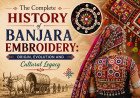
The Artistic Excellence of Banjara Embroidery
The beauty of Banjara clothing lies in its extraordinary embroidery.
Every garment is decorated with:
- Colorful thread work
- Tiny mirrors
- Beads
- Coins
- Glass pieces
- Decorative stitches
- Geometric patterns
Each design is handcrafted, requiring remarkable patience and artistic skill.
The embroidery represents:
- Nature
- Protection
- Prosperity
- Tribal identity
- Family traditions
Today, Banjara embroidery is internationally recognized as one of India's finest traditional textile arts.
International Recognition of Banjara Weaving
The artistic brilliance of Gor Banjara women gained global recognition during an international weaving exhibition held in 2001.
Eight Banjara women from Yallamma Tanda in Andhra Pradesh received an international prize worth 1,500 US dollars (approximately ₹60,000 at that time) for their exceptional weaving and embroidery work.
This achievement demonstrated that the traditional skills preserved by Banjara women are appreciated not only in India but around the world.
Clothing as Living History
Anthropologists believe that ancient tribal history survives through:
- Language
- Lifestyle
- Food habits
- Rituals
- Festivals
- Worship
- Clothing
- Ornaments
Many historians argue that the traditional clothing of Gor Banjaras preserves artistic elements dating back thousands of years.
Several similarities have been noted between Banjara embroidery and archaeological discoveries from the Indus Valley Civilization, particularly Harappa.
Although these similarities continue to be studied, they have attracted significant scholarly interest.
Silver Ornaments and Historical Trade Connections
Silver ornaments have always held special importance in Banjara culture.
Women traditionally decorate themselves with:
- Silver necklaces
- Silver bangles
- Silver waist ornaments
- Silver earrings
- Silver anklets
Historical references suggest that ancient India imported large quantities of silver from Afghanistan.
According to historian A. S. Chand in Bharatiya Sanskriti Ka Vikas, India imported silver and similar materials from Afghanistan.
Some researchers therefore propose historical connections between Gor Banjaras and regions that today lie within Afghanistan, although these ideas remain subjects of ongoing historical research rather than established fact.
Women as Master Craftswomen
Needlework occupies a central place in the life of a Gor Banjara woman.
From an early age, girls traditionally learn:
- Embroidery
- Mirror work
- Decorative stitching
- Ornament making
- Costume preparation
The needle and thread are considered essential tools of creativity.
Historical references also mention that Aryan women possessed exceptional embroidery skills, leading some scholars to compare ancient textile traditions with those preserved among Banjara women today.
Materials Used in Traditional Ornamentation
Banjara embroidery incorporates an impressive variety of materials.
These include:
- Cotton threads
- Colorful yarn
- Small mirrors
- Glass pieces
- Lac
- Mercury beads
- Coral (Munga)
- Decorative beads
- Ganthani
- Laladi
- Brass
- Bronze
- Gold
- Silver
- Ivory bangles
- Lead ornaments
The careful combination of these materials produces garments that sparkle beautifully during festivals and dances.
Traditional Goldsmiths of the Tanda
Every Tanda traditionally included skilled artisans responsible for making ornaments.
Among them were members of the Sonar (Goldsmith) community, who specialized in crafting:
- Necklaces
- Earrings
- Bangles
- Waist ornaments
- Head ornaments
Their close association with the Tanda ensured that every bride received beautifully handcrafted jewelry.
Similar Clothing Across Borders
Traditional Banjara attire is not confined to India alone.
Communities living in:
- Afghanistan
- Pakistan
- Balochistan
- Iran
have historically worn clothing displaying remarkable similarities to Indian Gor Banjara dress.
Researchers have observed similarities in:
- Ghaghra designs
- Head coverings
- Beadwork
- Mirror embroidery
- Ornament styles
These cultural connections continue to attract academic attention.
The Symbolism Behind Banjara Dress
Every element of traditional clothing carries symbolic meaning.
Examples include:
- Mirrors believed to ward off evil.
- Bright colors representing happiness.
- Embroidery reflecting prosperity.
- Horn ornaments symbolizing sacred cattle.
- Neck ornaments representing historical identity.
Thus, clothing becomes a visual language expressing social and cultural values.
Hairstyles of Gor Banjara Men
Traditional hairstyles are another distinctive feature.
Men historically maintained:
- Long hair below the ears
- A unique side pattern called Zalpa
- A small preserved ponytail
Many elderly men in traditional Tandas continue to maintain these ancestral hairstyles.
Hairstyles of Gor Banjara Women
The hairstyle of Gor Banjara women is equally unique.
The hair is carefully divided into two equal sections and arranged on both cheeks in decorative forms known as:
- Ghugari Topali
The remaining hair at the back is styled into:
- Shing Aati
Interestingly, archaeologists discovered terracotta figurines at Harappa displaying hairstyles that resemble these traditional Banjara styles, making them an intriguing subject for comparative cultural studies.
Traditional Ornaments of Gor Banjara Men
Although women wear far more ornaments, men also traditionally wear decorative items such as:
- Metal wrist rings
- Large earrings
- Silver waist chains
- Distinctive turbans
Their ornaments symbolize bravery, dignity, and cultural identity.
Traditional Ornaments of Gor Banjara Women
Gor Banjara women are renowned for wearing elaborate ornaments weighing between 10 and 15 kilograms during important occasions.
These ornaments include:
- Necklaces
- Bangles
- Anklets
- Earrings
- Nose rings
- Waist belts
- Ivory bangles
- Silver jewelry
- Coral ornaments
- Glass bead necklaces
- Shell decorations
- Mercury bead ornaments
Many similar ornaments have reportedly been found during excavations at Harappa, making them significant subjects for archaeological comparison.
Jewelry as an Indicator of Marital Status
Traditional ornaments also communicate social status.
From a woman's jewelry, community members can traditionally identify whether she is:
- Unmarried
- Married
- Widowed
A married woman traditionally wears:
- Ghughri
- Wakadi
- Chudiya (Bangles)
Historically, many Gor Banjara women did not apply vermilion (Sindoor) on the forehead, unlike several other Hindu communities. Customs can vary by region today.
Sacred Horn Symbol
One of the most remarkable features of traditional Banjara culture is the symbolic use of small horn ornaments in women's hairstyles.
These horns represent:
- The sacred ox
- Prosperity
- Strength
- Gor lineage (Gor Vamsha)
The ox has always occupied a central place in Banjara life because it served as the primary companion in transportation, trade, and livelihood.
Few communities in the world preserve such a distinctive symbolic tradition.
The Ox in Marriage Rituals
The ox is deeply respected in Gor Banjara culture.
In certain traditional marriage customs, the bride is ceremonially presented with an ox and bid farewell while seated upon it. This ritual symbolizes:
- Prosperity
- Fertility
- A successful household
- Respect for ancestral traditions
Although this custom is less common today, it survives in some traditional Tandas and reflects the historical importance of cattle in Banjara society.
Preserving a Living Heritage
Modern education, urbanization, and changing lifestyles have influenced the clothing habits of younger generations. Today, many Gor Banjaras wear contemporary clothing in daily life while reserving traditional attire for festivals, weddings, and cultural celebrations.
Despite these changes, Banjara embroidery, ornaments, hairstyles, and ceremonial dress remain powerful symbols of identity. Cultural organizations, researchers, museums, and artisans continue to document and promote these traditions so they are not lost to future generations.
The remarkable craftsmanship of Banjara women, their vibrant textiles, and their unique aesthetic continue to inspire fashion designers and textile scholars around the world.
Conclusion
The traditional lifestyle and clothing of the Gor Banjara community represent far more than colorful garments or beautiful ornaments. They embody centuries of history, artistic excellence, cultural resilience, and collective memory. From intricately embroidered Ghaghras and mirror work to distinctive hairstyles, silver jewelry, and symbolic horn ornaments, every aspect of Banjara attire tells a story of a people who preserved their identity through constant movement and changing times.
Their philosophy of living life joyfully, celebrating through music and dance, respecting nature, valuing craftsmanship, and maintaining ancestral customs continues to make the Gor Banjaras one of India's most distinctive tribal communities. As interest in indigenous heritage grows worldwide, documenting and preserving the traditional clothing and lifestyle of the Gor Banjaras becomes increasingly important—not only for the community itself but also for the cultural history of South Asia.
Frequently Asked Questions
What's Your Reaction?
 Like
1
Like
1
 Dislike
0
Dislike
0
 Love
0
Love
0
 Funny
0
Funny
0
 Wow
0
Wow
0
 Sad
0
Sad
0
 Angry
0
Angry
0


Comments (0)