

Sant Sevalal Maharaj and Goddess Jagadamba: The Divine Relationship That Shaped Banjara Faith
Discover the sacred relationship between Sant Sevalal Maharaj and Goddess Jagadamba. Learn how their divine connection shaped Banjara spirituality, traditions, and cultural identity.


Among the many stories preserved in the oral traditions of the Gor Banjara community, the relationship between Sant Sevalal Maharaj and Goddess Jagadamba (Mariamma) holds a special place. For millions of Banjaras across India, Sant Sevalal Maharaj was not merely a saint or social reformer—he was a devoted disciple chosen by Goddess Jagadamba to guide and protect the community.
This sacred relationship forms the foundation of Banjara spirituality. In almost every Banjara Thanda, the temples of Sant Sevalal Maharaj and Goddess Jagadamba stand together, symbolizing the inseparable bond between the divine mother and her devoted follower.
The stories of their relationship have been preserved through folk songs, bhajans, oral narratives, and traditional literature. While these accounts belong primarily to the devotional traditions of the Banjara community rather than independently verified historical records, they continue to inspire faith, unity, and moral living.
Who Is Goddess Jagadamba?
Jagadamba, also worshipped by many Banjaras as Mariamma, is regarded as the universal mother and protector of humanity.
Within Banjara tradition, she represents:
- Divine protection
- Motherly compassion
- Courage
- Justice
- Prosperity
- Spiritual guidance
Every major Banjara religious celebration includes prayers dedicated to Jagadamba. Her blessings are believed to protect families, livestock, crops, and entire Thandas from disease, famine, and hardship.
Because Banjaras traditionally depended upon cattle, forests, and long-distance trade, faith in Jagadamba became deeply connected with everyday life.
A Child Blessed by the Divine Mother
According to Banjara tradition, Sant Sevalal Maharaj's parents prayed sincerely to Goddess Jagadamba for a child.
Their prayers were answered with the birth of Sevalal, whom devotees regard as a divinely blessed child destined for a higher purpose.
From an early age, Sevalal showed extraordinary devotion toward the goddess.
Unlike other children of his age, he preferred spending time:
- praying,
- meditating,
- singing devotional songs,
- caring for animals, and
- serving people.
These qualities convinced many elders that he was under the special protection of Jagadamba.
A Lifelong Devotee of Jagadamba
Throughout his life, Sant Sevalal Maharaj remained completely devoted to Goddess Jagadamba.
Before making important decisions, traditional accounts describe him praying to the goddess and seeking her blessings.
Whether travelling across forests, helping poor families, resolving community disputes, or guiding Banjara caravans, he believed that all strength came from Jagadamba.
For him, devotion was not limited to rituals.
He taught that true worship meant:
- speaking the truth,
- helping the needy,
- protecting animals,
- respecting elders,
- avoiding violence, and
- living honestly.
These principles reflected the spiritual values he associated with the Divine Mother.
Conversations Preserved in Banjara Tradition
One of the most unique features of Banjara devotional literature is the series of conversations between Sant Sevalal Maharaj and Goddess Jagadamba.
These conversations appear in oral stories, devotional songs, and traditional narratives.
According to these traditions, Jagadamba repeatedly encouraged Sevalal to take responsibility for the welfare of the Banjara people.
She reminded him that true greatness lies not in personal comfort but in serving society.
These symbolic conversations express the belief that spiritual leaders receive wisdom through complete devotion to God.
Although preserved as matters of faith rather than historical documentation, they remain among the most cherished parts of Banjara religious heritage.
The Question of Marriage
One of the best-known episodes in Banjara tradition concerns the question of marriage.
According to devotional accounts, Goddess Jagadamba wished Sant Sevalal Maharaj to marry and establish a family.
Sevalal, however, expressed his desire to dedicate his entire life to spiritual service and the welfare of the Banjara community.
Traditional narratives describe respectful conversations between the saint and the goddess on this subject.
Ultimately, devotees believe that his life became an example of complete dedication to humanity and spiritual discipline.
This story symbolizes the idea that different individuals may serve God in different ways.
Divine Guidance During Difficult Times
Throughout the traditional biography of Sant Sevalal Maharaj, Jagadamba is described as guiding him during periods of great difficulty.
According to Banjara tradition, she provided spiritual strength during:
- dangerous journeys,
- community crises,
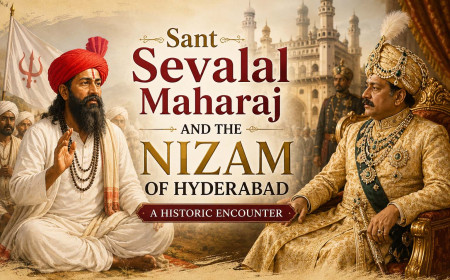
- conflicts with rulers,
- times of famine,
- disease outbreaks, and
- challenges faced by Banjara caravans.
These stories emphasize the community's belief that faith gives people courage to overcome adversity.
The Blessing Behind His Miracles
Many miracle stories associated with Sant Sevalal Maharaj are directly connected with Goddess Jagadamba.
Devotees believe that miracles such as:
- healing the sick,
- protecting followers,
- stopping epidemics,
- saving caravans,
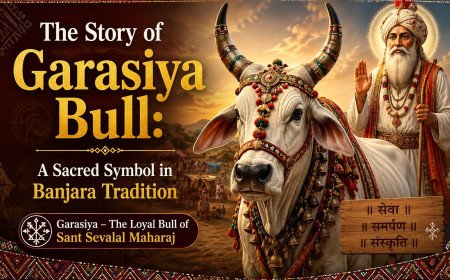
- recovering the Garasiya bull,
- surviving poisoned sweets,
were possible only through her blessings.
Rather than claiming supernatural powers for himself, traditional accounts portray Sant Sevalal Maharaj as a humble devotee who always attributed success to Jagadamba.
This humility remains one of the most admired aspects of his personality.
Jagadamba and the Message of Compassion
The teachings associated with Sant Sevalal Maharaj consistently reflect compassion.
According to Banjara tradition, Jagadamba desired kindness rather than cruelty.
This belief influenced Sevalal's message of:
- Ahimsa (non-violence),
- respect for animals,
- helping the poor,
- avoiding unnecessary sacrifice,
- sharing food with everyone.
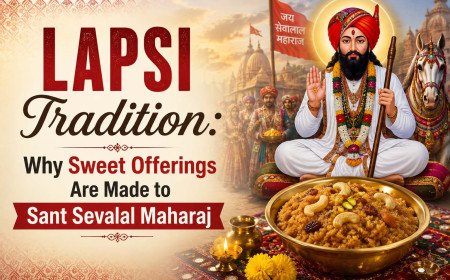
Because of these teachings, sweet offerings such as Lapsi became an important part of worship in many Banjara temples.
Why Sant Sevalal Maharaj and Jagadamba Are Worshipped Together
Visitors to Banjara temples often notice that the shrines of Sant Sevalal Maharaj and Goddess Jagadamba are located together.
This arrangement reflects a central belief of the community.
Jagadamba represents divine power.
Sant Sevalal Maharaj represents the ideal human disciple who follows divine guidance through humility, service, and moral living.
Together they symbolize:
- Faith and action
- Motherly protection and spiritual leadership
- Divine wisdom and human service
- Compassion and courage
This spiritual partnership has become one of the defining features of Banjara religious life.
Festivals Celebrating Their Divine Bond
During Sant Sevalal Maharaj Jayanti and other religious festivals, devotees offer prayers to both Sant Sevalal Maharaj and Goddess Jagadamba.
Celebrations typically include:
- Bhajans
- Community prayers
- Processions
- Lapsi offering
- Traditional dances
- Annadanam (community meals)
- Cultural programs
These events strengthen social harmony while preserving centuries-old traditions.
Lessons for Modern Society
The relationship between Sant Sevalal Maharaj and Goddess Jagadamba teaches lessons that remain relevant today.
Faith with Responsibility
Sant Sevalal Maharaj believed that prayer should inspire positive action.
Service Above Self
He dedicated his life to the welfare of others instead of seeking personal recognition.
Compassion
Kindness toward both humans and animals remains central to his teachings.
Moral Leadership
True leadership is based on honesty, humility, and service rather than authority.
Cultural Preservation
The stories encourage younger generations to remain connected with their language, customs, and traditions.
A Living Tradition
Even today, millions of Banjaras begin important occasions by remembering both Jagadamba and Sant Sevalal Maharaj.
Whether it is:
- building a new home,
- celebrating a wedding,
- organizing a community gathering,
- beginning a pilgrimage,
- or conducting annual temple festivals,
their blessings are invoked together.
This living tradition demonstrates the enduring influence of their spiritual relationship on Banjara identity.
Historical and Religious Perspective
It is important to distinguish between history and religious tradition.
Historical records establish Sant Sevalal Maharaj as a respected spiritual leader and social reformer.
Many detailed conversations between Sant Sevalal Maharaj and Goddess Jagadamba, however, are preserved through oral traditions, devotional literature, and folklore.
For devotees, these narratives are expressions of faith and spiritual truth. For historians, they represent valuable cultural traditions that help explain the beliefs and identity of the Gor Banjara community.
Recognizing both perspectives allows us to appreciate the richness of Banjara heritage.
The Lasting Legacy of Their Divine Relationship
The relationship between Sant Sevalal Maharaj and Goddess Jagadamba continues to shape Banjara society today.
Their combined message encourages people to:
- remain united,
- live honestly,
- protect nature,
- respect all living beings,
- preserve cultural traditions,
- work hard,
- and place humanity above selfish interests.
These principles have guided the community for generations and continue to inspire future leaders.
Conclusion
The sacred relationship between Sant Sevalal Maharaj and Goddess Jagadamba lies at the heart of Gor Banjara spirituality. Through stories preserved in oral tradition, devotees remember the saint as a humble servant of the Divine Mother who dedicated his life to protecting and uplifting his people.
Whether viewed as devotional history or symbolic spiritual teaching, their relationship represents faith, compassion, courage, humility, and service. Together, they continue to inspire millions of Banjaras to live with honesty, unity, and devotion while preserving the rich cultural heritage of the community.
Frequently Asked Questions
What's Your Reaction?
 Like
0
Like
0
 Dislike
0
Dislike
0
 Love
0
Love
0
 Funny
0
Funny
0
 Wow
0
Wow
0
 Sad
0
Sad
0
 Angry
0
Angry
0








Comments (0)