

Why Sant Sevalal Maharaj is Worshipped Across Every Banjara Thanda
Discover why Sant Sevalal Maharaj is worshipped in every Banjara Thanda. Learn about his teachings, temples, traditions, festivals, and lasting influence on the Gor Banjara community.

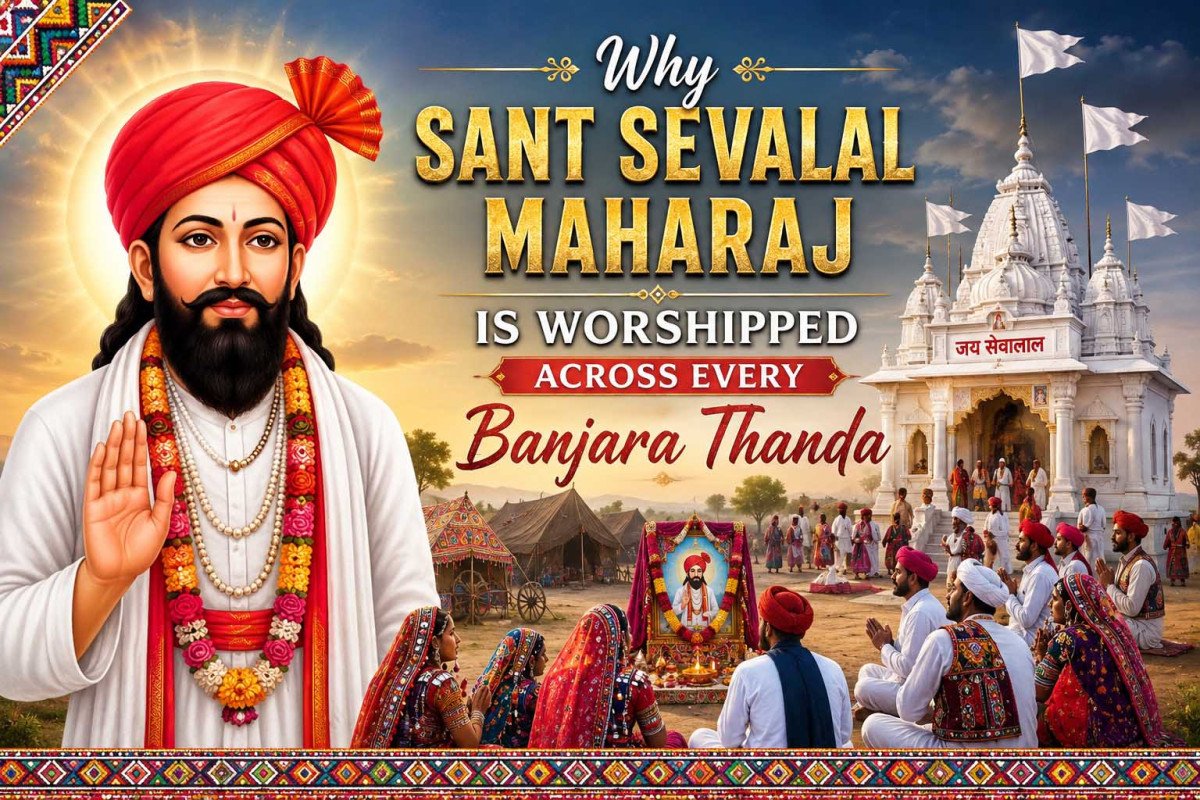
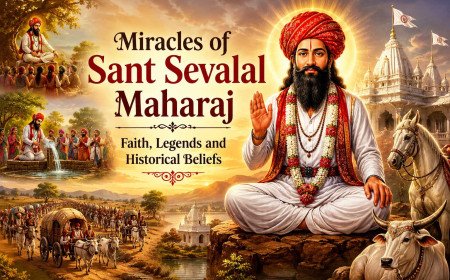
Sant Sevalal Maharaj occupies a unique and sacred place in the hearts of the Gor Banjara community. Across India—from the forests of Maharashtra and Karnataka to the Thandas of Telangana, Andhra Pradesh, Madhya Pradesh, Rajasthan, and beyond—his temples stand as symbols of faith, unity, and cultural identity.
Unlike many historical figures remembered only through books, Sant Sevalal Maharaj lives in the daily lives of millions of Banjaras. His teachings are passed from one generation to another through prayers, bhajans, festivals, folklore, and family traditions. Almost every Banjara Thanda has a temple or shrine dedicated to him, making him one of the most universally respected spiritual leaders of the community.
But why is Sant Sevalal Maharaj worshipped in every Banjara Thanda? The answer lies in his life, teachings, sacrifice, and his enduring role as the protector of Banjara culture and values.
Who Was Sant Sevalal Maharaj?
According to Banjara tradition, Sant Sevalal Maharaj was born on 15 February 1739 in a Rathod (Bhukiya) family. His parents were Bhima Naik and Dharmini Bai.
From childhood, he displayed extraordinary devotion to Goddess Jagadamba (Mariamma). He spent much of his youth in meditation, prayer, and service to people. As he grew older, he travelled extensively across South and Central India with Banjara caravans, spreading messages of unity, honesty, compassion, hard work, and self-respect.
Although remembered as a saint, he was equally admired as a social reformer who worked tirelessly to strengthen the Gor Banjara community.
The Spiritual Guide of the Gor Banjara Community
Every community has a spiritual figure who inspires its people. For the Gor Banjaras, Sant Sevalal Maharaj is regarded as the Kulguru—the eternal spiritual guide.
He encouraged people to live according to moral values rather than material wealth. His teachings focused on:
- Truthfulness
- Unity
- Hard work
- Equality
- Compassion
- Self-discipline
- Respect for nature
- Faith in God
Because his message addressed both spiritual and social life, Banjaras across different regions accepted him as their common guide.
A Symbol of Banjara Unity
The Banjara community is spread across many Indian states and is known by different regional names such as Lambani, Lambadi, Sugali, Vanjara, and Gormati. Despite linguistic and regional differences, Sant Sevalal Maharaj remains the one figure who unites them all.
His temples are places where people from different clans, gotras, and regions come together as one community. During festivals and Jayanti celebrations, thousands gather without distinction of wealth or status, reinforcing the spirit of equality that he preached.
His Teachings Continue to Guide Every Generation
Sant Sevalal Maharaj's influence extends far beyond religious worship. His teachings continue to shape the values of Banjara families.
Honesty
He encouraged people to earn their livelihood through honest means and to speak the truth in every situation.
Hard Work
The Banjaras have traditionally been known for their hardworking nature. Sant Sevalal Maharaj taught that honest labour is itself an act of worship.
Unity
He repeatedly reminded people that a united community can overcome any challenge. This principle remains central to Banjara society today.
Compassion
His kindness toward people and animals inspired generations to practice Ahimsa (non-violence) and mutual respect.
Self-Respect
He urged Banjaras to preserve their identity, culture, and traditions with pride, never allowing themselves to feel inferior.
These timeless teachings explain why he continues to be remembered in every household.
Temples in Almost Every Banjara Thanda
One of the most visible signs of Sant Sevalal Maharaj's influence is the presence of his temples throughout Banjara settlements.
A typical Sant Sevalal Maharaj temple serves not only as a place of worship but also as a center for:
- Community meetings
- Religious ceremonies
- Cultural events
- Bhajans and kirtans
- Social awareness programs
- Festivals
- Youth activities
Many temples also have a shrine dedicated to Goddess Jagadamba (Mariamma), reflecting the close spiritual connection between Sant Sevalal Maharaj and the goddess in Banjara tradition.
The White Flag of Sant Sevalal Maharaj
Visitors to Banjara Thandas often notice a distinctive white flag flying above the temple.
This white flag symbolizes:
- Purity
- Peace
- Truth
- Simplicity
- Spiritual guidance
Beside it, many temples also display the saffron flag of Goddess Jagadamba.
Together, these flags represent the spiritual foundation of Banjara faith.
Sant Sevalal Maharaj Jayanti
Every year, Banjaras celebrate Sant Sevalal Maharaj Jayanti with great devotion, generally on 15 February.
The celebrations include:
- Processions
- Bhajans
- Community prayers
- Cultural performances
- Traditional dances
- Religious discourses
- Free food distribution (Annadanam)
- Community gatherings
People travel from distant villages and cities to participate in the celebrations, making Jayanti one of the largest cultural events of the Banjara community.
The Sacred Offering of Lapsi
One of the most distinctive traditions associated with Sant Sevalal Maharaj is the offering of Lapsi, a sweet dish prepared from wheat, jaggery, and ghee.
According to Banjara tradition, Sant Sevalal Maharaj encouraged devotees to offer sweet food instead of animal sacrifice.
Today, Lapsi is prepared in thousands of homes and temples during:
- Jayanti celebrations
- Temple festivals
- Community gatherings
- Family prayers
After worship, the offering is shared as Prasad, symbolizing equality and unity.
Poharadevi – The Holy Pilgrimage of Banjaras
Poharadevi, located in Maharashtra, is regarded as one of the holiest pilgrimage centers for the Gor Banjara community.
Devotees from across India visit the temple every year to seek blessings and participate in religious ceremonies.
The temple complex has become a symbol of Banjara identity and spiritual heritage.
For many Banjaras, visiting Poharadevi at least once in life is considered a deeply meaningful spiritual experience.
A Living Cultural Heritage
Sant Sevalal Maharaj is remembered not only in temples but also through Banjara cultural traditions.
His life is celebrated through:
- Folk songs
- Bhajans
- Oral history
- Storytelling
- Traditional dances
- Community gatherings
- Religious festivals
These traditions help preserve Banjara history and ensure that younger generations remain connected to their roots.
More Than a Saint: A Social Reformer
Sant Sevalal Maharaj addressed many social issues that affected his community.
He encouraged people to:
- Avoid alcohol addiction
- Live peacefully
- Respect women
- Protect animals
- Resolve disputes through dialogue
- Maintain honesty in business
- Help the poor and needy
These teachings transformed him into both a religious and social leader.
His Message Is Still Relevant Today
Modern society faces many challenges:
- Social division
- Substance abuse
- Environmental degradation
- Loss of traditional culture
- Moral decline
The teachings of Sant Sevalal Maharaj provide timeless solutions.
His emphasis on compassion, discipline, unity, and hard work remains as relevant today as it was centuries ago.
Young Banjaras increasingly look to his life for inspiration while balancing modern education, careers, and cultural identity.
Why Every Banjara Family Teaches About Sant Sevalal Maharaj
Children in Banjara households grow up hearing stories about Sant Sevalal Maharaj from parents and grandparents.
These stories teach important values:
- Respect elders.
- Speak the truth.
- Help those in need.
- Never abandon your culture.
- Work honestly.
- Stay united.
- Live with humility.
- Respect nature.
In this way, Sant Sevalal Maharaj continues to guide new generations without ever meeting them personally.
Sant Sevalal Maharaj's Legacy Beyond Religion
Although deeply respected as a saint, Sant Sevalal Maharaj's influence extends into education, social welfare, and cultural preservation.
Many organizations, schools, hostels, trusts, and community associations across India are named in his honor.
His life continues to inspire:
- Educational movements
- Cultural festivals
- Community development
- Youth leadership
- Social reform initiatives
His legacy belongs not only to history but also to the future of the Gor Banjara community.
Conclusion
Sant Sevalal Maharaj is worshipped across every Banjara Thanda because he represents far more than a historical personality. He is the spiritual heart of the Gor Banjara community, a teacher whose principles continue to shape everyday life, and a social reformer whose message remains relevant across generations.
His temples stand as symbols of unity. His Jayanti celebrates cultural pride. His teachings inspire honesty, compassion, hard work, and self-respect. His traditions preserve the identity of millions of Banjaras across India.
Whether remembered through prayers, bhajans, festivals, or family stories, Sant Sevalal Maharaj continues to guide the Gor Banjara community with timeless wisdom. His legacy reminds us that true greatness is measured not by power or wealth, but by service to humanity, devotion to truth, and unwavering commitment to one's people.
Frequently Asked Questions
What's Your Reaction?
 Like
0
Like
0
 Dislike
0
Dislike
0
 Love
0
Love
0
 Funny
0
Funny
0
 Wow
0
Wow
0
 Sad
0
Sad
0
 Angry
0
Angry
0









Comments (0)