

Lapsi Tradition: Why Sweet Offerings Are Made to Sant Sevalal Maharaj
The Lapsi Tradition of Sant Sevalal Maharaj is a sacred practice followed by the Gor Banjara community, where sweet Lapsi made from wheat, jaggery, and ghee is offered as Prasad. Sant Sevalal Maharaj promoted non-violence, compassion, and devotion by encouraging sweet offerings and Homa instead of animal sacrifice.

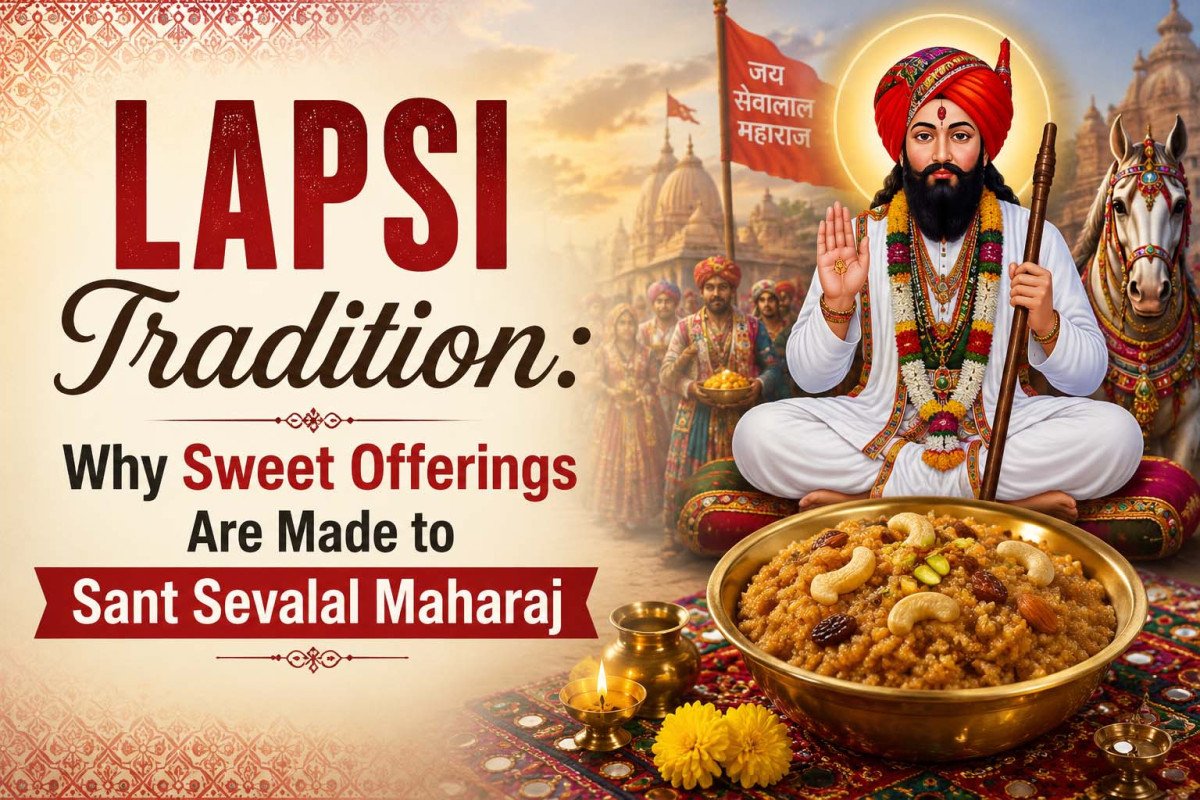
Among the many sacred traditions followed by the Gor Banjara community, the offering of Lapsi to Sant Sevalal Maharaj holds a unique place. Every year, during temple festivals, jatras, birth anniversaries, and religious gatherings, thousands of devotees prepare Lapsi as a sacred offering before distributing it as Prasad among the community.
Unlike many traditional rituals that involve animal sacrifice, Sant Sevalal Maharaj established a spiritual path centered on compassion, non-violence, purity, and equality. He encouraged his followers to worship God through sweet offerings, Homa (sacred fire ritual), prayers, and community service instead of violence.
Today, the Lapsi tradition continues to unite Banjara families across India and serves as one of the strongest symbols of Sant Sevalal Maharaj's teachings.
The Sacred Tradition of Lapsi
Lapsi is a sweet preparation traditionally made using wheat, jaggery, and pure ghee. In Gor Banjara tradition, it is much more than a festive dessert—it is considered a sacred offering dedicated to Sant Sevalal Maharaj.
Whenever devotees gather in a Sevalal Maharaj temple, Lapsi is prepared with devotion and offered first during worship before being distributed among everyone present.
The offering represents:
- Gratitude to God
- Purity of heart
- Prosperity
- Unity of the community
- Sharing blessings equally
Because it is sweet, Lapsi also symbolizes the wish that every devotee's life may become filled with happiness and harmony.
Sant Sevalal Maharaj's Teaching Against Animal Sacrifice
One of the greatest reforms introduced by Sant Sevalal Maharaj was his opposition to unnecessary violence against animals.
He taught his followers:
- Practice compassion toward every living being.
- Follow the path of Ahimsa (Non-Violence).
- Worship with devotion rather than blood sacrifice.
- Offer sweet food to God instead of sacrificing animals.
His teachings transformed the religious practices of many Banjara communities.
Rather than pleasing God through violence, he encouraged devotees to prepare sweet offerings and perform Homa while praying with sincere faith.
This message remains one of the most respected aspects of his spiritual legacy.
Why Is Lapsi Offered?
The offering of Lapsi represents complete surrender and devotion to Sant Sevalal Maharaj.
Devotees believe that:
- Pure food offered with devotion is accepted by God.
- Sweet offerings symbolize peace and goodwill.
- Sharing Prasad removes differences among people.
- Everyone receives equal blessings regardless of wealth or social status.
Because of these beliefs, Lapsi became the traditional offering associated with Sant Sevalal Maharaj.
The Homa Ceremony
One of the most important parts of the worship is the Homa.
After preparing Lapsi, devotees perform a sacred fire ritual by offering portions of the sweet preparation into the holy fire while chanting prayers.
The Homa symbolizes:
- Purification of the surroundings
- Purification of the mind
- Gratitude toward the Divine
- Surrender of ego
- Seeking blessings for the entire community
Unlike rituals centered on sacrifice, this Homa emphasizes devotion through sacred food and prayer.
Lapsi as Sacred Prasad
After the worship and Homa are completed, Lapsi becomes Prasad.
Every family contributes offerings to the temple.
Once the rituals conclude:
- The offerings from every household are collected.
- The Prasad is blessed.
- It is distributed equally among all devotees.
This tradition reinforces the idea that everyone belongs to one family under the guidance of Sant Sevalal Maharaj.
No distinction is made between rich and poor.
Everyone sits together and receives the same blessed food.
Community Feast and Social Unity
The Lapsi tradition is not only a religious ritual but also an important social institution.
During annual jatras and temple festivals:
- Families gather from different villages.
- Collective prayers are offered.
- Community meals are organized.
- Elders bless younger generations.
- Cultural traditions are preserved.
Sharing Lapsi strengthens relationships within the Gor Banjara community and reminds everyone of their shared heritage.
Religious Significance of Lapsi
Lapsi carries deep spiritual symbolism.
It represents:
Purity – Prepared with clean ingredients and devotional intention.
Sweetness – A prayer that life becomes filled with joy.
Prosperity – Gratitude for food, health, and abundance.
Equality – Every devotee receives the same Prasad.
Unity – Families celebrate together regardless of status.
Compassion – Worship without harming animals.
These values perfectly reflect the philosophy taught by Sant Sevalal Maharaj.
Sevalal Maharaj's Philosophy Behind Sweet Offerings
Sant Sevalal Maharaj taught that true worship begins with purity of heart rather than elaborate rituals.
He emphasized:
- Truthfulness
- Hard work
- Self-respect
- Unity
- Vegetarianism
- Compassion for animals
- Devotion through simple living
By replacing violent rituals with sweet offerings like Lapsi, he encouraged a form of worship rooted in kindness and spiritual discipline.
This reform continues to influence Banjara religious life even today.
Lapsi Tradition in Every Banjara Tanda
Across Maharashtra, Telangana, Karnataka, Andhra Pradesh, and other regions where Banjaras live, almost every Tanda celebrates Sant Sevalal Maharaj through the Lapsi tradition.
During temple festivals, devotees gather under the white flag of Sant Sevalal Maharaj and offer Lapsi with prayers.
The blessed Prasad is then shared among all assembled devotees, strengthening both faith and community bonds.
This living tradition has continued for generations and remains one of the defining characteristics of Gor Banjara religious culture.
Legacy of the Lapsi Tradition
The tradition of offering Lapsi has survived because it represents far more than a religious custom.
It reminds devotees that:
- Compassion is greater than sacrifice.
- Sharing is greater than selfishness.
- Unity is greater than division.
- Devotion is greater than ritual.
Through this simple sweet offering, Sant Sevalal Maharaj left behind a timeless message of humanity, equality, and spiritual purity.
Even today, whenever Lapsi is prepared in his name, devotees remember not only the saint but also the values he dedicated his life to teaching.
Conclusion
The Lapsi tradition is one of the most cherished practices in Gor Banjara culture. It reflects Sant Sevalal Maharaj's vision of a compassionate society founded on non-violence, equality, devotion, and service. By replacing animal sacrifice with sweet offerings and sacred Homa, he established a unique path of worship that continues to inspire millions of devotees. Every spoonful of Lapsi offered as Prasad serves as a reminder that true devotion is expressed through kindness, unity, and sharing blessings with others.
Frequently Asked Questions
What's Your Reaction?
 Like
0
Like
0
 Dislike
0
Dislike
0
 Love
0
Love
0
 Funny
0
Funny
0
 Wow
0
Wow
0
 Sad
0
Sad
0
 Angry
0
Angry
0












Comments (0)