

Tholaram: The Loyal Horse of Sant Sevalal Maharaj | Sacred Companion in Banjara History
Tholaram, the loyal white horse of Sant Sevalal Maharaj, holds a special place in Banjara history and tradition. From the saint's early years to his spiritual journeys across India, Tholaram faithfully accompanied him through forests, mountains, temples, and villages. More than a companion, he symbolized unwavering loyalty, courage, and devotion. According to Banjara tradition, Tholaram mourned deeply after Sant Sevalal Maharaj attained heaven and died shortly afterward, later being buried at Pohragad. His story continues to inspire generations as a timeless example of faithfulness and the deep bond between humans and animals.

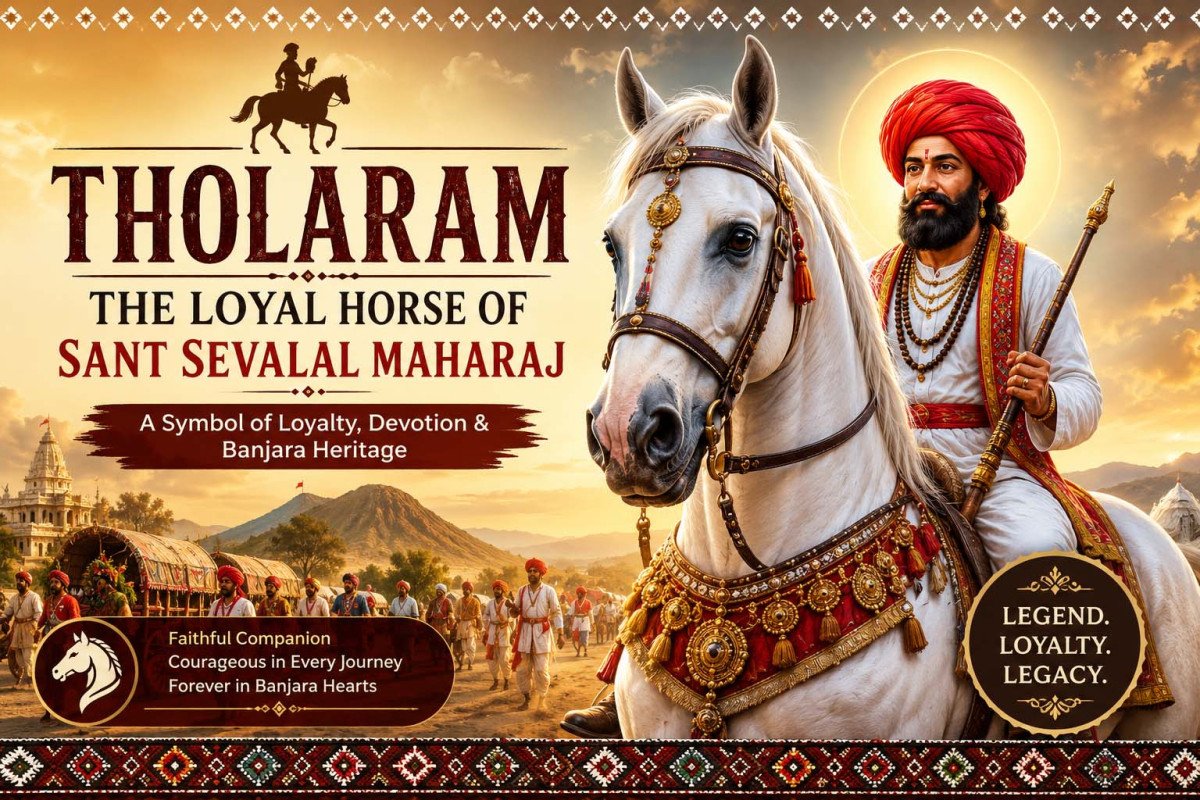
The Sacred Companion Who Never Left His Master's Side
Sant Sevalal Maharaj's life is remembered for his spiritual wisdom, social reforms, fearless leadership, and deep compassion for both humans and animals. Among all the companions who traveled with him throughout his remarkable journey, one name occupies a special place in the hearts of the Banjara community—Tholaram, his beloved white horse.
Tholaram was much more than a means of transportation. According to Banjara tradition, he was Sant Sevalal Maharaj's closest companion, faithfully accompanying him through forests, mountains, rivers, villages, temples, and kingdoms. His loyalty became so legendary that even today Tholaram is remembered as a sacred symbol of devotion, courage, and unwavering faith.
Who Was Tholaram?
Tholaram was the white horse of Sant Sevalal Maharaj. Since childhood, Sevalal Maharaj loved animals and treated them with kindness and respect. Among all his animals, Tholaram shared a unique bond with him.
Traditional Banjara folklore describes Tholaram as:
- A majestic white horse
- Intelligent and obedient
- Fearless during long journeys
- Calm during battles
- Spiritually connected with Sant Sevalal Maharaj
Unlike ordinary horses, Tholaram is remembered not simply as an animal but as a devoted companion who understood the mission of his master.
Tholaram in the Early Life of Sant Sevalal Maharaj
As Sant Sevalal Maharaj grew into a young man, he became skilled in horse riding. Every morning he followed a disciplined spiritual routine.
According to traditional accounts:
- He first bathed in Kalo-Kundo, the sacred pond.
- He wore a garland around his neck.
- He worshipped Sri Mariamma (Jagadamba).
- After completing his prayers, he mounted his white horse Tholaram.
- Riding Tholaram, he climbed Chandrayana Gutta to worship Sri Chennakesava (Lord Shiva).
- Later, he grazed the community's cattle in the nearby forests with his companions.
The traditional Gor Boli verses beautifully describe this routine:
Kalo-kundo ma angoli karana
Galema Kamaler mala ghalana
Mariamma na pooja kido Sevabhaya
Tholarame pera besana
Chandrayanagutta par pooja kido
Chennekesava na
These verses remain an important part of Banjara oral tradition and demonstrate the inseparable bond between Sevalal Maharaj and Tholaram.
A Companion Throughout Every Journey
Sant Sevalal Maharaj was constantly traveling across India to guide the Banjara community, spread spiritual teachings, and unite scattered Tandas.
During these long journeys, Tholaram remained beside him.
Together they traveled through:
- Ramagundam
- Bellary
- Chitradurga
- Davangere
- Shimoga
- Sirsi
- Mangalore
- Mysore
- Madurai
- Thanjavur
- Chennai
- Tirupati
- Hyderabad
- Nanded
- Penaganga
- Surat
- Nashik
- Ruigad
- Pohragad
These journeys covered forests, rivers, mountains, and difficult terrain. Throughout every challenge, Tholaram faithfully carried Sant Sevalal Maharaj.
Tholaram During Spiritual Missions
Wherever Sant Sevalal Maharaj went, he performed worship, meditation, and social service.
Tholaram accompanied him while he visited famous temples including:
- Sri Chennakesava Temple
- Sri Mariamma temples
- Sri Meenakshi Temple
- Tirupati Balaji Temple
- Sri Marikamba Temple
- Ram and Shiva temples at Nashik
- Chitrakoot
The horse became a silent witness to countless spiritual events that later became part of Banjara history.
The Bond Between Sevalal Maharaj and Tholaram
The relationship between Sant Sevalal Maharaj and Tholaram reflected love, trust, and compassion.
Sant Sevalal Maharaj believed that animals were living beings deserving kindness and respect. Throughout his life, he opposed unnecessary violence against animals and encouraged compassion toward all creatures.
This philosophy was evident in the way he treated Tholaram—not as property, but as a loyal friend.
The deep emotional bond between the saint and his horse became one of the most touching aspects of his life story.
Witness to Miracles and Historic Events
Tholaram accompanied Sant Sevalal Maharaj during many important events, including:
- His travels through South India.
- His meetings with rulers and kings.
- His service as Mahant at Tirupati.
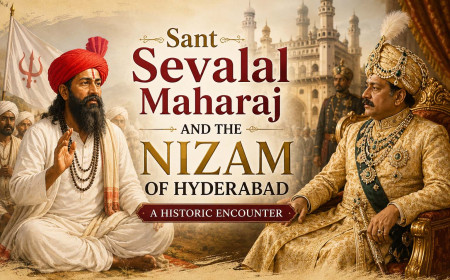
- His visit to Hyderabad and meeting with the Nizam.
- The miraculous survival after the poisoned sweets incident.
- The stopping of the cholera epidemic through prayer.
- His campaigns to unite the Banjara community.
- His numerous pilgrimages and acts of social reform.
Although the miracles were attributed to Sant Sevalal Maharaj's devotion to Jagadamba, Tholaram remained constantly by his side, witnessing these extraordinary moments.
Symbol of Courage During Difficult Journeys
Travel in the eighteenth century was dangerous.
The routes crossed:
- Dense forests
- Mountain passes
- Wild animal territories
- Flooded rivers
- Remote tribal regions
A dependable horse was essential for survival.
Tholaram enabled Sant Sevalal Maharaj to continue his mission across vast regions without fear.
His endurance symbolized the determination with which Sevalal Maharaj served society.
Tholaram's Loyalty Until the End
The most emotional chapter in Tholaram's story comes after Sant Sevalal Maharaj attained his heavenly abode.
According to Banjara tradition, after the passing of Sant Sevalal Maharaj:
- Thousands of devotees gathered in mourning.
- His brothers prepared to carry his body from Ruigad to Pohragad.
- The entire Banjara community grieved deeply.
Among those who mourned most intensely were:
- Tholaram, the beloved horse
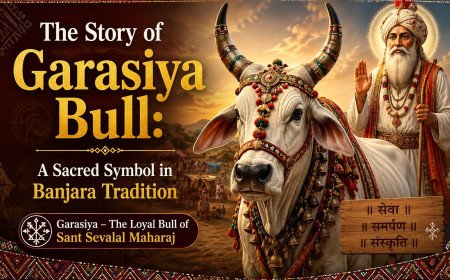
- Garasiya, the sacred bull
Traditional accounts describe that both animals shed tears after the death of their master.
Their grief reflected the extraordinary bond they had shared with Sant Sevalal Maharaj throughout his life.
The Death of Tholaram
According to Banjara oral tradition, Tholaram could not bear the separation from Sant Sevalal Maharaj.
After the saint's final journey:
- Tholaram cried bitterly.
- Garasiya Bull also mourned deeply.
- Both faithful companions died soon afterward.
The traditional account states:
"Thus Sevabhaya left the Banjaras and attained heaven. His favourite horse Tholaram and Garasiya Bull cried loudly and bitterly and died. They were also buried in Pohragad."
This episode remains one of the most emotional stories in Banjara history.
Burial at Pohragad
Sant Sevalal Maharaj was buried at Pohragad according to Banjara customs because he remained unmarried throughout his life.
Alongside this sacred place, the memories of his loyal companions were also preserved.
Traditional belief holds that:
- Tholaram was buried at Pohragad.
- Garasiya Bull was also buried there.
This reflects the respect that the Banjara community gives not only to saints but also to faithful animals who served alongside them.
Why Tholaram Is Still Remembered
Even today, devotees remember Tholaram because he represents timeless values:
- Unwavering loyalty
- Faithful service
- Courage
- Obedience
- Devotion
- Love without expectation
His life teaches that true companionship is built on trust, sacrifice, and unconditional loyalty.
Tholaram in Banjara Tradition
Across many Banjara communities, the stories of Sant Sevalal Maharaj are narrated together with those of Tholaram and Garasiya.
These companions symbolize that:
- Animals deserve compassion.
- Loyalty is sacred.
- Service is greater than pride.
- Love between humans and animals is part of dharma.
For devotees, remembering Tholaram is also a way of remembering the humility and compassion of Sant Sevalal Maharaj.
Legacy of Tholaram
Although centuries have passed, the story of Tholaram continues to inspire the Banjara community.
His name is remembered not because he was a horse, but because he stood beside one of the greatest spiritual leaders of the Banjara people with unwavering devotion until the very end.
The life of Tholaram reminds us that loyalty has no language, no status, and no boundaries. His story remains an enduring symbol of faithful companionship, making him one of the most beloved figures in the traditions surrounding Sant Sevalal Maharaj.
Conclusion
Tholaram was far more than Sant Sevalal Maharaj's horse. He was a trusted companion, a witness to history, a participant in countless spiritual journeys, and an eternal symbol of loyalty within the Banjara tradition. From the sacred hills of Sevagad to the final resting place at Pohragad, Tholaram never abandoned his master. His unwavering devotion continues to inspire generations, reminding us that true loyalty is one of the highest virtues in both human and spiritual life.
Frequently Asked Questions
What's Your Reaction?
 Like
0
Like
0
 Dislike
0
Dislike
0
 Love
0
Love
0
 Funny
0
Funny
0
 Wow
0
Wow
0
 Sad
0
Sad
0
 Angry
0
Angry
0





Comments (0)