Gormati Is Our Mother Tongue | Banjara Identity and Linguistic Heritage
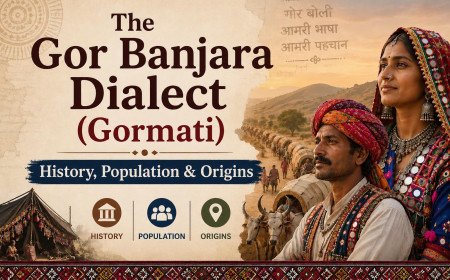
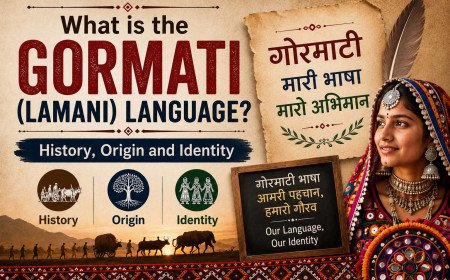
Gormati is not merely a dialect; it is the mother tongue, cultural identity, and ancestral memory of the Banjara community. Preserving a language does not mean rewriting history; it means reclaiming the voice that was lost.

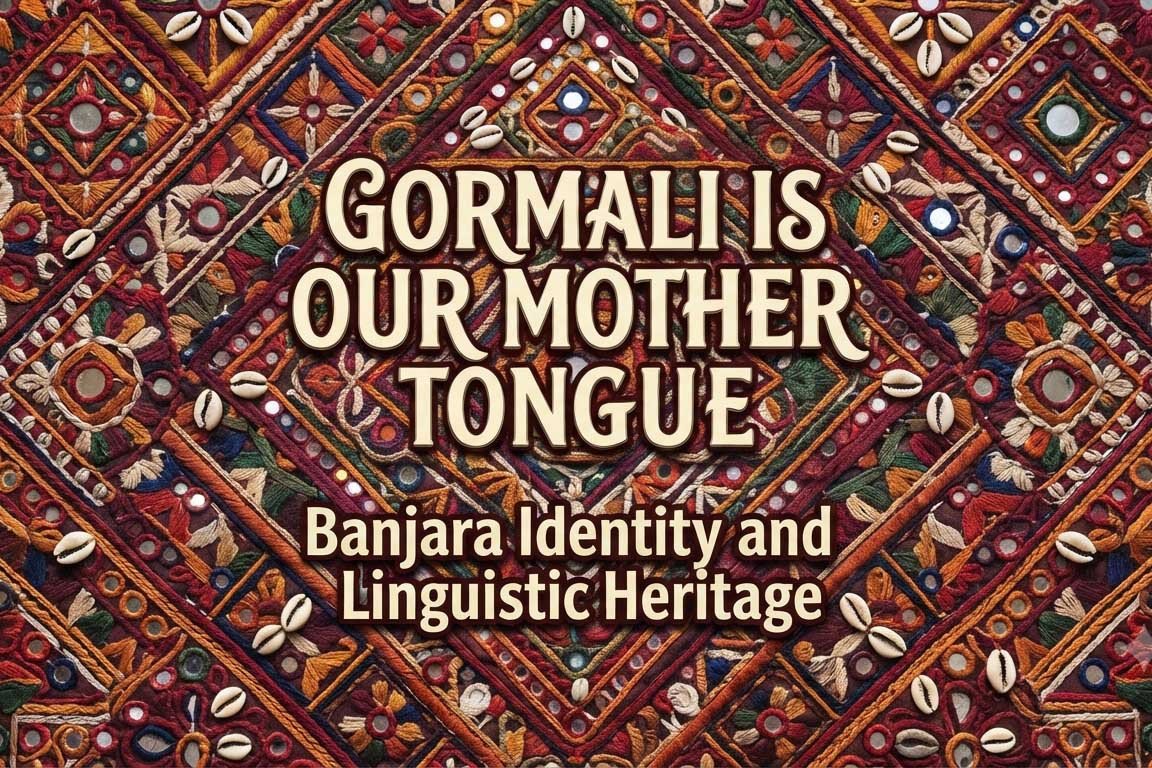
It is often alleged that history is being rewritten in the name of preserving a language. However, this claim itself arises from an incomplete understanding of history.
“Banjara” is a broad social identity—there is no dispute about that. But history does not end there. The self-identity preserved in the hearts of the community, its traditions, dialect, folk memories, and cultural continuity are equally important. The word “Gormati” is at the centre of this self-identification. It is not a term that suddenly emerged today; rather, it comes from the collective memories that have been preserved and lived through generations.
While questioning the word “Gormati,” one important fact must be considered: historical evidence cannot be found exclusively in British records. The British administration classified many nomadic and trading communities into broader groups for administrative convenience. That was the language of administration, not the expression of a community's own identity. Therefore, the prominence of a particular name in British records does not automatically make it the ultimate historical truth.
The existence of a language is not determined merely by its mention in an old book. A language proves its existence through the lives of its people—in their homes, Tandas, Dhavalo, Haveli songs, Valang, festivals such as Holi, Diwali and Dussehra, Teej celebrations, folk tales, marriage ceremonies, religious traditions, and everyday conversations. A language in which a community has preserved its joys, sorrows, struggles, and identity cannot simply be dismissed as an “artificially created name.” Such a denial is far removed from reality.
Today, the use and recognition of the word Gormati are increasing because the community is beginning to look back towards its roots. This growing awareness can be seen on social media, in literature, community gatherings, dictionaries, and discussions surrounding the census. This does not mean that history is being erased. On the contrary, it means that a cultural memory neglected for generations is finally finding its voice.
“The entire world knows us as Banjara”—this is true. However, an external identity and an internal sense of identity are not contradictory. Just because the world recognizes us as “Banjara,” should we forget the mother tongue spoken in our homes? A broader social identity and an original cultural identity can coexist. This is the reality of history.
Therefore, bringing “Gormati” to the forefront does not mean pushing “Banjara” into the background. This is not a question of competition; it is a question of memory, identity, and linguistic pride.
To state it clearly—Gormati is not merely a combination of words. It is the voice that has emerged from our soil. It is the treasure of our ancestors' memories. It is the voice of our community's soul.
Preserving a language does not mean rewriting history; it means restoring the voice that history has lost. And that is why Gormati is not merely a dialect—it is our mother tongue, our cultural heritage, and our identity.
Gostavalo!
Gor Banjara Bhasha Bachao Samiti
What's Your Reaction?
 Like
0
 Dislike
0
 Love
0
 Funny
0
 Wow
0
 Sad
0
 Angry
0
Comments (0)