
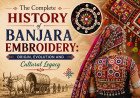
The Complete History of Banjara Embroidery: Origin, Evolution and Cultural Legacy
Banjara embroidery is one of India's oldest tribal textile traditions, renowned for its vibrant colors, mirror work, cowrie shells, and intricate hand stitching. This comprehensive guide explores its origins in Rajasthan, the migration of the Banjara community, the evolution of traditional garments, embroidery techniques, cultural symbolism, government preservation efforts, and its growing recognition in contemporary fashion. Discover how this remarkable craft continues to preserve the artistic and cultural identity of the Banjara people across generations.

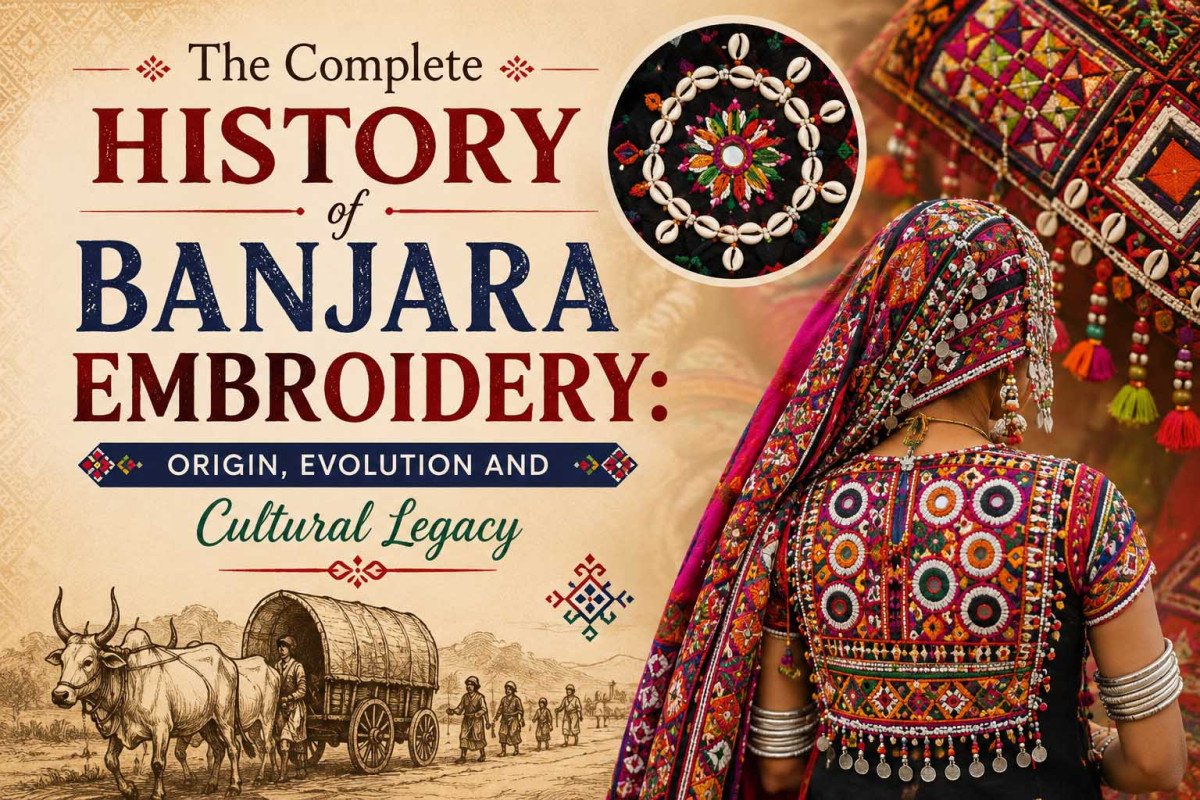
Banjara embroidery is one of India's most vibrant and distinctive tribal textile traditions. Characterized by brilliant colors, intricate hand stitching, tiny mirrors, cowrie shells, coins, beads, and geometric motifs, it represents centuries of artistic excellence preserved by the Banjara community. Unlike many other traditional crafts that evolved into commercial industries, Banjara embroidery was originally created for personal use. Every embroidered garment reflected the identity, beliefs, and cultural pride of its maker.
For generations, Banjara women have embroidered their own garments, bags, household articles, and ceremonial textiles entirely by hand. Each stitch carries a story of migration, resilience, craftsmanship, and community. The embroidery is not merely decorative—it is a living archive of the Banjaras' history, preserving traditions that have survived despite social, political, and economic changes.
The importance of this remarkable craft was officially recognized when the Government of India documented it in the Handicraft Survey Report on Banjara Embroidery, published as part of the 1981 Census Handicraft Survey. The report recorded the historical background, techniques, cultural significance, and challenges facing this unique tradition.
Today, Banjara embroidery is admired by textile historians, fashion designers, collectors, museums, and craft enthusiasts worldwide. However, it also faces serious challenges as fewer young Banjara women continue the tradition. Understanding its history is essential for preserving this invaluable cultural heritage for future generations.
What is Banjara Embroidery?
Banjara embroidery is the traditional hand embroidery practiced by the Banjara tribe, also known in different parts of India as Lambadi, Lambani, Lamani, Sugali, Gor, and several other regional names. It is one of the oldest surviving forms of tribal embroidery in India.
Unlike commercial embroidery styles, Banjara embroidery developed entirely within the community. Every woman learned the craft from her mother or grandmother, producing garments for herself and her family rather than for sale.
The embroidery is distinguished by:
- Bright red, blue, black, and white fabrics
- Intricate geometric stitch patterns
- Mirror work (Shisha)
- Cowrie shell decoration
- Metal ornaments and coins
- Thick cotton embroidery threads
- Handmade borders
- Symbolic motifs inspired by nature and tribal life
Each garment required weeks or even months of careful handwork. The embroidery transformed ordinary cloth into wearable art while also reflecting the social identity of the wearer.
Unlike many textile traditions where men participated in weaving or embroidery, Banjara embroidery remained almost entirely the work of women. Every stitch demonstrated patience, skill, creativity, and cultural responsibility.
Historical Origins of the Banjara People
To understand the origin of Banjara embroidery, it is first necessary to understand the history of the Banjara people themselves.
According to historical records, the Banjaras originally belonged to Rajasthan, from where they gradually migrated to different parts of India. The Census survey notes that their embroidery tradition cannot be separated from their own history because the craft evolved as an integral part of their lifestyle.
Historically, Banjaras were famous as traders and transporters. Long before modern roads and railways existed, they transported food grains, salt, cloth, military supplies, and other commodities across the Indian subcontinent using thousands of bullocks.
During the Mughal period, Banjara caravans played a crucial role in supplying armies with provisions. Their long caravans, known as tandas, travelled hundreds of kilometres across forests, deserts, mountains, and plains.
Because of their occupation, they became one of the most mobile communities in India.
Origin of the Name "Banjara"
The word Banjara is believed to have originated from the Sanskrit word Vanijya, meaning trade or commerce.
As languages evolved across India, the word changed into different forms:
- Sanskrit – Vanijya
- Gujarati – Vanajara
- Rajasthani – Banajara
- Hindi – Banzara
- Urdu – Banjare
- Marathi – Banjari
Rather than representing a specific caste, the name originally referred to people engaged in transporting goods and merchandise over long distances. Over time, the professional identity became the name of the community itself.
Rajasthan – The Birthplace of Banjara Embroidery
Most scholars agree that Rajasthan is the ancestral homeland of the Banjaras. This explains why many features of Banjara embroidery resemble the vibrant textile traditions of western India while still retaining their own unique identity.
As nomadic traders, Banjaras travelled extensively but carried their artistic traditions wherever they went. Since they had no permanent settlements for centuries, embroidery became one of the few cultural practices that could easily move with them.
Unlike architecture or sculpture, embroidery required only simple tools:
- Needle
- Cotton thread
- Cloth
- Mirrors
- Cowrie shells
- Metal ornaments
These materials could be carried during long journeys, allowing women to continue creating garments while travelling with their families.
As a result, embroidery became a portable expression of cultural identity that survived migration across the Indian subcontinent.
Migration Across India and the Spread of the Craft
For centuries, Banjara caravans travelled throughout India transporting essential goods. As they settled in different regions, they established small settlements called tandas.
Today, Banjara communities are found in:
- Rajasthan
- Maharashtra
- Telangana
- Andhra Pradesh
- Karnataka
- Madhya Pradesh
- Gujarat
- Chhattisgarh
- Odisha
- Tamil Nadu
- Haryana
- Punjab
- Uttar Pradesh
Although they settled in different linguistic regions, one remarkable feature remained unchanged—their traditional embroidered dress.
The Census report observes that a Banjara can easily be recognized anywhere in India because the community maintained nearly identical traditional clothing regardless of where they lived. This continuity helped preserve their identity across generations.
Why Banjara Women Made Their Own Clothes
One of the most fascinating aspects of Banjara embroidery is that women never relied on professional tailors to make their traditional garments.
Instead, every woman produced her own clothing by hand.
This tradition served several important purposes.
Cultural Identity
Traditional clothing immediately identified a woman as belonging to the Banjara community.
Self-Reliance
Nomadic life often meant travelling through remote areas where professional tailors were unavailable. Women therefore learned to cut, stitch, and embroider every garment themselves.
Family Tradition
Embroidery skills passed naturally from one generation to another. Mothers began teaching girls at an early age, ensuring that knowledge was never lost.
Artistic Expression
Every embroidered garment allowed women to display their creativity, patience, and craftsmanship. Although the overall garment followed traditional designs, each woman added her own decorative patterns and combinations of mirrors, shells, and embroidery.
This system of learning without formal schools enabled the craft to survive for centuries.
Embroidery as a Symbol of Identity
Unlike many traditional crafts that were produced for trade, Banjara embroidery originally existed to preserve community identity.
Every garment reflected:
- Tribal heritage
- Family traditions
- Womanhood
- Marriage customs
- Religious beliefs
- Pride in Banjara culture
The embroidery also served as a visible marker distinguishing Banjaras from neighbouring communities.
According to the Census survey, this strong attachment to traditional dress explains why the embroidery remained almost unchanged across India despite centuries of migration. The Banjaras consciously maintained a common style of clothing decorated with elaborate embroidery, mirrors, cowrie shells, and metal ornaments as a symbol of their shared heritage.
The Beginning of a Legendary Textile Tradition
By the nineteenth century, Banjara embroidery had become one of the most recognizable tribal textile traditions in India.
Every important stage of a woman's life—from childhood to marriage—was reflected through embroidered garments and accessories. Household articles such as shoulder bags, storage bags, food covers, and ceremonial textiles were also decorated with intricate embroidery, turning everyday objects into works of art.
Unlike factory-made textiles, each piece represented countless hours of careful hand stitching and carried the personal touch of its creator.
This remarkable tradition transformed simple cloth into a visual language of culture, history, and identity—one that continues to inspire textile scholars, designers, and craft lovers around the world.
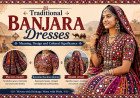
Traditional Banjara Dress: A Living Canvas of Art
The traditional attire of the Banjara community is one of the most recognizable forms of tribal clothing in India. Rich in colour, intricate embroidery, mirrors, cowrie shells, coins, tassels, and symbolic motifs, every garment reflects the artistic skills and cultural identity of its wearer.
Unlike many other communities that purchased or tailored their clothing, Banjara women traditionally designed, stitched, embroidered, and decorated every garment themselves. Each piece required weeks or even months of patient work and became a symbol of pride, identity, and craftsmanship. The Census survey notes that Banjara women never entrusted the making of their traditional garments to professional tailors; instead, they created them at home using their own embroidery skills and decorated them with cowrie shells, mirrors, lead ornaments, and old coins.
Major Components of Traditional Banjara Costume
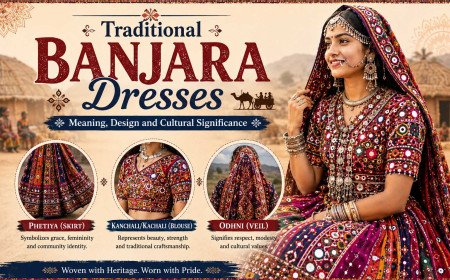
1. Phetiya (Skirt)
The Phetiya is the traditional embroidered skirt worn by Banjara women. It is usually made from strong cotton fabric in shades of red, maroon, blue, or black and is heavily decorated with colourful embroidery, mirrors, shells, and geometric borders.
A completed phetiya may contain hundreds of mirrors and thousands of stitches, making it one of the most elaborate garments in tribal India.
The lower border is often the richest part of the skirt, featuring multiple embroidered panels and decorative elements that move beautifully while walking.
2. Kanchali (Blouse)
The Kanchali is the traditional embroidered blouse.
Unlike modern blouses, the Kanchali is designed using several separate cloth panels joined together through intricate embroidery. Every section is decorated before assembly, giving the blouse its distinctive appearance.
The Census report identifies major components such as:
- Chhati
- Peti
- Bahi
- Lepo
- Lawan
- Sabab
Each component is individually embroidered before being stitched together into the finished garment.
The Kanchali combines beauty with practicality and represents centuries of indigenous garment engineering.
3. Odhani (Head Cover)
The embroidered head covering or veil is equally important.
Besides protecting women from the sun, it symbolizes dignity, modesty, and tradition.
Decorated with embroidered borders, mirrors, shells, and tassels, it completes the traditional Banjara attire.
Traditional Ornaments
The beauty of Banjara clothing is enhanced by numerous ornaments.
These include:
- Heavy silver necklaces
- Bangles
- Ivory arm ornaments
- Waist belts
- Bajuband (armlets)
- Anklets
- Nose rings
- Earrings
- Hair ornaments
Historical observers described Banjara women wearing several kilograms of ornaments made from ivory and metal, making them instantly recognizable wherever they travelled.
Decorative Elements Used in Embroidery
One of the unique characteristics of Banjara embroidery is the combination of stitching with decorative objects.
Mirrors
Tiny mirrors reflect light beautifully and symbolize prosperity, protection, and positive energy.
Mirror work has become one of the defining features of Banjara textiles.
Cowrie Shells
Cowrie shells have been used for centuries in Indian tribal culture.
Among Banjaras they symbolize:
- Wealth
- Fertility
- Good fortune
- Protection against evil
They are stitched carefully along borders and decorative panels.
Old Coins
Traditional garments often include old copper or silver coins.
Originally these reflected prosperity and family status while also producing attractive sounds during movement.
Metal Decorations
Small metal ornaments increase both the visual richness and durability of embroidered garments.
Beads
Colourful beads are sometimes added to enhance borders and geometric motifs.
Together these decorative materials create a three-dimensional appearance rarely seen in other embroidery traditions.
Colours Used in Banjara Embroidery
Traditional Banjara embroidery is famous for its bold colour combinations.
Common colours include:
- Red
- Maroon
- Deep Blue
- Black
- White
- Yellow
- Green
- Orange
These bright colours reflect the joyful spirit of tribal life and create striking visual contrast against mirror work and cowrie shells.
Raw Materials
Although the finished products appear highly complex, the materials required are surprisingly simple.
Traditional artisans use:
- Coarse cotton cloth
- Printed cotton fabric
- Cotton embroidery thread
- Mirrors
- Cowrie shells
- Glass beads
- Old coins
- Metal ornaments
- Strong sewing thread
The Census survey illustrates these raw materials and explains how they are selected before embroidery begins.
Tools Used by Banjara Women
Unlike modern embroidery workshops filled with machinery, traditional Banjara embroidery requires only a few simple tools.
These include:
Needle
The most important tool.
Nearly every stitch is completed entirely by hand.
Sickle
One surprising traditional tool documented in the Census survey is the sickle, which is used for cutting thick cloth before embroidery begins.
Scissors
Used for trimming thread and fabric.
Measuring Thread
Traditional measurements often relied on practical experience rather than modern measuring instruments.
Learning the Craft
Unlike institutional training available today, traditional Banjara embroidery was learned entirely within the family.
Girls generally began learning between the ages of eight and ten years.
The learning process included:
- Threading needles
- Basic stitches
- Mirror attachment
- Border decoration
- Joining cloth panels
- Completing small household articles
- Finally producing complete garments
The Census report observes that with patience and enthusiasm even young children could master the craft because its techniques are relatively simple, though highly time-consuming.
Step-by-Step Manufacturing Process
The production of a traditional embroidered garment follows several carefully planned stages.
Step 1 – Selecting the Cloth
Strong cotton fabric is selected according to the intended garment.
Different coloured pieces are arranged to create decorative contrast.
Step 2 – Cutting
Individual components are cut using traditional methods before embroidery begins.
Step 3 – Designing
The artisan visualizes the arrangement of borders, mirrors, embroidery panels, and decorative motifs.
Unlike modern fashion design, these patterns are usually memorized rather than drawn.
Step 4 – Embroidery
This is the most time-consuming stage.
Every stitch is completed manually.
Mirrors, shells, coins, and decorative threads are attached one by one.
Step 5 – Joining Components
Separate embroidered sections are stitched together to create the complete garment.
This requires considerable precision because the embroidered patterns must align perfectly.
Step 6 – Finishing
Loose threads are removed.
Additional decorations are attached.
The completed garment is carefully inspected before use.
The Census survey documents every stage of this manufacturing process with photographs and descriptions of artisans working on traditional garments.
Household Articles Made with Banjara Embroidery
Although clothing receives the greatest attention, Banjara embroidery also decorates many everyday household objects.
These include:
- Jolana (Shoulder Bag)
- Kothalo (Large Shopping Bag)
- Kothali (Money Bag)
- Darani (Cloth used while preparing bread)
- Gadano (Food Cover)
- Khalchi (Bread Bag)
- Masala Kothali
- Fan Covers
- Bed Spreads
- Decorative Cloth Panels
- Storage Bags
- Ceremonial Accessories
Each item combines practical utility with artistic beauty, transforming everyday household objects into expressions of cultural heritage.
The Value of Handmade Craftsmanship
Unlike machine embroidery, every Banjara textile is unique.
No two artisans produce identical patterns.
Minor variations in stitches, colours, mirror placement, and decorative arrangements make every piece a one-of-a-kind work of art.
A single garment may require several weeks—or even months—of careful labour.
Because of this enormous investment of time and skill, authentic handmade Banjara embroidery remains highly valued by collectors, museums, designers, and textile enthusiasts around the world.
Banjara Embroidery in Everyday Life
For the Banjara community, embroidery has never been merely a decorative craft—it has been an integral part of everyday life. Traditionally, embroidered textiles accompanied every stage of life, from childhood to marriage and old age. Women wore richly embroidered garments during festivals, weddings, religious ceremonies, and community gatherings, while simpler embroidered clothes were used in daily life.
Beyond clothing, embroidery was also used to decorate practical household items. Shoulder bags, shopping bags, money pouches, food covers, bedding, and storage cloths were carefully embroidered, reflecting the belief that beauty should be a part of everyday living. According to the Census survey, Banjaras created embroidered articles such as Jolana (shoulder bag), Kothalo (large shopping bag), and several other domestic items to meet their daily needs while preserving their traditional identity.
Embroidery as a Symbol of Womanhood
Among the Banjaras, embroidery has traditionally been associated with the identity and dignity of women.
From an early age, girls learned embroidery from their mothers and grandmothers. Mastering the craft was considered an important part of growing up. By the time a young woman reached marriageable age, she was expected to have completed several embroidered garments for herself and, in many cases, for her future household.
These handmade textiles became treasured family possessions, often passed from one generation to the next.
Thus, embroidery represented not only artistic skill but also patience, discipline, family values, and cultural continuity.
Economic Importance of the Craft
Historically, Banjara embroidery was not a commercial occupation. Unlike weaving communities or professional artisans who produced goods for the market, Banjara women embroidered primarily for personal and family use.
The Census survey clearly states that embroidery was regarded as part of household responsibilities rather than a profession or source of income. It was only in recent decades that a small number of artisans began producing embroidered items for sale.
Today, however, handmade Banjara embroidery contributes to the livelihood of many tribal families. Fashion designers, exporters, handicraft organizations, museums, and online marketplaces have created new opportunities for artisans to earn income while preserving traditional skills.
Decline of Traditional Banjara Embroidery
Despite its rich cultural heritage, Banjara embroidery has experienced a gradual decline over the past century.
Several factors have contributed to this change:
Modern Clothing
Machine-made garments are cheaper, lighter, and easier to maintain than traditional embroidered clothing.
Urbanization
As Banjara families moved to towns and cities, many adopted modern lifestyles that reduced the use of traditional attire.
Time-Consuming Production
A single handmade garment may require weeks or even months to complete, making it difficult to compete with factory-produced clothing.
Declining Interest Among Younger Generations
Many young people pursue education and employment outside their villages, leaving little time to learn traditional embroidery.
The Census survey observed that although many households had practiced embroidery in the past, a significant number had discontinued the tradition, even though they continued to identify with their cultural heritage.
Government Documentation and Revival Efforts
Recognizing the cultural importance of Banjara embroidery, the Government of India initiated documentation and training programmes through the All India Handicrafts Board and the Development Commissioner (Handicrafts).
The Census Handicraft Survey documented:
- Traditional techniques
- Garment construction
- Decorative motifs
- Artisan communities
- Training programmes
- Marketing opportunities
- Challenges facing the craft
The report also recommended introducing suitable design adaptations while preserving the traditional embroidery, enabling the craft to reach wider markets without losing its cultural identity.
Training Programmes
To encourage the continuation of the craft, several government-sponsored training centres were established in Jalgaon district of Maharashtra, including:
- Rajdehere
- Ichchhapur
- Ghodegaon
- Vasantnagar
- Laxminagar
Training programmes generally lasted one year, with instructors receiving remuneration and trainees receiving monthly stipends. These initiatives aimed to preserve traditional skills and create future employment opportunities for Banjara artisans.
Banjara Embroidery in Contemporary Fashion
During the late twentieth and early twenty-first centuries, fashion designers rediscovered the beauty of Banjara embroidery.
Today, traditional embroidery appears on:
- Jackets
- Handbags
- Cushion covers
- Wall hangings
- Dupattas
- Sarees
- Kurtas
- Blouses
- Home décor
- Footwear
- Jewellery accessories
Many designers incorporate authentic Banjara panels into contemporary fashion, allowing tribal craftsmanship to reach international audiences while providing additional income for artisans.
Cultural Legacy
Banjara embroidery is far more than an artistic tradition.
It represents:
- The history of migration
- Women's creativity
- Tribal identity
- Indigenous knowledge
- Sustainable craftsmanship
- Community memory
Every stitch reflects centuries of experience, preserving stories that were rarely written in books but carefully recorded in cloth.
Unlike printed fabrics or machine embroidery, handmade Banjara textiles carry the individuality of the artisan who created them.
Challenges for the Future
Although awareness has increased, several challenges remain.
These include:
- Shortage of young artisans
- Low financial returns
- Competition from machine-made imitations
- Loss of traditional knowledge
- Limited marketing opportunities
- Difficulty obtaining quality raw materials
- Lack of geographical indication (GI) awareness in many regions
Addressing these challenges requires cooperation between governments, educational institutions, museums, designers, NGOs, and the Banjara community itself.
Preserving Banjara Embroidery
The future of Banjara embroidery depends upon active preservation.
Important measures include:
- Documenting traditional techniques.
- Encouraging young artisans through training programmes.
- Supporting women's self-help groups.
- Promoting authentic handmade products instead of machine-made imitations.
- Expanding domestic and international markets.
- Including Banjara embroidery in museum exhibitions and educational curricula.
- Using digital platforms to showcase artisans and their stories.
- Preserving traditional designs while encouraging thoughtful innovation.
By supporting authentic artisans, consumers also contribute to safeguarding one of India's most valuable tribal textile traditions.
Conclusion
Banjara embroidery is one of India's greatest examples of living cultural heritage. Born centuries ago among the nomadic Banjaras of Rajasthan and carried across the Indian subcontinent through migration, it has survived because of the extraordinary dedication of Banjara women.
From brilliantly embroidered Phetiya skirts and Kanchali blouses to beautifully decorated household articles, every creation reflects patience, creativity, and deep cultural pride. More than a decorative art, Banjara embroidery is a visual language that tells the story of a community's journey, resilience, and identity.
Although modernization has reduced its everyday use, the craft continues to inspire designers, historians, museums, and textile lovers around the world. With proper documentation, training, market support, and community participation, this priceless heritage can continue to flourish for generations to come.
Banjara embroidery is not merely a handicraft—it is a living legacy stitched into the fabric of Indian civilization.
Frequently Asked Questions
What's Your Reaction?
 Like
0
Like
0
 Dislike
0
Dislike
0
 Love
0
Love
0
 Funny
0
Funny
0
 Wow
0
Wow
0
 Sad
0
Sad
0
 Angry
0
Angry
0


Comments (0)