What is the Gormati (Lamani) Language? History, Origin and Identity
Discover the history, origin, and identity of the Gormati (Lamani) language. Learn about its evolution, linguistic roots, cultural significance, and why it is an important part of the Gor Banjara community.

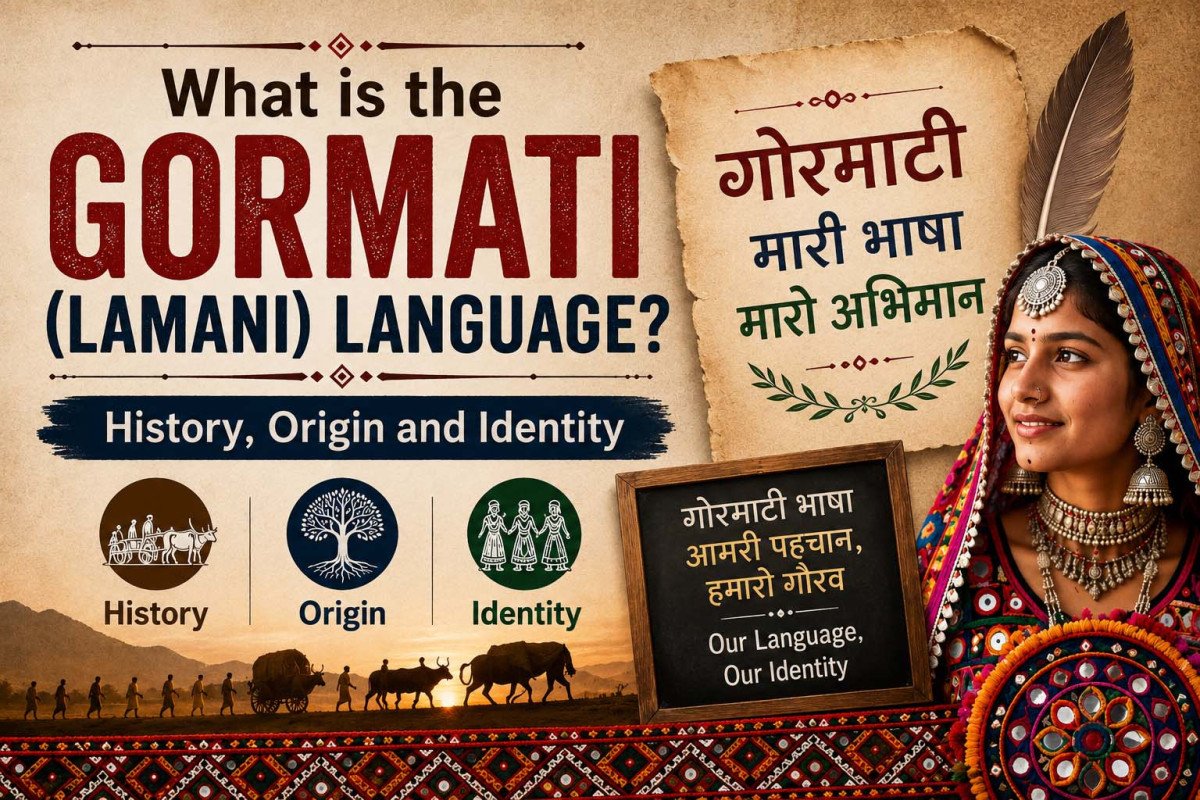
Language is the foundation of every civilization. It preserves a community's history, traditions, customs, beliefs, folklore, and collective identity from one generation to the next. Among the many indigenous languages spoken across India, Gormati (Lamani) holds a unique place as the traditional language of the Gor Banjara community. It is not merely a medium of communication but a living symbol of the community's cultural heritage, social values, and historical journey.
For centuries, the Gor Banjara people travelled across different regions of the Indian subcontinent. Their migration exposed them to numerous regional languages and cultures, yet they continued to preserve their own language within their families and communities. This remarkable continuity has enabled Gormati to survive despite centuries of geographical movement and cultural interaction.
Today, the language is known by several regional names, including Lamani, Lambani, Lambadi, Labhani, Banjari, Wanjari, Sugali, and Singadi. Although these names vary from one region to another, they all refer to the same linguistic tradition spoken by the Gor Banjara people. Within the community, however, the language is commonly identified as Gormati or Gorwat, names that reflect its original cultural identity.
Unfortunately, many people still believe that Gormati is simply a mixture of Hindi, Marathi, and Gujarati. This misconception has existed for decades because the Gor Banjaras have lived among speakers of different regional languages. In reality, Gormati possesses its own grammatical structure, phonological system, vocabulary, and sentence patterns, making it an independent Indo-Aryan language rather than a combination of other languages.
Understanding the history and identity of Gormati helps us appreciate not only the richness of the language itself but also the remarkable cultural resilience of the Gor Banjara community.
What is the Gormati (Lamani) Language?
Gormati is the mother tongue of the Gor Banjara people and belongs to the Indo-Aryan branch of the Indo-European language family. Linguistically, it shares historical roots with northwestern Indo-Aryan languages and is believed to have developed from Old Western Rajasthani, alongside languages such as Gujarati and Marwadi.
Being an Indo-Aryan language means that Gormati forms part of one of the world's largest language families. However, while it shares certain historical similarities with neighbouring languages, it has evolved independently over centuries, developing its own sound system, grammar, and vocabulary.
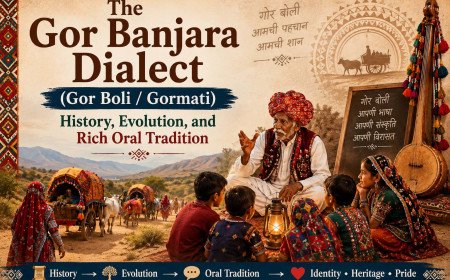
Unlike many modern languages that possess a long written literary tradition, Gormati has historically flourished as an oral language. Folk songs, devotional hymns, wedding traditions, oral narratives, riddles, proverbs, and everyday conversations have preserved the language across generations. This oral heritage has played a vital role in maintaining linguistic continuity even in regions where the community speaks other languages for education or administration.
Historical Origin of Gormati
The origin of Gormati is closely connected with the historical journey of the Gor Banjara people.
Linguistic evidence indicates that the language originated in Rajasthan, where it developed from Old Western Rajasthani before gradually spreading to different parts of India through migration.
Historically, the Gor Banjaras were renowned traders and transporters. Long before the development of railways and modern highways, they transported grain, salt, spices, metals, textiles, and other essential commodities across the Indian subcontinent. Their extensive travel connected kingdoms and markets while simultaneously carrying their language into new regions.
As communities settled in different states, local influences naturally affected pronunciation and vocabulary. Nevertheless, the essential grammatical framework of Gormati remained remarkably stable, allowing speakers from distant regions to communicate with one another despite minor regional differences.
The Gor Banjara community has traditionally maintained that its ancestors descended from the Rajputs. This belief forms an important part of community identity and reflects the historical traditions preserved within Gor Banjara society.
Why Does the Language Have So Many Names?
One of the most interesting features of Gormati is the large number of names by which it is known.
Depending on the region, it may be called:
- Gormati
- Gorwat
- Lamani
- Lambani
- Lambadi
- Labhani
- Banjari
- Wanjari
- Sugali
- Singadi
These names emerged because neighbouring communities referred to the Gor Banjaras differently in different parts of India. Over time, these regional names also became associated with the language itself. Despite these variations, the linguistic identity remains fundamentally the same, and many speakers continue to identify their language as Gormati or Gorwat.
This diversity of names reflects the geographical spread of the community rather than the existence of completely different languages.
Geographical Distribution
Today, Gormati is spoken across a wide geographical area. Large populations of speakers are found in Maharashtra, Karnataka, Andhra Pradesh, Telangana, Madhya Pradesh, Gujarat, Rajasthan, and several other states.
The language spread primarily because of the traditional mobility of the Gor Banjara people. As they migrated and established settlements in different regions, Gormati became the common language that united the community regardless of local surroundings.
Although vocabulary and pronunciation vary slightly from one region to another, the overall grammatical structure remains largely uniform across most dialects. Only a few regional varieties display significant structural differences.
This consistency demonstrates the remarkable stability of the language despite centuries of migration.
Is Gormati a Separate Language?
One of the most frequently asked questions concerns whether Gormati is an independent language or merely a mixture of several regional languages.
The linguistic evidence clearly supports the first view.
Detailed grammatical analysis shows that Gormati possesses its own sound system, grammar, sentence structure, and vocabulary. While it naturally shares certain features with other Indo-Aryan languages because of common historical origins, it cannot be described simply as a combination of Hindi, Marathi, or Gujarati.
Like all languages belonging to the same family, similarities exist because they evolved from related historical sources. However, these similarities do not diminish the independent identity of Gormati.
Recognizing Gormati as an independent language is important because it acknowledges the linguistic heritage of the Gor Banjara community and encourages further documentation and preservation of this rich tradition.
Identity and Cultural Significance
Language is one of the strongest expressions of cultural identity, and this is especially true for the Gor Banjara community.
Through Gormati, generations have preserved folk songs, traditional stories, community history, moral teachings, marriage customs, religious practices, and oral literature. Every proverb, blessing, and traditional song carries memories of earlier generations and reflects the collective experiences of the community.
Even when members of the community become fluent in regional languages such as Marathi, Hindi, Kannada, Telugu, or Gujarati, Gormati continues to play an essential role in family life and cultural ceremonies. It remains a language of belonging, identity, and shared heritage.
The survival of Gormati over centuries demonstrates the remarkable resilience of the Gor Banjara people. Despite migration, social change, and increasing urbanization, the language continues to connect people with their ancestral traditions.
Conclusion
The Gormati (Lamani) language represents far more than a means of communication. It is a living record of the history, migration, traditions, and identity of the Gor Banjara community. Originating in Rajasthan and belonging to the Indo-Aryan language family, it has travelled across India while preserving its unique grammatical structure and linguistic character.
Although known by many regional names—including Lamani, Lambani, Lambadi, Banjari, Wanjari, Sugali, and Singadi—the language remains a unifying force among Gor Banjaras throughout the country. Its continued use in homes, cultural events, songs, and oral traditions reflects the community's determination to preserve its heritage for future generations.
In an age when many indigenous languages face the risk of decline, protecting and promoting Gormati is essential. Every effort to document, teach, and celebrate the language contributes not only to the preservation of Gor Banjara culture but also to the rich linguistic diversity of India.
Frequently Asked Questions
What's Your Reaction?
 Like
2
Like
2
 Dislike
0
Dislike
0
 Love
2
Love
2
 Funny
0
Funny
0
 Wow
0
Wow
0
 Sad
0
Sad
0
 Angry
0
Angry
0



Comments (0)