

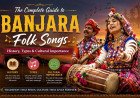
The Complete Guide to Banjara Folk Songs: History, Types & Cultural Importance
Explore the complete guide to Banjara Folk Songs, including their history, origin, types, literary features, cultural significance, oral tradition, and preservation in Banjara society.

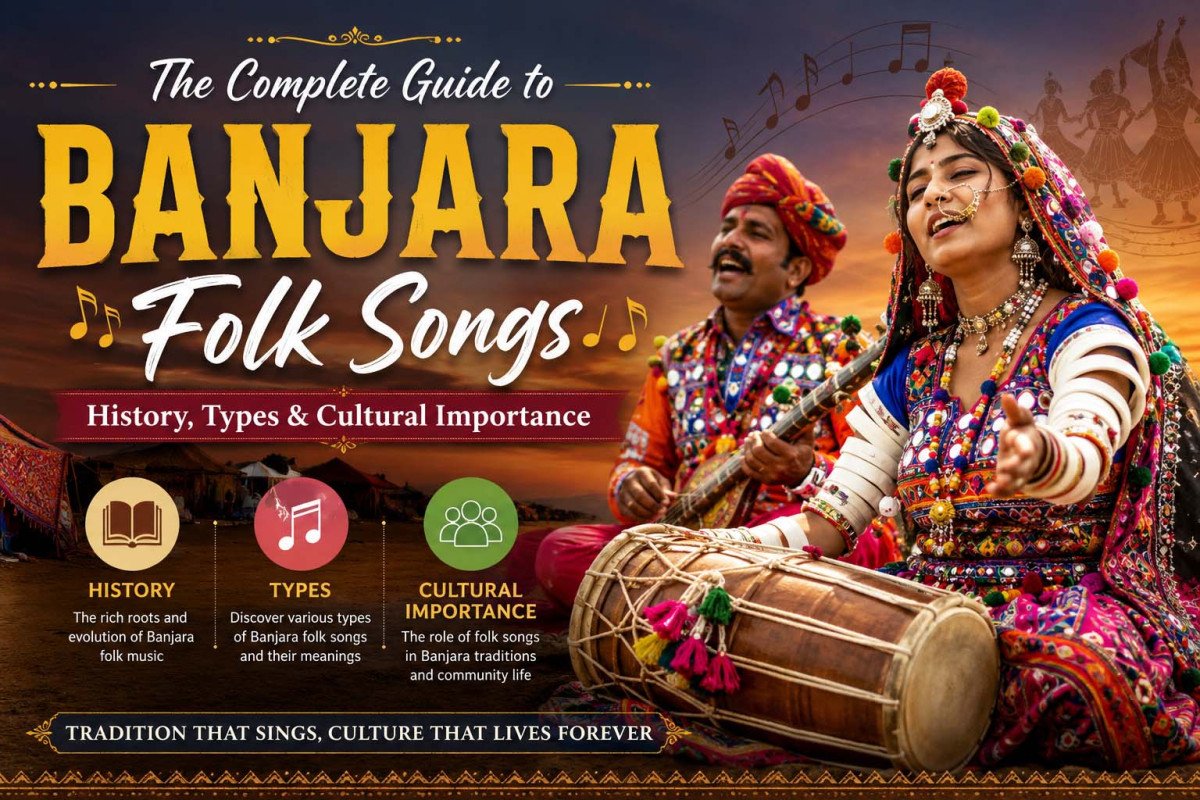
The Banjara community is one of India's oldest and most culturally vibrant communities, preserving a rich oral heritage that has been passed down from one generation to another. Among the many elements of this heritage, Banjara folk songs occupy a special place. They are not merely songs for entertainment but serve as a living record of the community's history, traditions, emotions, beliefs, and collective experiences. These songs accompany the Banjaras throughout every stage of life—from birth to death—and continue to strengthen their cultural identity.
Unlike written literature, Banjara folk songs have survived through oral transmission. They are learned by listening, singing, and participating in community life rather than through books or formal education. This oral tradition has allowed the songs to evolve naturally while retaining their cultural essence for centuries. Even today, these songs remain an important part of traditional ceremonies, festivals, agricultural activities, and social gatherings.
What Are Banjara Folk Songs?
Banjara folk songs are traditional lyrical compositions created collectively by members of the Banjara community. They express emotions, beliefs, customs, values, and everyday experiences through music and rhythm. These songs are deeply connected with community life and are performed during important social and religious occasions.
Unlike literary poetry, folk songs do not belong to a single author. They are created, modified, and preserved collectively over generations. Because they are transmitted orally, every generation contributes to their preservation while maintaining the original spirit of the songs.
The importance of folk songs extends beyond entertainment. They educate younger generations about customs and traditions, strengthen community relationships, preserve historical memories, and provide emotional expression during joyful as well as difficult moments. Whether celebrating the birth of a child, performing wedding rituals, working in the fields, or worshipping deities, music forms an inseparable part of Banjara life.
Scholarly Perspectives on Folk Songs
Scholars from different fields have described folk songs in various ways, but they all agree on one essential idea: folk songs are the authentic voice of ordinary people.
According to various folklorists cited in the source text, folk songs:
- originate within a community rather than from an individual,
- develop naturally over time,
- preserve the culture and traditions of a society,
- are transmitted orally,
- remain relevant across generations despite changing times.
These scholarly viewpoints emphasize that folk songs are not merely artistic creations but important cultural documents that preserve the collective memory of a community.
History of Banjara Folk Songs
The history of Banjara folk songs is closely connected with the historical journey of the Banjara people themselves. Traditionally known for their nomadic lifestyle and long-distance trading activities, the Banjaras travelled across different regions of the Indian subcontinent. During these journeys, songs became an important companion, helping people express emotions, reduce physical fatigue, celebrate achievements, and strengthen social bonds.
As the community settled permanently in different regions, their songs continued to evolve while preserving their original cultural identity. Each generation inherited this musical tradition through participation in family ceremonies, festivals, and everyday activities rather than through written records.
Because the songs evolved naturally within the community, they reflect changing social conditions without losing their traditional foundation. This ability to adapt has allowed Banjara folk songs to survive for centuries despite social and cultural transformations.
Oral Tradition: The Foundation of Banjara Folk Literature
One of the most remarkable characteristics of Banjara folk songs is their oral transmission.
Unlike written literature, these songs are preserved through memory and performance. Elderly members of the community teach them to younger generations during family ceremonies, religious gatherings, festivals, and everyday life. Children gradually become familiar with traditional melodies simply by listening to parents, grandparents, and community elders.
This process creates a living tradition in which every generation becomes both a learner and a preserver of cultural heritage. Although minor variations may appear over time, the central themes, emotions, and cultural values remain unchanged.
The oral tradition also encourages collective participation. There is little distinction between performer and audience because everyone participates by singing, responding, or joining group performances. This shared participation strengthens social unity and cultural continuity.
Characteristics of Banjara Folk Songs
Banjara folk songs possess several distinctive features that make them an important part of India's folk literature.
1. Community Creation
These songs belong to the entire community rather than to individual writers. Their anonymous nature reflects collective creativity and shared cultural experiences.
2. Oral Preservation
Instead of written manuscripts, they survive through memory and continuous performance, making oral tradition their strongest foundation.
3. Musical Expression
Music is the soul of Banjara folk songs. Rhythm and melody help convey emotions more effectively than words alone.
4. Simplicity
The language used in folk songs is simple, natural, and closely connected with everyday life, allowing people of all ages to understand and participate.
5. Emotional Depth
These songs express happiness, sorrow, devotion, hope, love, separation, gratitude, and community pride with remarkable sincerity.
6. Reflection of Culture
Banjara folk songs preserve customs, rituals, traditions, occupations, beliefs, festivals, and social values, making them valuable cultural records.
7. Historical Importance
Since many aspects of Banjara history were transmitted orally, folk songs provide valuable insight into the community's past, lifestyle, and cultural development.
8. Connection Between Work and Music
Many songs accompany physical activities, making labour more enjoyable while encouraging cooperation among community members.
Folk Songs as Cultural Identity
For the Banjara community, folk songs represent far more than music. They are symbols of identity, belonging, and continuity.
Through these songs, people preserve their language, customs, values, and worldview. Every important life event becomes meaningful through traditional singing. Songs also strengthen relationships among family members and reinforce respect for elders, ancestors, and community traditions.
Women play an especially significant role in preserving this musical heritage. Through daily activities, family ceremonies, and community celebrations, they continue to pass traditional songs from one generation to another. Their contribution has been essential in maintaining the continuity of Banjara folk literature.
Challenges in the Modern Era
Modernization, urbanization, migration, and changing lifestyles have created new challenges for preserving Banjara folk songs.
Many young people now grow up away from traditional community environments where these songs were once learned naturally. As a result, oral transmission has weakened in some areas. Without proper documentation and active participation, valuable cultural knowledge may gradually disappear.
Nevertheless, many Banjara communities continue to organize cultural programs, festivals, and traditional gatherings where these songs remain an important part of community life. Such efforts help preserve the musical heritage while introducing younger generations to their cultural roots.
Types of Banjara Folk Songs & Their Role in Community Life
Banjara folk songs are far more than traditional melodies sung on special occasions. They form an essential part of the community's social structure, religious beliefs, family traditions, and everyday life. Every important event—from the birth of a child to marriage ceremonies, religious festivals, agricultural work, and even death rituals—is accompanied by songs that express the emotions and values of the community.
These songs are not randomly composed. They are closely associated with specific ceremonies, customs, and responsibilities, making them an important medium for preserving Banjara culture. Because of their wide range of themes and functions, scholars classify Banjara folk songs into different categories based on the occasions on which they are performed and the role they play in society.
Classification of Banjara Folk Songs
The Banjara community has developed a rich and diverse tradition of folk music. According to the source text, these songs can generally be classified into three broad categories:
- Ritual Songs
- Religious Songs
- Songs Sung During Physical Work
This classification reflects the close relationship between music and everyday life in Banjara society. Every category serves a unique purpose while contributing to the preservation of cultural values and collective identity.
Ritual Songs
Among all categories, ritual songs occupy the most significant position in Banjara folk literature. These songs accompany the major milestones of human life and are considered an inseparable part of community traditions.
The Banjara community believes that every important stage of life deserves celebration, blessings, guidance, and emotional expression through music. As a result, ritual songs are performed throughout the life cycle of an individual.
Broadly, ritual songs are associated with:
- Birth ceremonies
- Wedding ceremonies
- Death rituals
Each of these ceremonies includes several traditional customs where singing becomes an important means of expressing joy, gratitude, devotion, hope, or sorrow. Rather than serving only as entertainment, ritual songs reinforce family relationships, social responsibilities, and cultural continuity.
Birth Ritual Songs
The arrival of a child is regarded as one of the happiest occasions in Banjara society. Birth is not viewed simply as a family event but as a blessing for the entire community.
From pregnancy onwards, numerous customs are observed, each accompanied by traditional songs. These songs express the emotions of parents, grandparents, relatives, and especially women, who play the central role in preserving these traditions.
Birth-related songs celebrate:
- Motherhood
- Family happiness
- Blessings for the newborn
- Community participation
- Hope for the child's future
These songs also reveal the affection that the community has for children and the importance placed on family continuity and social harmony.
Wedding Ritual Songs
Marriage is one of the most elaborate and culturally significant ceremonies in Banjara society. Weddings traditionally involved several days of rituals, with nearly every stage accompanied by singing and dancing.
Wedding songs reflect a wide range of emotions:
- Joy
- Excitement
- Blessings
- Humour
- Advice
- Separation
- Emotional farewell
Women are the principal performers of these songs. Through music they guide the bride, encourage the groom, welcome relatives, express family emotions, and preserve centuries-old customs.
Wedding songs also illustrate the strong family relationships and social organization that characterize traditional Banjara life. Although modern weddings have become shorter, traditional songs continue to remain an important part of many ceremonies.
Death Ritual Songs
Like birth and marriage, death also occupies an important place in the ritual life of the Banjara community.
Songs associated with mourning express grief, remembrance, respect, and prayers for the departed soul. They help family members cope with emotional loss while reinforcing the community's belief in collective support during difficult times.
These songs also remind listeners of the temporary nature of human life and encourage compassion, unity, and mutual responsibility within society.
Religious Songs
Religion occupies a central place in Banjara life, and devotional songs form an important part of their musical tradition.
Religious songs are performed during:
- Temple worship
- Religious festivals
- Community gatherings
- Pilgrimages
- Family rituals
These songs express devotion toward family deities, local goddesses, revered saints, and other divine figures respected within the Banjara community.
Beyond worship, religious songs strengthen moral values, inspire faith, and reinforce community unity. They also preserve traditional beliefs that have been transmitted orally for generations.
Songs Sung During Physical Work
One of the most distinctive features of Banjara folk literature is the close relationship between work and music.
Daily labour often involves physically demanding activities. Singing helps reduce fatigue, improve coordination, and create a pleasant working atmosphere.
Traditional work songs accompany activities such as:
- Agricultural work
- Grinding grain
- Wood cutting
- Embroidery
- Household activities
- Child care
Rather than viewing labour as merely physical effort, Banjara culture transforms work into a shared cultural experience through music.
These songs strengthen cooperation among family members while preserving valuable knowledge about traditional occupations and community life.
Women's Contribution to Banjara Folk Songs
No discussion of Banjara folk songs is complete without recognizing the extraordinary contribution of women.
Women are the primary custodians of the oral tradition. They learn songs from mothers, grandmothers, and elderly women and pass them to the next generation through daily life rather than formal instruction.
Their participation extends to nearly every occasion, including:
- Birth ceremonies
- Weddings
- Festivals
- Agricultural work
- Religious rituals
- Family celebrations
Women also compose spontaneous songs based on changing situations and emotions, making the tradition dynamic and continuously evolving.
Their role demonstrates that Banjara folk literature is not simply preserved in books but lives through everyday community participation.
Music and Dance: An Inseparable Tradition
In Banjara culture, music and dance complement one another.
Group performances are common during ceremonies and festivals, where singing naturally leads to dancing. These performances create an atmosphere of celebration while strengthening social relationships among community members.
Unlike formal stage performances, traditional Banjara singing encourages participation from everyone present. There is little distinction between performers and audience, making music a collective experience rather than an individual performance.
This participatory tradition has helped preserve folk songs for generations despite the absence of written documentation.
Social Functions of Banjara Folk Songs
Banjara folk songs perform numerous functions beyond entertainment.
Preserving Traditions
Songs help transmit customs, rituals, and social practices from one generation to another.
Community Education
Young people learn social responsibilities, moral values, and cultural expectations through participation in traditional songs.
Emotional Expression
Whether celebrating happiness or coping with sorrow, songs provide a natural means of expressing deep human emotions.
Strengthening Unity
Collective singing promotes cooperation, mutual respect, and a strong sense of belonging within the community.
Preserving History
Many aspects of Banjara history survive through oral tradition, making folk songs valuable historical sources.
Cultural Values Reflected in Folk Songs
Banjara folk songs preserve many values that continue to guide community life.
Among them are:
- Respect for elders
- Family unity
- Community cooperation
- Religious devotion
- Hospitality
- Hard work
- Courage
- Compassion
- Social responsibility
- Cultural pride
These values are woven naturally into songs and ceremonies, allowing each generation to absorb them through participation rather than formal instruction.
Literary Features, Cultural Importance & Preservation of Banjara Folk Songs
Banjara folk songs are much more than traditional music passed down through generations. They represent the collective wisdom, emotions, beliefs, and cultural identity of the Banjara community. Every song reflects the experiences of ordinary people and preserves traditions that have survived for centuries through oral transmission rather than written literature. This remarkable heritage continues to connect the present generation with its ancestors while strengthening the cultural foundation of the community.
As modern society changes rapidly, these songs have become even more valuable because they preserve historical memories, traditional knowledge, and community values that might otherwise disappear. Understanding their literary beauty and cultural importance helps us appreciate why they remain one of the greatest treasures of Banjara heritage.
Literary Features of Banjara Folk Songs
Although Banjara folk songs were not composed by professional writers, they possess remarkable literary qualities that have enabled them to survive for generations.
Simplicity of Language
One of the defining characteristics of Banjara folk songs is their simple and natural language. The words are drawn from everyday life, making the songs easy to understand and remember. This simplicity allows people of all ages to participate in singing without requiring formal education.
The language also reflects the regional influence of different areas where Banjaras settled over centuries. Despite these influences, the songs preserve the unique identity of the community through their traditional expressions and cultural vocabulary.
Emotional Expression
Every folk song is filled with genuine human emotions.
Depending on the occasion, they express:
- Happiness
- Love
- Devotion
- Hope
- Gratitude
- Courage
- Compassion
- Separation
- Sorrow
- Community pride
Unlike formal literature, these emotions emerge naturally from real-life experiences rather than imaginative storytelling.
Rhythm and Musical Beauty
Music gives life to Banjara folk songs.
Simple rhythmic patterns make them easy to sing collectively, while repeated phrases help listeners remember the lyrics. The close relationship between rhythm, movement, and community participation creates a lively atmosphere during ceremonies and celebrations.
Because these songs were designed for oral performance, musical flow often takes precedence over complex poetic structure.
Collective Creativity
Most folk songs have no known individual author.
Instead, they represent the collective creativity of the community. Every generation contributes small changes while preserving the original spirit of the songs. This process has allowed the tradition to remain both stable and dynamic over many centuries.
Symbolism in Banjara Folk Songs
Banjara folk songs frequently use symbolic language to express ideas and emotions.
Nature serves as one of the most important sources of symbolism.
Common symbolic elements include:
- Flowers representing beauty and purity.
- Trees symbolizing stability and family roots.
- Rivers representing life's continuous journey.
- Rain expressing prosperity and hope.
- Sunrise symbolizing new beginnings.
- Moonlight reflecting peace and emotional affection.
These symbols make the songs meaningful without requiring lengthy explanations. They also demonstrate the close relationship between the Banjara community and the natural environment.
Reflection of Community Life
Banjara folk songs function as a mirror of society.
They preserve information about:
- Family relationships
- Community customs
- Religious beliefs
- Traditional occupations
- Festivals
- Social responsibilities
- Moral values
- Collective celebrations
Through these songs, younger generations learn not only music but also the traditions and responsibilities associated with community life.
Educational Importance
Long before formal education became widespread, folk songs served as an important educational tool.
They helped teach:
- Respect for parents and elders.
- Community cooperation.
- Religious faith.
- Traditional customs.
- Moral behaviour.
- Social responsibility.
- Family values.
- Cultural identity.
Learning through music made these lessons memorable and enjoyable, allowing important knowledge to pass naturally from one generation to the next.
Historical Value of Banjara Folk Songs
Because much of Banjara history was preserved orally, folk songs provide valuable historical evidence about the community's past.
They help researchers understand:
- Traditional lifestyle
- Social organization
- Community beliefs
- Cultural practices
- Historical experiences
- Everyday occupations
- Religious traditions
Although folk songs are artistic expressions rather than historical documents, they preserve important cultural memories that written records often overlook.
Cultural Importance
The cultural importance of Banjara folk songs extends far beyond music.
They serve several essential functions within society.
Preserving Identity
Songs help maintain a strong sense of belonging by preserving language, customs, and shared traditions.
Strengthening Families
Group singing during ceremonies encourages cooperation and emotional bonding among relatives.
Building Community Unity
Traditional performances bring people together and reinforce collective participation.
Preserving Oral Heritage
Every performance helps ensure that traditional knowledge survives into the next generation.
Celebrating Cultural Diversity
Banjara folk songs contribute significantly to India's rich and diverse folk heritage while maintaining their unique identity.
Challenges to Preservation
Like many oral traditions around the world, Banjara folk songs face several modern challenges.
Urbanization
Migration to cities has reduced opportunities for traditional community gatherings.
Changing Lifestyles
Modern entertainment has replaced many traditional forms of music among younger generations.
Decline of Oral Transmission
Children now have fewer opportunities to learn songs directly from elders.
Language Shift
Increasing use of dominant regional languages has affected the preservation of traditional expressions.
Limited Documentation
Many songs remain undocumented and survive only through elderly community members.
Preserving Banjara Folk Songs for Future Generations
Preserving this rich musical heritage requires collective effort.
Important initiatives include:
- Recording traditional performances.
- Documenting songs through books and digital archives.
- Encouraging cultural festivals.
- Teaching traditional songs to children.
- Supporting research on Banjara folklore.
- Promoting community-based cultural programs.
- Using digital platforms to preserve oral traditions.
Such efforts ensure that future generations can continue to learn about their cultural roots while adapting to modern society.
The Future of Banjara Folk Songs
Despite modern challenges, the future of Banjara folk songs remains hopeful.
Growing interest in indigenous cultures, academic research, digital preservation, and community-led cultural initiatives has created new opportunities for safeguarding this valuable heritage.
Younger generations are increasingly using social media, online platforms, and cultural organizations to promote traditional music. When combined with the wisdom of community elders, these efforts can ensure that Banjara folk songs continue to inspire future generations.
Conclusion
Banjara folk songs are one of the most valuable expressions of India's intangible cultural heritage. They preserve centuries of history, traditions, beliefs, emotions, and collective wisdom through the remarkable power of oral tradition. Their simple language, emotional depth, rhythmic beauty, and strong connection with everyday life have enabled them to survive across generations without depending on written literature.
More importantly, these songs continue to strengthen family relationships, promote community unity, preserve cultural identity, and educate younger generations about their rich heritage. Protecting and documenting this tradition is not only important for the Banjara community but also for preserving the cultural diversity of India as a whole.
Frequently Asked Questions
What's Your Reaction?
 Like
0
Like
0
 Dislike
0
Dislike
0
 Love
0
Love
0
 Funny
0
Funny
0
 Wow
0
Wow
0
 Sad
0
Sad
0
 Angry
0
Angry
0


Comments (0)