

Nangara: A Universal Roar of Human Identity in Banjara Literature
Explore 'Nangara', the epic poem by Eknathrao Pawar Naik, celebrating Banjara culture, human identity, universal brotherhood, global peace, and the philosophy of One Earth, One Family.

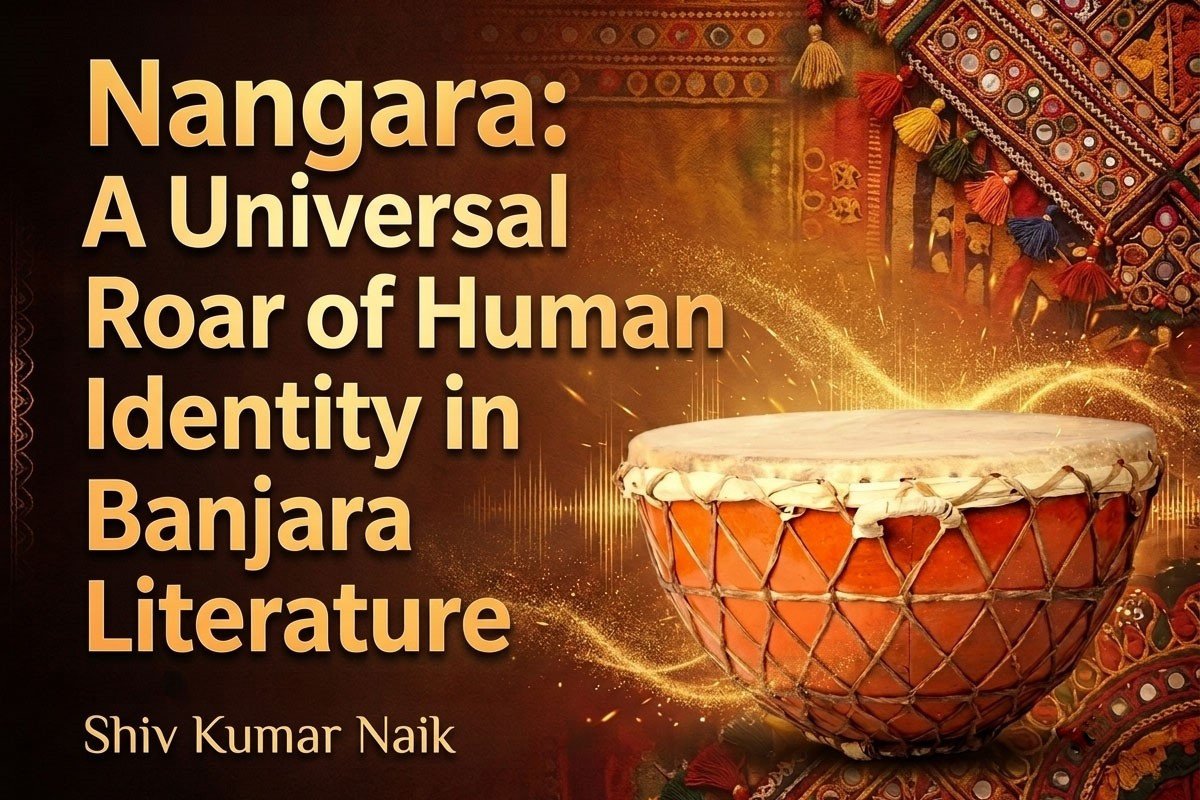
'Nangara', the epic poem written by renowned litterateur, thinker, and poet Eknathrao Pawar Naik, has emerged as a milestone in the world of Banjara literature. Going beyond the boundaries of a single community, this literary masterpiece has established its identity as an exceptional epic that promotes universal human values. Eminent personalities such as Padma Shri Somlal Naik from Telangana and renowned Gujarati litterateur Dr. Govardhan Banjara have appreciated the literary brilliance and profound values reflected in this work.
Symbolism and Cultural Heritage
The title 'Nangara' represents much more than a musical instrument. It symbolizes energy, justice, victory, struggle, and bravery. Drawing upon the historical significance of this instrument, which holds an important place in Gor Banjara culture, the poet has created poetry that awakens human consciousness. This literary work plays a significant role in establishing an independent identity for Banjara literature.
'One Earth, One Family': A Universal Vision
The greatest strength of this epic lies in its concept of 'One Earth-One Family'. Through the rich vocabulary and expressions of the Banjara community, the poet conveys a message of global peace and human welfare. Giving a global voice to the marginalized and spreading the message of universal brotherhood are among the defining characteristics of 'Nangara'.
"म आब सावध वेतांळी पेरणी करेवाळो छू..."
Through these words, the poet expresses his determination to sow the seeds of humanity through modern thinking. To prevent the spread of hatred, terrorism, and violence, the poet speaks of providing a booster dose of the 'Human Version'. His commitment to continuously sow 'thoughts that create better human beings' in order to help a world trapped in a maze of crises find its way out is truly inspiring.
The Confluence of Rivers and Civilizations
The poet's vision is not confined to the Tanda (Banjara settlement); it is truly global. This poetry flows from the Sahyadri, Himalayas, and Vindhyas to the Ganga and Indus, extending further to the Nile, Thames, and Mississippi. By exploring the journey from Takshashila University to Oxford and Princeton, 'Nagara' creates an awareness of global citizenship.
Philosophy of Life and Reality
"चमकेती बाटी मळेनी. रोवं जेती केनी राज मळेनी."
Through these poignant words, the poet presents the harsh realities of life: fear does not bring bread, and crying does not bring power.
Presenting the philosophy of life through the symbolic figure of Lakha Banjara, the poet says:
"इ लाखा बंजारारो टांडो... लाखा थांबेवाळो कोनी..."
The unstoppable journey and the science of human existence are beautifully woven into this poetry through deeply moving literary expressions and imagery.
Conclusion
'Nangara' is not merely an ornament of words; it is a profound intellectual foundation. Rising above narrow nationalism and communalism, this work presents the philosophy of 'Vasudhaiva Kutumbakam' (The World Is One Family), making it a modern hymn of peace. This literary masterpiece, which teaches humanity to future generations and warns against inhuman tendencies, stands as an enduring jewel in the treasure of Banjara literature.
– Shiv Kumar Naik
What's Your Reaction?
 Like
0
 Dislike
0
 Love
0
 Funny
0
 Wow
0
 Sad
0
 Angry
0






Comments (0)