

Origin of the Gor Banjara Community: Ancient Theories Explained
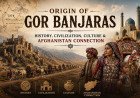
The Gor Banjara community has a rich and ancient history that has given rise to several theories about its origin. Historical traditions connect the community with the Indus Valley Civilization, the ancient Gor region of present-day Afghanistan, and early Aryan pastoral groups. Over time, the Gor people developed into skilled traders and transporters, establishing extensive trade routes across the Indian subcontinent.

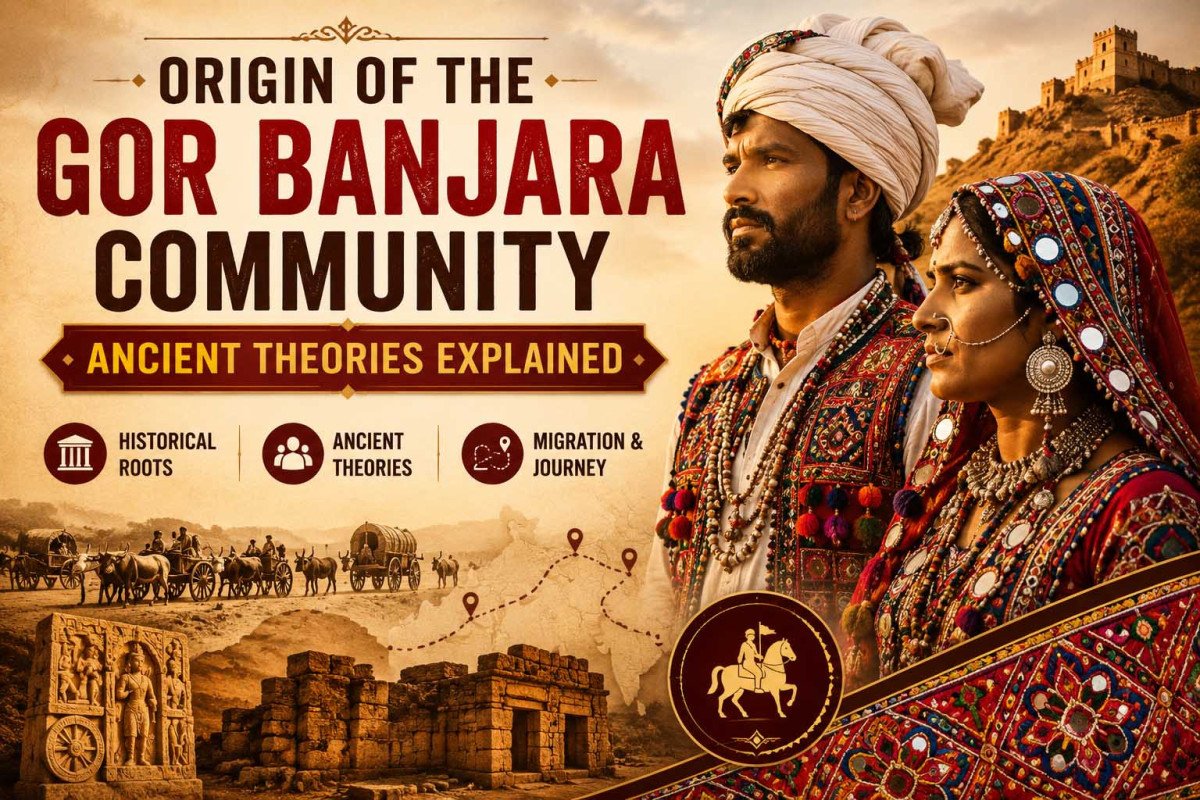
The Gor Banjara community is one of the oldest and most culturally rich communities in the Indian subcontinent. Known by different names such as Gor, Banjara, Lambani, Lambadi, Lamani, Labhani, and Sugali, the community has a long history that has been preserved through its traditions, language, folklore, and social institutions. Despite its widespread presence across India, the exact origin of the Gor Banjaras remains a subject of historical discussion. Over the years, several theories have been proposed based on cultural traditions, historical references, linguistic studies, and archaeological interpretations. Together, these theories present a fascinating picture of the community's ancient past.
Why the Origin of the Gor Banjara Community is Debated
Unlike many communities whose history is documented in continuous written records, much of the early history of the Gor Banjaras has been preserved through oral traditions, folk literature, customs, and community memory. Researchers have therefore relied on multiple forms of evidence, including ancient settlements, migration patterns, language, traditional occupations, and cultural practices, to understand their origins.
The remarkable continuity of Gor traditions—including the Tanda system, Naik leadership, Gor Boli (Gormati), distinctive clothing, embroidery, and community rituals—suggests that the community has preserved many ancient cultural features over a long period. These living traditions continue to play an important role in the study of Gor history.
The Pre-Indus and Indus Valley Civilization Theory
One of the oldest theories suggests that the Gor community represents the continuation of an ancient civilization that existed before or during the Indus Valley Civilization. According to this view, many customs still practiced by the Gor Banjaras resemble traditions associated with ancient settlements discovered at Harappa and Mohenjodaro.
Researchers have pointed to similarities in settlement patterns, community organisation, traditional dress, ornaments, hairstyles, agricultural practices, and the use of bullocks for transport. These cultural similarities have led some scholars to believe that the ancestors of the Gor Banjaras may have shared cultural links with one of the earliest urban civilizations of South Asia. While this remains a historical theory rather than a universally accepted conclusion, it continues to attract scholarly interest because of the community's remarkable preservation of ancient traditions.
The Afghanistan (Gor Province) Theory
Another important theory identifies the Gor region of present-day Afghanistan as the original homeland of the Gor community. Historical references describe a mountainous region called Gor, located between Herat and Ghazni, where Gor communities are believed to have lived for centuries. The existence of a province named Gor, a river carrying the same name, and settlements associated with Gor people are often cited as geographical evidence supporting this theory.
Historical traditions further indicate that this region was influenced by Vedic, Buddhist, and Hindu cultures before the spread of Islam. Similarities between the traditional clothing, festivals, social customs, and settlement patterns of communities in this region and those of present-day Gor Banjaras have strengthened the belief that Afghanistan played an important role in the early history of the community.
The Aryan Origin Theory
A widely discussed historical theory connects the Gor Banjaras with one of the early Aryan clans. According to this interpretation, the Gor people formed an independent branch of ancient Aryan society with their own social organisation, language, and traditions.
The theory describes early Gor groups as pastoral communities that depended on cattle for their livelihood. These groups lived in organised settlements under the leadership of a chief, a system that resembles the traditional Tanda headed by a Naik. Over time, many groups gradually expanded into agriculture and long-distance trade while preserving their unique cultural identity.
The traditional explanation of the word "Gor" also supports this interpretation. It derives the term from "Go", meaning cow, and "Ra", meaning protector, giving the meaning "protector of cattle." Since cattle formed the basis of the community's economy and way of life, this explanation reflects the historical importance of pastoralism in Gor society.
From Pastoral Life to Long-Distance Trade
As their settlements expanded, the Gor people gradually became famous for transporting goods across vast regions using caravans of bullocks. Grain, salt, textiles, and other essential commodities were carried over long distances, connecting markets across present-day Afghanistan, Pakistan, Rajasthan, Gujarat, Madhya Pradesh, Maharashtra, and several other regions.
This long-distance trade eventually became one of the defining characteristics of the community. It also explains the origin of the name Banjara, which is associated with trade and commerce. The word is linked with Banaj or the Sanskrit term Vanik, both referring to trading activities. Thus, while Gor represents the community's traditional identity, Banjara reflects its historic occupation as traders and transporters.
Similarly, the names Labhani, Lamani, and Lambadi are connected with the historical trade of salt. The word Lawan means salt, and over time regional pronunciations transformed the name into different forms across India.
Migration into India
Historical traditions describe the Gor community as gradually entering the Indian subcontinent through the north-west. Rather than a single migration, different groups are believed to have moved over many centuries in search of grazing land, water resources, agricultural opportunities, and commercial routes.
These groups eventually established settlements across Malwa, Nimar, Rajasthan, Gujarat, the Narmada Valley, Satpura, Bundelkhand, and later eastern regions including Bengal and Tripura. Wherever they settled, they established Tandas, preserved their customs, and continued speaking Gor Boli while adapting to local languages and environments.
Cultural Evidence Supporting Ancient Origins
One of the strongest aspects of the Gor Banjara community is the preservation of its traditional institutions. The Tanda system, community leadership under the Naik, distinctive embroidery, silver ornaments, Gor Boli, folk songs, oral traditions, and unique customs continue to form the foundation of community life.
Researchers regard these living traditions as valuable cultural evidence because they have survived despite centuries of migration and regional adaptation. The continuity of these practices has encouraged further study into the ancient origins of the community and its place in Indian history.
Conclusion
The origin of the Gor Banjara community remains an important subject of historical research. Different theories associate the community with the Indus Valley Civilization, the ancient Gor region of Afghanistan, and early Aryan pastoral groups. Although these theories differ in their interpretations, they all recognise the antiquity of the Gor people and the remarkable continuity of their cultural traditions.
The survival of the Tanda system, Gor Boli, traditional leadership, community customs, and rich oral heritage demonstrates a cultural identity that has endured for generations. As archaeological discoveries and historical research continue, they may provide an even clearer understanding of the ancient journey of the Gor Banjara community and its enduring contribution to the cultural heritage of the Indian subcontinent.
Frequently Asked Questions
What's Your Reaction?
 Like
0
Like
0
 Dislike
0
Dislike
0
 Love
0
Love
0
 Funny
0
Funny
0
 Wow
0
Wow
0
 Sad
0
Sad
0
 Angry
0
Angry
0





Comments (0)