
Gor Banjara Marriage Rituals Explained: Traditional Customs, Ceremonies & Folk Songs
Discover the traditional Gor Banjara marriage rituals from engagement to farewell. Learn about unique wedding ceremonies, folk songs, customs, cultural significance, and the rich heritage of the Gor Banjara community.

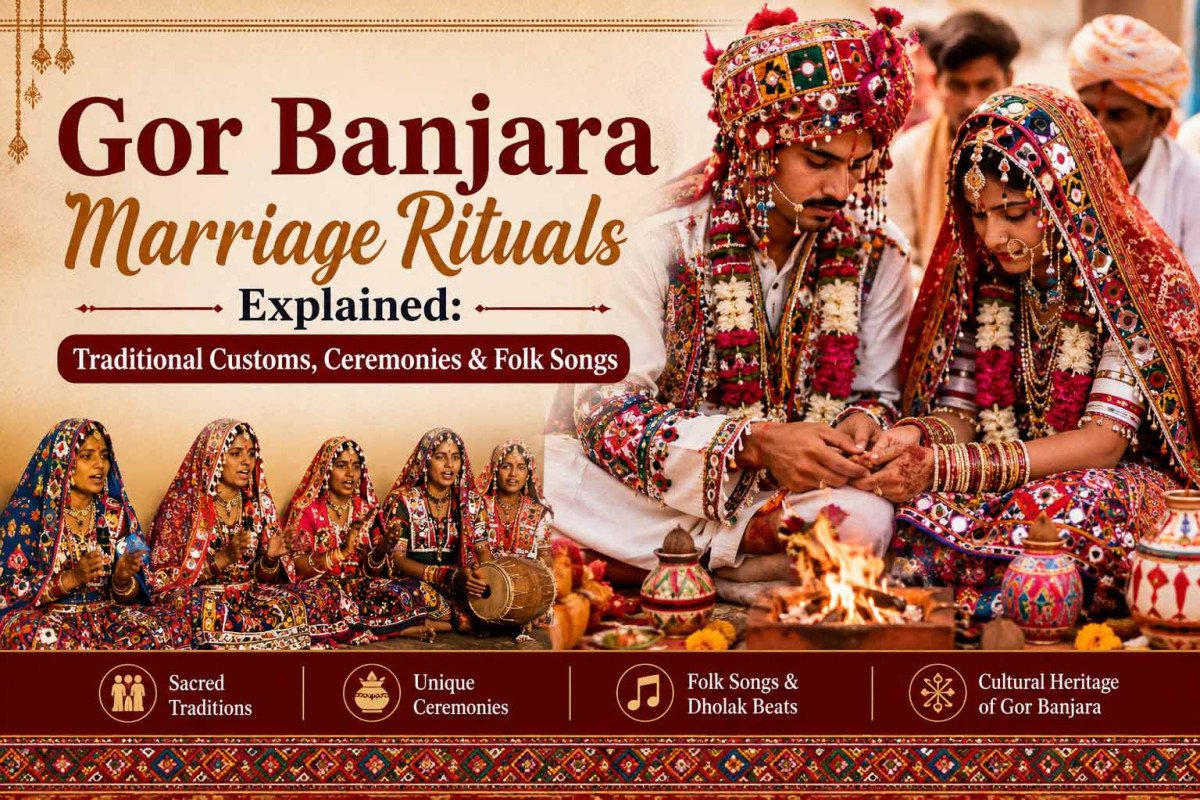
The Gor Banjara community is one of India's oldest and most culturally vibrant tribal communities. Known for their colorful attire, rich oral traditions, and strong community values, the Gor Banjaras have preserved their customs for centuries despite changing times. Among these traditions, marriage (Vivah Sanskar) is considered one of the most sacred and significant social institutions. It is not merely the union of two individuals but the coming together of two families, clans, and the entire community.
Traditional Gor Banjara weddings are unique because every ritual is accompanied by folk songs (Lokgeet), blessings, symbolic ceremonies, and community participation. These customs reflect respect for ancestors, family values, and the cultural identity of the Gor Banjara people. Research on Gor Banjara wedding traditions highlights that wedding songs are not just a form of entertainment—they preserve history, emotions, customs, and cultural knowledge passed from one generation to another.
The Importance of Marriage in Gor Banjara Society
Marriage holds a sacred place in Gor Banjara culture. It is regarded as a lifelong commitment based on mutual respect, family honor, and community approval. Traditionally, marriages strengthen social bonds while maintaining clan traditions and cultural values.
Unlike modern weddings that often focus on lavish celebrations, traditional Gor Banjara marriages emphasize rituals, blessings, cooperation, and collective participation. Elders, relatives, and the village community actively contribute to every stage of the wedding.
One of the most distinctive features of these ceremonies is the continuous singing of traditional folk songs, which express joy, humor, advice, blessings, and emotional farewells.
Traditional Matchmaking and Clan Rules
Traditionally, marriage proposals were discussed by elders and respected members of both families. Family reputation, cultural values, and compatibility were considered before confirming the alliance.
The Gor Banjara community follows traditional clan (Gotra) rules to maintain social harmony. Marriage within the same clan is generally avoided, while alliances between different clans are encouraged according to established customs. Community elders and local leaders ensure these traditions are respected.
Engagement Ceremony (Sagai)
The wedding journey officially begins with the Sagai, or engagement ceremony. This ritual represents the formal acceptance of the marriage proposal by both families.
Community elders gather together to bless the couple and confirm the relationship. Traditional greetings, symbolic exchanges, and blessings mark this important occasion.
Women sing engagement folk songs filled with happiness and hope. These songs welcome the new relationship while expressing gratitude for the union of two families. The engagement is considered not only a family celebration but also a community event where everyone participates in the joy.
Folk Songs: The Soul of Every Ceremony
No traditional Gor Banjara wedding is complete without Lokgeet (folk songs). Every important ritual is accompanied by songs that reflect different emotions.
These songs celebrate:
- Happiness and excitement
- Respect for elders
- Advice for the bride and groom
- Humorous exchanges between relatives
- Emotional farewell of the bride
- Blessings for prosperity and family life
Unlike written literature, these songs have been preserved through oral tradition for generations. They serve as a living archive of Gor Banjara history, customs, language, and social values.
Ghota Ceremony
After the engagement comes the traditional Ghota ceremony, one of the earliest pre-wedding rituals.
This ceremony brings together family members and community participants, especially women, who perform songs filled with humor and playful conversations. The atmosphere becomes lively as relatives sing, laugh, and prepare the bride and groom for the upcoming wedding.
The Ghota ceremony demonstrates the importance of collective celebration in Gor Banjara culture. Rather than being a private family event, it becomes a social gathering where the entire community shares happiness.
Traditional Bridal Preparations
Preparing the bride is an important part of the wedding celebrations.
The bride wears traditional Gor Banjara attire decorated with colorful embroidery, mirror work, silver ornaments, and handcrafted jewelry. Every ornament has symbolic meaning representing prosperity, protection, beauty, and cultural identity.
Female relatives assist the bride throughout these preparations while continuously singing traditional songs that celebrate womanhood, family, and new beginnings.
Ritual Blessings and Sacred Ceremonies
Several sacred ceremonies take place before the wedding procession. Elders offer blessings and prayers for a happy married life.
Special rituals symbolize the groom's transition into family responsibilities and married life. These ceremonies reinforce values such as honesty, courage, responsibility, and respect for tradition.
Community participation remains central throughout the process, with elders guiding younger generations according to long-established customs.
The Wedding Ceremony
The main wedding ceremony combines spiritual beliefs, family traditions, and community customs.
The bride and groom receive blessings from parents, elders, and respected community members. Traditional rituals symbolize unity, mutual commitment, and lifelong companionship.
Unlike many modern weddings, Gor Banjara ceremonies emphasize simplicity, spirituality, and collective participation rather than extravagance.
Traditional music and folk songs continue throughout the ceremony, making every ritual meaningful and memorable.
Emotional Farewell (Vidai)
The farewell ceremony is among the most emotional moments in the entire wedding.
Women sing deeply touching farewell songs expressing the love between parents and daughter. These songs reflect gratitude, family affection, sacrifice, and hope for the bride's prosperous future.
Many of these songs carry messages encouraging the bride to respect her new family while never forgetting the values and blessings received from her parents.
The emotional power of these farewell songs has made them one of the most treasured parts of Gor Banjara oral tradition.
Cultural Importance of Wedding Folk Songs
Traditional wedding songs preserve much more than music.
They document:
- Ancient customs
- Community history
- Social values
- Family relationships
- Women's voices and experiences
- Local language and expressions
- Moral teachings
Because these songs have been transmitted orally for generations, they continue to serve as an important source of cultural identity for the Gor Banjara community. Researchers have noted that these songs help preserve historical traditions that might otherwise disappear over time.
Community Participation
One remarkable feature of Gor Banjara weddings is that they involve the entire community.
Parents, grandparents, relatives, neighbors, and community elders all contribute to organizing ceremonies, preparing meals, welcoming guests, singing folk songs, and performing rituals.
This collective participation strengthens social unity and reinforces the belief that marriage is not only the responsibility of two individuals but of the entire community.
Changes in Modern Times
Modern education, urbanization, and changing lifestyles have influenced Gor Banjara weddings. Today, many families combine traditional customs with contemporary wedding practices.
While wedding venues, photography, and modern decorations have become common, many families continue to preserve important traditions such as:
- Traditional folk songs
- Community blessings
- Clan customs
- Respect for elders
- Traditional attire
- Cultural rituals
These customs help younger generations remain connected to their heritage while adapting to modern life.
Preserving a Living Heritage
The wedding traditions of the Gor Banjara community represent centuries of cultural wisdom. Every ritual, song, blessing, and ceremony reflects values of unity, respect, cooperation, and family harmony.
As modernization continues, documenting and preserving these traditions becomes increasingly important. Wedding folk songs are more than ceremonial music—they are historical records, cultural lessons, and emotional expressions that connect present generations with their ancestors.
By celebrating and preserving these customs, the Gor Banjara community ensures that its rich cultural identity continues to inspire future generations.
Conclusion
Traditional Gor Banjara marriage rituals are a beautiful combination of spirituality, social responsibility, family values, and cultural expression. From the joyful Sagai to the emotional Vidai, every ceremony carries deep symbolic meaning. Folk songs remain the heart of these celebrations, preserving history, language, and collective memory through oral tradition.
Understanding these rituals helps us appreciate the richness of Gor Banjara heritage and highlights the importance of protecting one of India's most remarkable living cultural traditions.
Frequently Asked Questions
What's Your Reaction?
 Like
1
Like
1
 Dislike
0
Dislike
0
 Love
1
Love
1
 Funny
0
Funny
0
 Wow
0
Wow
0
 Sad
0
Sad
0
 Angry
0
Angry
0

Comments (0)