

Traditional Musical Instruments of the Lambadi Tribes: History, Construction and Cultural Significance
Discover the traditional musical instruments of the Lambadi (Gor Banjara) tribes, including Nangara, Dappu, Rabaab, Sarangi, Thalalu and Chirathalu. Learn their history, construction, cultural significance and role in festivals.

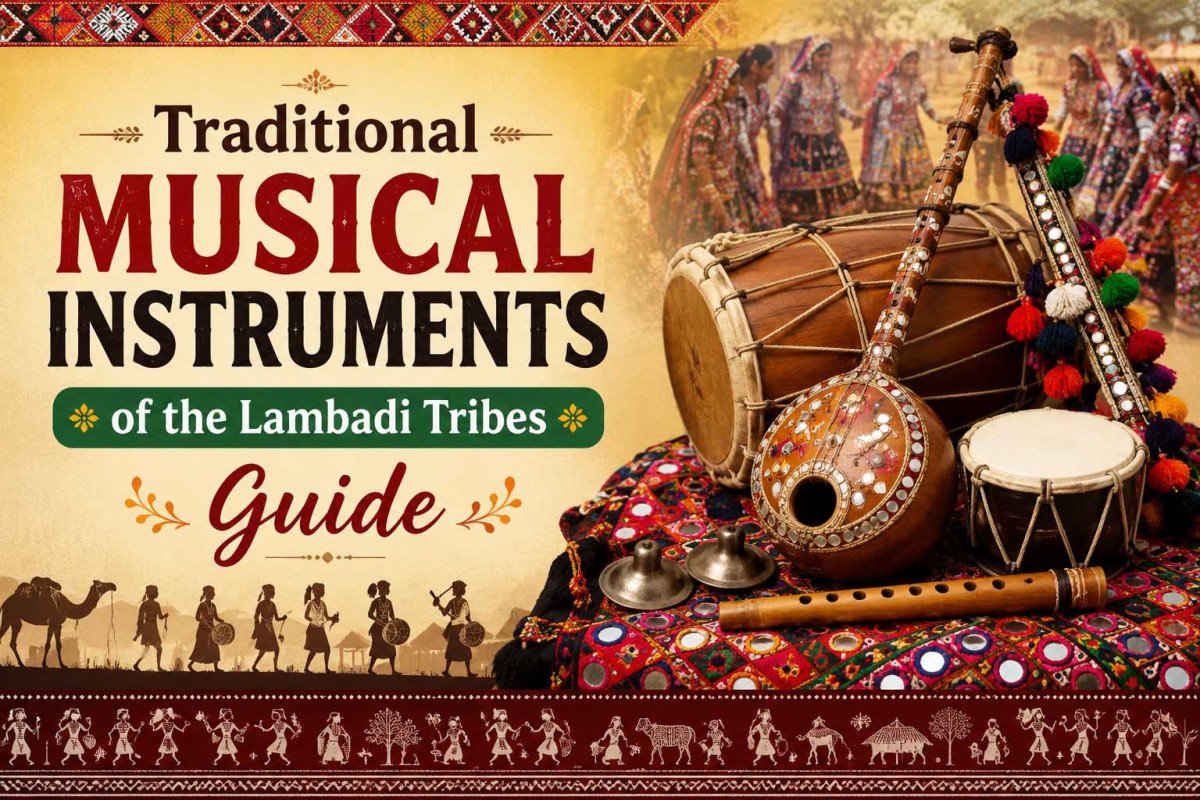
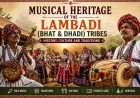
Music has always been an inseparable part of Lambadi (Gor Banjara) culture. It is much more than entertainment—it is a medium through which traditions, religious beliefs, festivals, social customs, and collective memories are preserved. Every important celebration in a Lambadi Thanda is accompanied by rhythmic drumbeats, melodious string instruments, devotional songs, and energetic dances that unite the community.
Traditional musical instruments have been passed from one generation to another through oral tradition and practical learning. Many of these instruments are handmade using locally available materials such as mango wood, goat skin, buffalo hide, brass, iron, bamboo, and natural gums. Their construction reflects the craftsmanship of tribal artisans, while their sounds represent centuries of cultural continuity.
According to the study presented in your source, these instruments are played during festivals such as Teej, Seetala, Tulja Bhavani, Holi, Deepavali, marriage ceremonies, devotional bhajans, and the worship of deities including Merama Bhavani and Sant Sevalal Maharaj.
This article explores the history, construction, performance techniques, and cultural significance of the traditional musical instruments of the Lambadi tribes.
Music in Lambadi Culture
The Lambadi community has traditionally maintained a rich musical heritage closely connected with religion, agriculture, social gatherings, and seasonal festivals. Music accompanies almost every important event in community life, from weddings and devotional gatherings to annual festivals and public celebrations.
Rather than being performed by professional orchestras, traditional music is community-based. During celebrations, musicians play rhythmic instruments while women perform colourful traditional dances, and devotional songs are sung collectively. Music therefore strengthens social unity and preserves cultural identity.
Traditional Musical Instruments of the Lambadi Tribe
1. Nangara (Nagara)
Among all traditional Lambadi instruments, the Nangara occupies a special place. It is primarily a percussion instrument used during religious ceremonies, festivals, devotional performances, and traditional dances.
The instrument is played during celebrations dedicated to Sant Sevalal Maharaj, Merama Bhavani, Mahankali, and several other community festivals. Women dance rhythmically to the beats of the Nangara while devotional songs are performed alongside it.
Construction
The preparation of a Nangara is a detailed traditional process.
Its construction generally includes:
- A circular metal body
- A bronze bowl fixed inside
- Buffalo or similar animal hide stretched across the surface
- Leather ropes for tightening
- Wooden sticks (called Tollys) for playing
The animal skin is soaked in water before being fixed over the frame. Natural colours mixed with castor oil are applied before drying the instrument for several days. The leather is then tightly stretched using ropes to produce the desired sound quality.
Cultural Importance
Before being used publicly, the completed instrument is traditionally dedicated through religious rituals. During Dasara and other major festivals, the Nangara becomes the central rhythm instrument for dances, devotional singing, and community gatherings.
2. Dappu
The Dappu is one of the most recognisable percussion instruments in Lambadi culture. It provides the principal rhythm during weddings, deity worship, and traditional dance performances.
Construction
According to the source, the Dappu is carefully handcrafted using:
- Mango wood
- Goat skin or cow skin
- Tamarind seed gum
- Iron fittings
- Wooden frame
The wooden ring is first prepared from tender mango wood and shaped into a circular frame. Goat or cow skin is cleaned, treated with salt, dried, and fixed over the frame using natural adhesives prepared from tamarind seeds.
Playing Technique
The Dappu is played using:
- Wooden sticks
- Light cane sticks
- One hand and one stick combination
If the leather becomes loose due to moisture, musicians warm the drum near a fire to tighten the skin and restore its strong, resonant sound.
Role in Dance
Traditional Lambadi women's dances depend heavily upon the rhythmic beats of the Dappu. Different dance styles are performed according to variations in rhythm produced by skilled musicians.
3. Brass Plate (Thambalam / Kaachodo)
The Brass Plate, locally known as Thambalam or Kaachodo, serves as an important supporting rhythm instrument.
Unlike drums, it produces metallic rhythmic sounds that complement percussion instruments.
Construction
It is made entirely from brass and requires no complicated manufacturing process.
Usage
It is played:
- By striking with bare hands
- Using wooden sticks
- During bhajans
- During festivals
- Alongside Nangara and other percussion instruments
Its sharp metallic sound helps maintain rhythm during group singing and dancing.
4. Rabaab
The Rabaab is one of the finest traditional string instruments associated with Lambadi musical heritage. Rather than being used for loud celebrations, it is valued for its melodious sound during storytelling, devotional performances, and historical narratives.
(This article intentionally focuses on the instrument itself rather than the detailed traditions of Bhats or Dhadis.)
Construction
The Rabaab requires remarkable craftsmanship.
Traditional materials include:
- Mango wood
- Goat skin
- Goat intestines for strings
- Tamarind seed gum
- Wooden tuning pegs
- Wooden bridge
- Curved wooden bow
The wooden body is carved from fresh mango timber before being sun-dried. Goat skin is cleaned, soaked in salted water for several days, stretched over the body, and fixed using natural gum made from tamarind seeds.
Four strings are traditionally prepared from cleaned and dried goat intestines and attached to wooden tuning pegs that allow musicians to adjust pitch.
Playing Technique
The instrument is played using a curved wooden bow. Each string produces a distinct tone, allowing musicians to create rich melodies during devotional and narrative performances.
Maintenance
Traditional maintenance includes:
- Cleaning twice weekly
- Applying castor or coconut oil
- Sun drying
- Wrapping in cloth
- Decorating with peacock feathers
- Preserving it with great respect
The instrument is regarded with deep reverence and is carefully protected between performances.
5. Sarangi
The Sarangi belongs to the family of string instruments.
Construction
It consists of:
- Wooden body
- Three strings
- Bamboo bow
- Small decorative bells
The bow is drawn across the strings while the musician rests the instrument comfortably during performance.
Cultural Role
The Sarangi produces expressive melodies suitable for devotional songs, storytelling, and ceremonial performances.
6. Thalalu (Jhanje)
The Thalalu, also called Jhanje, are traditional brass cymbals.
Construction
Each pair consists of:
- Circular brass discs
- Central hollow
- Small hole for rope attachment
They are available in three sizes:
- Small
- Medium
- Large
Different sizes are selected depending on whether the performance is a devotional gathering, festival, or large public celebration.
Performance
These cymbals provide the rhythmic pulse that accompanies drums and string instruments.
7. Chirathalu
Another supporting rhythm instrument is the Chirathalu.
Construction
Traditional Chirathalu include:
- Mango wood handles
- Thin iron plates
- Iron nails
- Flat wooden strips
Each wooden strip contains multiple iron plates that create a jingling sound when struck rhythmically.
Function
The Chirathalu support the primary melody by reinforcing rhythm during musical performances.
Materials Used in Traditional Instrument Making
The Lambadi artisans rely mainly on natural materials obtained locally.
Common materials include:
- Mango wood
- Goat skin
- Buffalo skin
- Cow skin
- Brass
- Iron
- Bronze
- Bamboo
- Goat intestine strings
- Tamarind seed gum
- Castor oil
- Coconut oil
- Leather ropes
These materials provide durability while preserving the authentic sound quality developed over generations.
Festivals and Occasions
Traditional instruments are played during:
- Teej Festival
- Seetala Festival
- Tulja Bhavani celebrations
- Merama Bhavani worship
- Sant Sevalal Maharaj celebrations
- Holi
- Deepavali
- Marriage ceremonies
- Bhajans
- Community dances
- Religious processions
Music transforms these occasions into collective cultural experiences where rhythm, dance, and devotion come together.
Cultural Significance
The musical instruments of the Lambadi tribes are far more than handcrafted objects. They embody cultural memory, religious devotion, artistic skill, and community identity.
Their significance includes:
- Preserving traditional melodies
- Supporting ritual worship
- Accompanying folk dances
- Strengthening community participation
- Passing traditions between generations
- Reflecting indigenous craftsmanship
Each instrument has a unique role, yet together they create the vibrant musical landscape that defines Lambadi cultural celebrations.
Challenges in Preservation
The source notes that rapid modernisation, globalisation, and changing lifestyles pose serious challenges to the survival of traditional tribal cultural heritage. The decline in traditional craftsmanship and reduced transmission of knowledge to younger generations threaten the continued use of these instruments.
Preserving Traditional Musical Heritage
The study highlights the importance of documentation, media, education, and digital preservation in safeguarding tribal culture. Recording performances, encouraging younger generations to learn traditional instruments, organising cultural festivals, and creating digital archives are presented as important ways to sustain this heritage.
Conclusion
The traditional musical instruments of the Lambadi tribes represent centuries of artistic excellence, indigenous craftsmanship, and cultural continuity. Instruments such as the Nangara, Dappu, Brass Plate, Rabaab, Sarangi, Thalalu, and Chirathalu continue to accompany festivals, devotional gatherings, weddings, and community celebrations, preserving the rhythms and melodies that define Lambadi identity.
Although modernisation has changed many aspects of tribal life, these instruments remain powerful symbols of cultural resilience. Preserving their construction techniques, performance traditions, and cultural meanings will ensure that future generations continue to experience the rich musical heritage of the Lambadi community.
Frequently Asked Questions
What's Your Reaction?
 Like
0
Like
0
 Dislike
0
Dislike
0
 Love
0
Love
0
 Funny
0
Funny
0
 Wow
0
Wow
0
 Sad
0
Sad
0
 Angry
0
Angry
0


Comments (0)