

Banjara Teej Festival: The Sacred Celebration of Faith, Nature, and Womanhood in Gor Banjara Culture
The Banjara Teej Festival is far more than a seasonal celebration—it is a living expression of the Gor Banjara community's history, spirituality, and cultural identity. Through the worship of wheat sprouts, the festival reflects gratitude toward Mother Earth, respect for agriculture, and hope for a prosperous future.

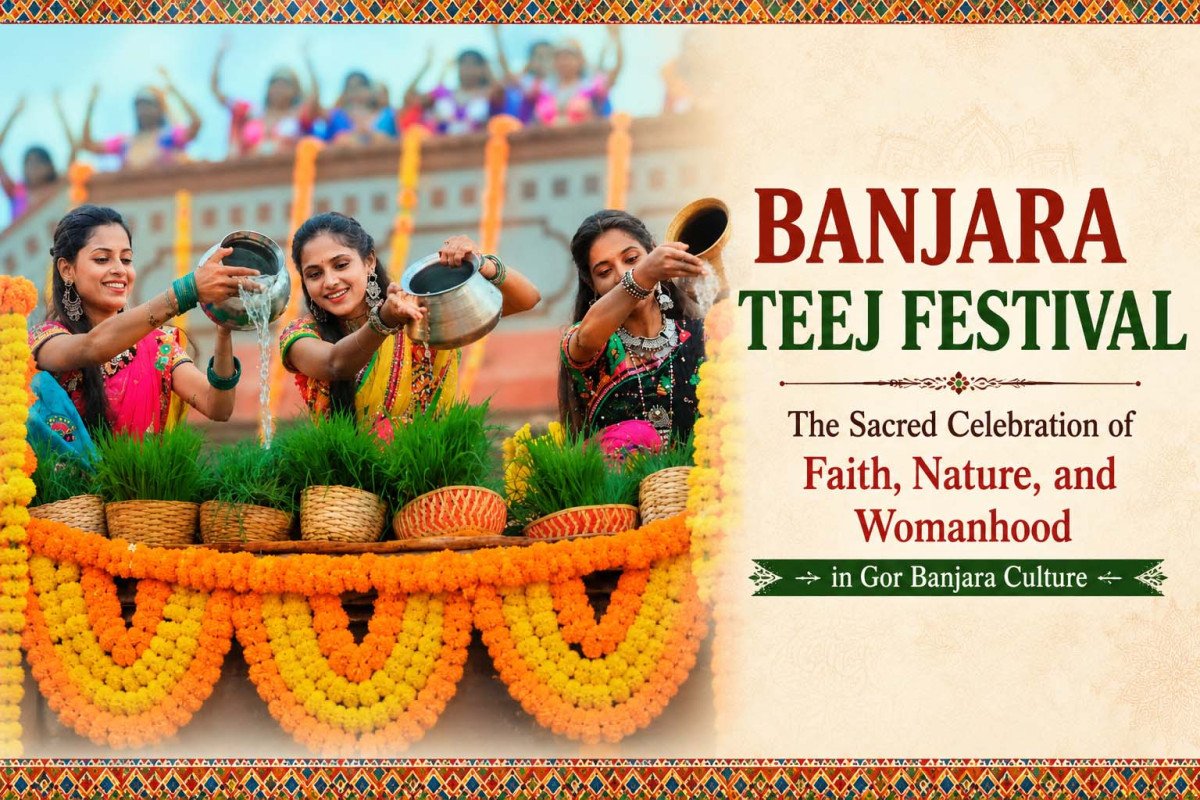
The Banjara Teej Festival is one of the most beautiful and culturally significant festivals celebrated by the Gor Banjara community across India. Unlike many other Indian festivals that revolve around temples or mythology alone, Banjara Teej represents a harmonious relationship between nature, agriculture, womanhood, fertility, devotion, and community life. It is a festival where songs echo through the Tandas, colorful traditional dresses brighten every home, and young girls gather with immense joy to worship the sacred wheat sprouts that symbolize prosperity, growth, and a blessed future.
For centuries, the Gor Banjaras have preserved this unique tradition despite changing lifestyles and modernization. The festival is celebrated mainly by unmarried girls, who pray for happiness, prosperity, good health, and an ideal life partner. However, the celebration is not limited to young girls alone. Every member of the Tanda participates, making Teej one of the grandest community festivals after Holi.
The celebration lasts for nine to ten days, during which wheat seeds are carefully sown in baskets filled with sacred black soil. Every morning and evening, the girls gather to water the sprouts, sing traditional Gor Boli songs, dance together, and perform rituals that have been passed down from generation to generation.
More than just a festival, Teej is a living expression of Banjara identity. It teaches respect for nature, strengthens social unity, preserves folk traditions, and reminds every generation of the rich cultural heritage of the Gor community.
What is Banjara Teej?
Banjara Teej is a traditional harvest and devotional festival celebrated primarily during the Shravan (Sawan) month, when the monsoon transforms the landscape into lush green fields. The rains symbolize new life, fertility, and hope. This season is considered ideal for honoring Mother Nature and seeking blessings for prosperity.
Unlike the Teej festivals celebrated in Rajasthan or North India, where Goddess Parvati is the central deity, Banjara Teej has its own unique customs rooted in the agricultural traditions of the Gor Banjara people.
The centerpiece of the festival is the worship of wheat sprouts, locally known as Teej. These green shoots symbolize:
- New beginnings
- Fertility
- Prosperity
- Agricultural abundance
- Spiritual purity
- Hope for a happy married life
The entire festival reflects the ancient lifestyle of the Banjaras, who have always maintained a close relationship with nature and agriculture.
Historical Background of Banjara Teej
The origins of Banjara Teej are believed to date back hundreds of years, long before the Banjaras settled permanently in villages. Historically, Banjaras were nomadic traders who traveled across India with thousands of bullocks carrying grains, salt, spices, and essential goods.
Despite their continuous movement from one region to another, they carefully preserved their customs and traditions. Festivals like Teej became occasions when the entire caravan (Tanda) paused its commercial activities and came together to celebrate life.
Agriculture held immense importance in Banjara society. Wheat was regarded as a sacred crop because it represented food, wealth, and survival. Even today, wheat occupies an important place in almost every religious ceremony among the Gor Banjaras.
Historical studies and oral traditions suggest that wheat has been considered holy in Gor culture for centuries. During Teej, young girls worship wheat saplings for nine days, demonstrating the community's deep respect for agriculture and nature.
Wheat: The Sacred Symbol of Prosperity
Among all grains cultivated by the Banjaras, wheat occupies a unique spiritual position.
Traditional Gor households prepare several important offerings using wheat flour, including:
- Chapati
- Puri
- Patali Baati
- Lapad
- Ghughari
- Sacred offerings during rituals
The significance of wheat extends beyond food.
It represents:
- Life
- Fertility
- Wealth
- Blessings from Mother Earth
- Continuity of family traditions
Because of this sacred association, wheat seeds become the central element of the Teej festival.
The gradual growth of green wheat shoots during the festival symbolizes the growth of human life, happiness, and prosperity.
Why is Teej Celebrated by Unmarried Girls?
One of the most distinctive aspects of Banjara Teej is that it is primarily celebrated by unmarried girls.
This tradition reflects the cultural belief that young women represent hope, purity, and the future of society.
During the festival, girls pray for:
- Good health
- Happiness
- Wisdom
- Family prosperity
- Peace
- An ideal husband
- A happy married life
However, Teej is much more than a prayer for marriage.
The festival teaches young girls important social values such as:
- Discipline
- Cooperation
- Respect for elders
- Responsibility
- Community participation
- Preservation of traditions
Every day, they gather together, care for the wheat sprouts, sing devotional songs, and participate in rituals that strengthen lifelong friendships.
Preparation for the Festival
Preparations begin several days before the actual celebration.
As the monsoon rains arrive, excitement spreads throughout the Tanda.
Women clean their homes thoroughly.
Traditional utensils are polished.
Colorful clothes are prepared.
Silver ornaments are cleaned.
Musical instruments are repaired.
The elders identify an auspicious day to begin the festival.
The young girls then organize themselves into groups responsible for different ceremonial activities.
The preparation itself becomes a joyful celebration.
Collecting the Sacred Black Soil
One of the most memorable rituals of Banjara Teej is collecting black fertile soil.
This is not an ordinary task.
Groups of unmarried girls, dressed in traditional Banjara attire, walk together towards nearby fields while singing beautiful folk songs.
According to traditional customs, the black soil symbolizes:
- Fertility
- Mother Earth
- Prosperity
- Agricultural abundance
- New beginnings
The girls carefully collect the soil with devotion because it will nurture the sacred wheat seeds during the coming days.
Interestingly, old Banjara traditions describe that boys playfully try to prevent the girls from collecting the soil.
This friendly interaction adds excitement to the celebration and creates joyful memories for the entire Tanda.
Traditional Gor Boli songs accompany this ritual.
One of the famous songs remembered by elders is:
"Boradi re Bor, Khate Mithe Bor..."
These songs celebrate friendship, youth, and the joyful spirit of Teej.
Sowing the Wheat Seeds
After returning to the Tanda, the girls fill beautifully decorated baskets or earthen containers with the sacred black soil.
They then carefully sow wheat seeds into the moist soil.
The baskets are placed in a clean and respected location where every participant can gather for daily worship.
This marks the official beginning of the nine-day festival.
Every seed planted represents hope.
Every basket symbolizes a future filled with happiness.
Every green shoot that emerges reminds the community of nature's incredible power to sustain life.
Daily Worship of the Wheat Sprouts
From the very first day, the girls begin caring for the growing wheat.
Every morning they gather to:
- Offer water.
- Sing traditional songs.
- Perform simple prayers.
- Dance together.
- Seek blessings from elders.
In the evening, they return once again to continue the rituals.
As the days pass, the tiny green shoots slowly emerge from the soil.
Watching these delicate sprouts grow becomes one of the most emotional moments of the festival.
The wheat is treated almost like a sacred guest in every household.
No one is allowed to disrespect or damage the plants.
Their healthy growth is considered an auspicious sign for the entire community.
Music: The Soul of Teej
No Banjara festival is complete without music.
During Teej, every evening the Tanda comes alive with traditional Gor Boli songs.
Unlike modern entertainment, these folk songs preserve centuries of history, emotions, customs, and wisdom.
The songs celebrate:
- Rain
- Green fields
- Friendship
- Love
- Nature
- Family
- Community life
- Devotion
Young girls dance in circles wearing beautifully embroidered Ghagra, Kanchali, colorful Odhani, heavy silver ornaments, bangles, anklets, and traditional jewelry.
The rhythmic sounds of clapping, singing, and dancing transform the Tanda into a vibrant cultural celebration.
These songs are not merely performances—they are living archives of Banjara history, passed orally from one generation to the next.
The Nine Days of Devotion
The heart of the Banjara Teej festival lies in its nine days of continuous devotion, discipline, and celebration. Unlike festivals that are observed only for a single day, Teej allows every member of the Tanda to participate in a gradual spiritual journey. As the wheat seedlings grow taller each day, so do the excitement and devotion of the participants.
Every morning begins with the young girls gathering around the baskets containing the sacred wheat sprouts. Dressed in colorful traditional Banjara attire, they offer clean water to the growing plants while singing ancient Gor Boli devotional songs. Elders bless the girls and encourage them to continue the rituals with sincerity and respect.
In the evening, after completing household work, everyone assembles again. The atmosphere becomes lively with singing, dancing, and storytelling. Elderly women narrate old traditions, while young girls learn songs that have been preserved for generations through oral tradition.
Each day of the festival symbolizes patience, hope, growth, and faith. Just as the wheat sprouts slowly emerge from the soil, every individual is reminded that success and happiness require dedication and time.
Traditional Banjara Dress During Teej
One of the most attractive features of the festival is the magnificent traditional attire worn by Banjara women and girls.
Unmarried girls wear beautifully embroidered Ghagras decorated with colorful mirror work and traditional thread embroidery. They pair these with embroidered Kanchali (blouse) and a richly decorated Odhani covering their heads.
Heavy silver ornaments complete the traditional appearance. These ornaments include:
- Hansli (silver necklace)
- Bangles
- Anklets
- Earrings
- Finger rings
- Waist belts
- Traditional silver coins
- Nose rings
The colorful dresses, sparkling ornaments, and graceful dance movements create an unforgettable sight. Even today, many Tandas proudly preserve these traditional costumes during Teej despite the influence of modern fashion.
Traditional Folk Songs of Teej
Music is the soul of every Banjara festival, and Teej is no exception.
Every ritual is accompanied by songs that express devotion, joy, friendship, love, and respect for nature. Most of these songs have been passed from one generation to another without being written down, making them an invaluable part of Banjara oral heritage.
One of the well-known songs remembered during the collection of sacred black soil is:
"Boradi re Bor, Khate Mithe Bor..."
This playful song reflects the cheerful atmosphere created when groups of girls go together to collect fertile black soil for sowing the wheat seeds.
The songs are rhythmic and easy to sing together. Elder women lead the singing while younger girls follow them, learning both the lyrics and their meanings.
These folk songs preserve centuries of cultural memory. They contain stories about nature, seasons, family life, friendship, agriculture, and devotion. Through music, each new generation inherits the cultural identity of the Gor Banjara community.
Friendly Play Between Boys and Girls
One unique feature of traditional Banjara Teej is the playful interaction between boys and girls.
When the girls leave the Tanda to collect black soil from nearby fields, the boys often playfully try to stop them from bringing the soil back.
This is not considered a conflict but rather a traditional game that fills the festival with laughter and excitement.
The girls respond by singing teasing songs while continuing their mission to collect the sacred soil. Eventually, they succeed in bringing the soil back to the Tanda, where it is used to prepare the Teej baskets.
Such customs strengthen friendships within the community and make the festival enjoyable for everyone.
Dance: The Heartbeat of the Festival
No Banjara celebration is complete without dance.
Every evening, groups of girls form circles around the Teej baskets and dance rhythmically while singing traditional songs. Their synchronized steps, colorful dresses, and graceful movements create an atmosphere of joy and devotion.
Unlike stage performances, these dances are spontaneous expressions of happiness. Everyone joins naturally—young girls, married women, elderly ladies, and sometimes even children.
The dances celebrate:
- The arrival of monsoon
- Fertility of Mother Earth
- Prosperity
- Community unity
- Respect for tradition
Traditional musical instruments such as the Dhol, Daf, and hand clapping provide the rhythm for these performances.
Teej Strengthens Community Bonds
Beyond its religious importance, Teej plays a significant role in strengthening relationships within the Tanda.
Every household participates in one way or another.
Women prepare food together.
Elders teach customs.
Children observe and learn traditions.
Young girls spend quality time with friends.
Families visit one another.
The festival becomes an opportunity to renew relationships and maintain unity within the community.
For a society that historically lived in mobile caravans known as Tandas, such festivals were essential in preserving social harmony and collective identity.
The Emotional Tenth Day: Teej Visarjan
After nine days of worship comes the most emotional moment of the festival—the immersion of the Teej.
On the tenth day, the beautifully grown wheat sprouts are carefully lifted from their place of worship.
The girls decorate the baskets with flowers and carry them in a procession toward a nearby river, pond, or natural water source.
Throughout the journey, traditional songs continue to fill the air.
One of the songs remembered by many elders is:
"Pak Meti Aayo Re Veri Khaliya, Mari Satan Le Lego Re Veri Khaliya..."
The song reflects the emotional farewell offered to the sacred wheat that has been lovingly cared for over the previous nine days.
Tears Behind the Celebration
Although Teej is a joyful festival, the immersion ceremony often becomes deeply emotional.
For nine days, the girls nurture the wheat seedlings like members of their own family. They water them daily, sing before them, and pray sincerely.
When the time finally comes to immerse the Teej, many girls feel genuine sadness.
Traditional songs beautifully express these emotions.
One famous farewell line remembered by elders says:
"Koni Vhiyeye Gavari Manre Huns Uji Das Dan Rejoni..."
These songs symbolize the temporary nature of life and remind everyone that every joyful beginning eventually reaches its conclusion.
The emotional farewell also prepares young girls for future responsibilities in life, especially the experience of leaving their parental home after marriage.
Symbolism of the Wheat Immersion
The immersion ceremony carries deep spiritual meaning.
It represents:
- Gratitude to Mother Nature.
- Respect for agricultural life.
- Acceptance of life's changing seasons.
- Hope for future prosperity.
- Renewal of faith.
Just as seeds return to the earth and later produce fresh crops, human life also follows cycles of growth, change, and renewal.
The ritual teaches humility and reminds everyone that all life ultimately depends upon nature.
Cultural Importance of Teej
The Banjara Teej festival is much more than a seasonal celebration.
It serves as a living school of culture where younger generations learn:
- Traditional songs
- Folk dances
- Respect for elders
- Agricultural traditions
- Community cooperation
- Religious customs
- Banjara identity
Without festivals like Teej, much of the Gor Banjara oral heritage could disappear over time.
The festival therefore plays a crucial role in preserving the unique cultural identity of the community.
A Festival Rooted in Nature
Perhaps the most remarkable aspect of Banjara Teej is its close relationship with nature.
Unlike many festivals centered around elaborate idols or expensive decorations, Teej revolves around simple natural elements:
- Black fertile soil
- Wheat seeds
- Clean water
- Rain
- Green plants
- Flowers
- Earth
This simplicity reflects the traditional Banjara philosophy of living in harmony with the environment.
The festival teaches that prosperity comes not merely from wealth but from fertile land, healthy crops, sufficient rainfall, and collective happiness.
In today's world, where environmental conservation has become increasingly important, the values represented by Teej are more relevant than ever.
The celebration reminds us that protecting nature is not only an ecological responsibility but also a cultural and spiritual duty.
Banjara Teej Across Different States
Although the Gor Banjara community is spread across many states of India, the essence of the Teej festival remains the same everywhere. However, each region has developed its own customs, songs, and styles of celebration over time.
Maharashtra
In Maharashtra, Teej is celebrated with great enthusiasm in Banjara Tandas across districts such as Nanded, Hingoli, Beed, Latur, Parbhani, Yavatmal, Washim, Akola, Buldhana, Aurangabad (Chhatrapati Sambhajinagar), and Amravati.
Young girls gather every evening to sing traditional Gor Boli songs while worshipping the wheat sprouts. Cultural programs, folk dances, and community feasts are often organized. Elders use this opportunity to teach children about Banjara history and customs.
Telangana
The Lambada (Banjara) community in Telangana celebrates Teej as one of its most important cultural festivals. Traditional embroidery, colorful costumes, silver jewelry, and energetic dances are major highlights.
Many villages organize community gatherings where women perform folk dances around the Teej baskets while singing devotional songs dedicated to nature and prosperity.
Karnataka
In Karnataka, Teej continues to be celebrated in Banjara settlements with great devotion. The rituals closely resemble those practiced in Maharashtra and Telangana, although the songs may differ slightly due to regional influences.
Families gather together, share traditional food, and encourage children to participate in cultural activities that preserve Gor identity.
Rajasthan and Other Regions
Although Rajasthan is widely known for Hariyali Teej, the Banjara version of Teej remains unique.
Instead of focusing primarily on Goddess Parvati, Gor Banjara Teej emphasizes:
- Wheat worship
- Nature
- Agricultural prosperity
- Community unity
- Traditional songs
- Preservation of tribal heritage
This distinction makes the Banjara Teej festival one of the most unique cultural celebrations among India's tribal communities.
The Importance of Women in Teej
Teej beautifully reflects the important role women play in preserving Banjara culture.
From childhood, girls learn:
- Traditional songs
- Folk dances
- Religious customs
- Community values
- Respect for elders
- Love for nature
Women become the custodians of oral traditions. Since most Banjara folk songs were never written down, they have survived because mothers and grandmothers passed them from one generation to another.
Without women, much of Gor Banjara cultural heritage would have disappeared long ago.
Teej and Environmental Awareness
One of the most inspiring aspects of the Banjara Teej festival is its deep respect for nature.
Every ritual revolves around natural elements:
- Fertile black soil
- Wheat seeds
- Rainwater
- Green plants
- Trees
- Rivers and ponds
Long before environmental conservation became a global movement, the Banjaras were teaching these values through festivals.
The festival reminds people that human life depends on healthy soil, clean water, forests, crops, and seasonal rainfall. Caring for nature is therefore not only an environmental responsibility but also a spiritual duty.
Today, Teej serves as a powerful reminder that sustainable living has always been part of the traditional Gor Banjara way of life.
Preserving Banjara Identity Through Teej
Modernization has brought many changes to the lifestyle of the Banjara community.
Urbanization, migration, and changing occupations have reduced the number of traditional celebrations in some areas. Many young people now grow up away from their ancestral Tandas.
Despite these changes, Teej continues to unite the community.
Every year, families return to their native villages whenever possible to participate in the festival. Community organizations, cultural associations, and educational institutions also organize Teej celebrations to keep the traditions alive.
Social media has become another important platform where young Banjaras share photographs, traditional songs, dance performances, and cultural messages during the festival.
These efforts help introduce the younger generation to their rich heritage and strengthen community pride.
Challenges in Preserving the Tradition
Although Teej remains popular, several challenges threaten its continuity.
Some traditional songs are gradually disappearing because very few elders remember their complete lyrics. Modern entertainment has replaced folk music in many places, reducing opportunities for younger generations to learn authentic songs.
Traditional handmade dresses and silver ornaments have also become expensive, making them less common in everyday use.
Migration to cities has reduced participation in community festivals, and many children are unfamiliar with the deeper meanings behind the rituals.
To preserve this heritage, families and community organizations can:
- Record traditional Gor Boli (Gormati) songs.
- Teach children about Teej through schools and cultural programs.
- Encourage wearing traditional attire during festivals.
- Document oral histories from elders.
- Promote Banjara culture through books, websites, documentaries, and digital archives.
By combining tradition with modern technology, the Gor Banjara community can ensure that Teej continues to inspire future generations.
Frequently Asked Questions
What's Your Reaction?
 Like
0
Like
0
 Dislike
0
Dislike
0
 Love
0
Love
0
 Funny
0
Funny
0
 Wow
0
Wow
0
 Sad
0
Sad
0
 Angry
0
Angry
0







Comments (0)